


From West End to role play acting, Simon Anthony’s evolving career


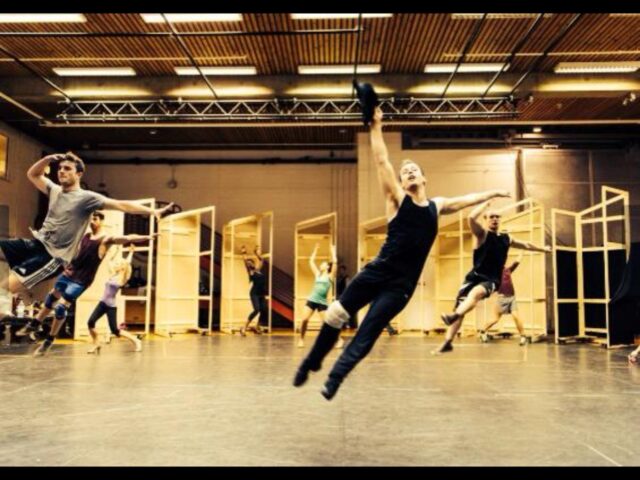
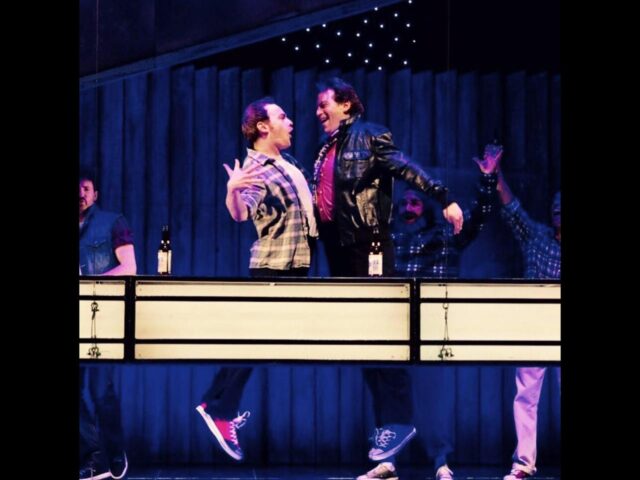
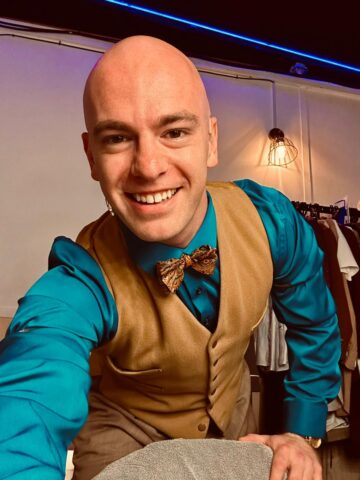
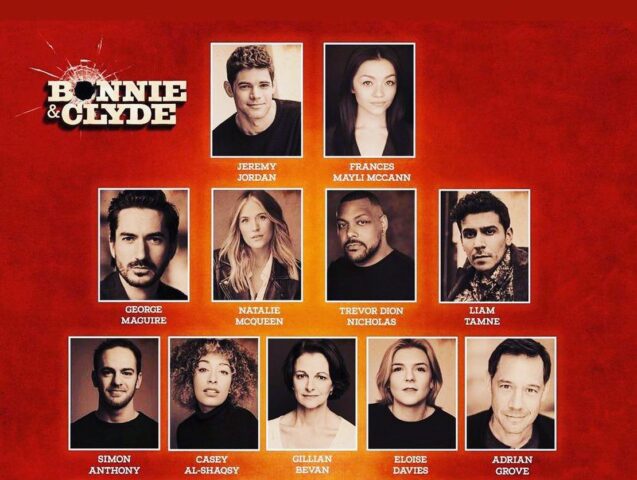
Simon Bolland, stage name Simon Anthony, has had a glittering career treading the boards on the West End since 2014 and now is acting in role play scenarios in the medical and legal fields.
Mr Bolland has been in productions such as Anything Goes, Fame, The Wedding Singer, The Wizard of Oz, Ragtime, Singing in the Rain, Guys and Dolls, and more recently Fiddler on the Roof.
Leaving his home in Cambridgeshire, he spoke to the Chronicle while on the train into the city where he is currently taking part in role play workshops as his career focus is shifting as he and his wife prepare to welcome their first child.
“When you're an actor, and you're not in a show at this current moment, or, in a filming project, or anything like that, sometimes you do these role play jobs where you work as either medical role play or like law examination role play,” he said.
“Where you basically have to become a character, a client as it were, or a patient as it were, and you have a brief just like you would a character, so you have a set of circumstances and information about this character, who you are, and who you're playing, and you have to play that out.”
These highly structured scenarios demand the same emotional truth and detail as any role in a theatre, he explained.
Giving the scenario of where you have an ailment, you have to think how you would play that out, so that a doctor could appropriately treat you.
“You're basically the guinea pig, but you're being an actor at the same time. You're playing, you're doing the performance of the real person,” he said.
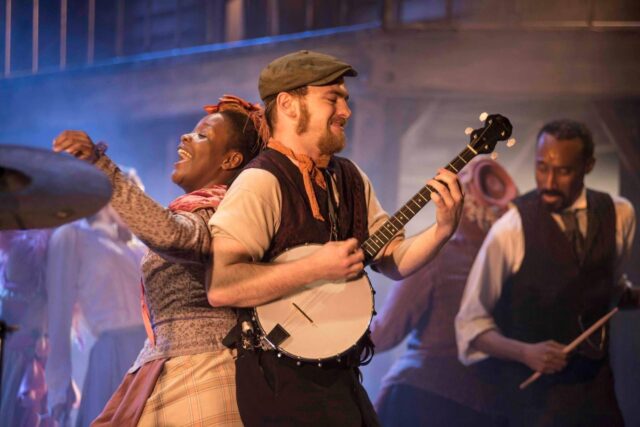
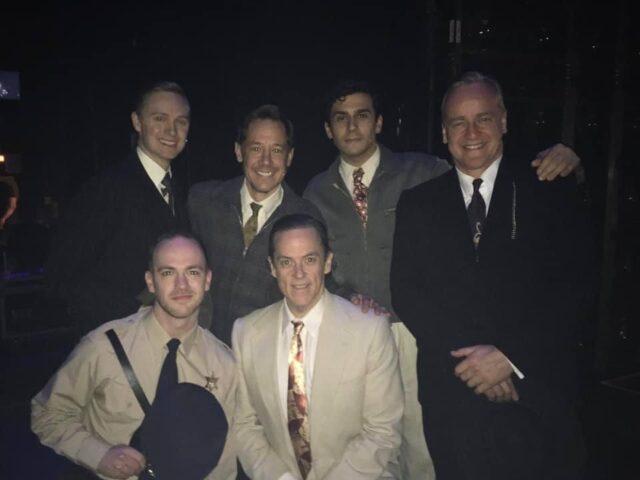
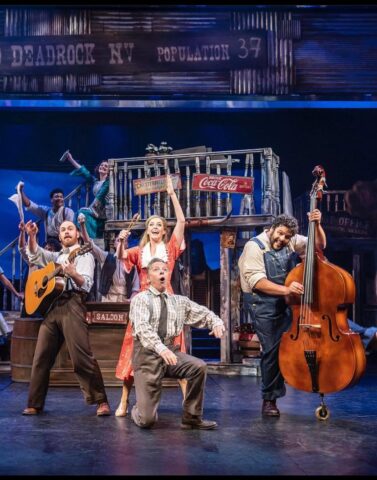
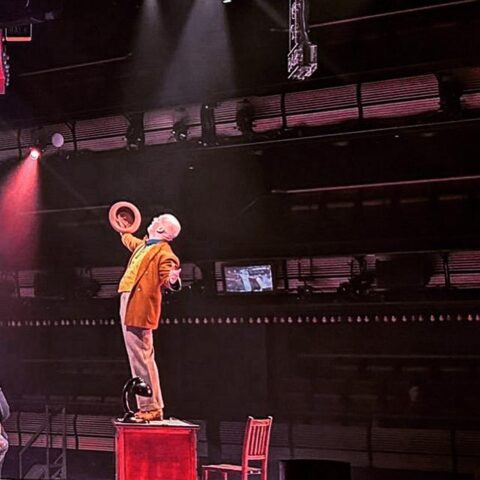
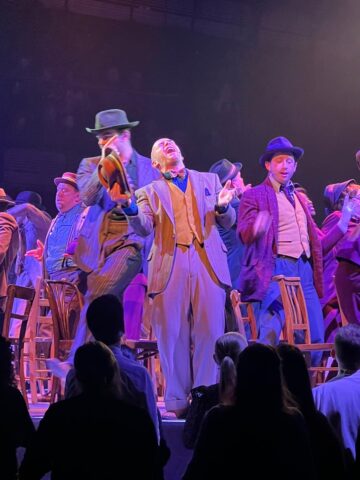
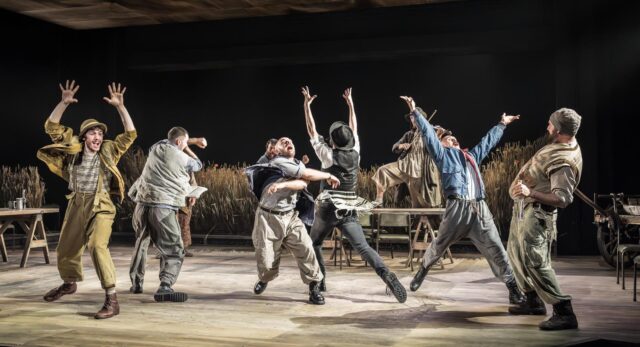
Before the workshops, one of Mr Bolland’s most significant recent credits was in the revival of Fiddler on the Roof, which began at London’s Park Theatre before transferring to the Barbican and then touring.
Fiddler on the Roof was originally a book that was written a long time ago and originally in Yiddish, before it was adapted into a play, and then a film, before a musical.
The production he joined placed particular emphasis on cultural authenticity.
“But the thing that really attracted me to the piece was that all the characters from the Jewish community in the play were played by people of the Jewish community,” he said.
“So they were Jewish actors, or had some sort of heritage connection, and that really inspired me to go, ‘I really want to be a part of this’.”
In addition, he enjoyed being welcomed into the Jewish community and learning from it.
“In theater, a lot of the time we recreate communities, or stories of communities, whereas in this case it was, it was genuinely the community. There was no recreating,” he said.
On tour, he played a Russian antagonist amid the story’s portrayal of pogroms and displacement.
“He was an oppressive in the show, which is kind of telling the story of the time where there were a lot of pogroms happening at the time… people were being forced out of their communities, their homes, for no reason at all other than hate,” he said.
The production ran for three months at the Barbican and six months on tour.
“We had incredible audiences along the whole tour… It was sold out like 90% of the time…We broke records in terms of ticket sales.”
For him, the enduring popularity of Fiddler on the Roof in today’s climate underlines the continuing power of theatre.
“It just shows how much theater still is present and still has a story to tell, and really can change people's minds, hopefully, and open their minds up to what they don't necessarily see on the news,” he said.
Mr Bolland also recently worked on ‘Little Piece of You’, a musical project originating in the United States with its music having been written by a 14 year old girl.
“It's brilliant. It's incredible. It's about story about Sidney Hill, and she's this fictional character. She is a superstar and a pop star, but kind of jaded as it were,” he said.
“The show explores fame, self-worth and the consequences of choices.”
“It's this kind of story about how your choices along the way really do matter and it's all about self worth and looking after yourself and keeping the people you love around you instead of pushing them away again, because you see the outcome of that.”
Mr Bolland was brought in to play multiple roles in London’s Theatre Royal, Drury Lane.
“It's a musical that's kind of been getting legs over the last couple of years. They did a concert performance of it at Drury Lane last year, they're doing reworks. So I was brought on board to play a different bunch of different characters, a lot of multiroling, which was fun.”
He added that it is not about being centre-stage as being central to the story.
“Anything that gets me super-intertwined and involved in the story of a piece, it doesn't need to necessarily be the lead character,” he said.
“It doesn't necessarily need to be the bad guy, as it were, the antagonist. It has to be something or someone who really plays an integral part in the way things weave in a story. I think that's what really interests me.”
He is particularly fascinated by narratives built around betrayal due to the emotional complexity involved.
“I think it's all about the emotions behind betrayal. It's not just betrayal, there's anger, there's sadness, there's grief, there's mourning a potential relationship. There's so many different layers to those kind of scenarios,” he said.
“I think those are the ones that kind of really speak out, because there's so many potential opportunities for you to play.”
Mr Bolland has deliberately slowed the pace of his acting commitments and is looking forward to his biggest role yet: becoming a father.
“I've had to say no to a lot of projects that have come my way, and I've been in a really fortunate situation recently where there have been no auditions, but offers, which is a really fortunate position that like I never thought I'd be in,” he said.
Those offers, he said, are the result of experience, reputation and relationships built over time.
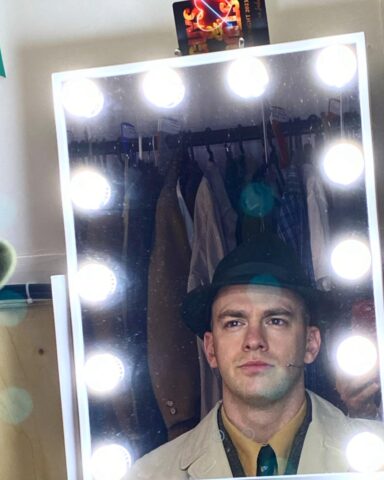

But, at the moment, he is taking some time out to enjoy being a family and if he does accept work, he wants it to be close to home.
“If I am going to take something, it's going to be in London where I can commute it easily. There's definitely a back step, and it's definitely a gear shift that I'm getting I'm trying to get used to,” he said.
“I take it very seriously, and I like my like one of my main goals in life has to be and has been to be a good dad in the future.”
“It's really important to me that they have a present Dad.”
“The biggest role I'm about to play is a Dad.”
To support this new balance and to stay closer to home in Cambridgeshire, he supplements his theatre work with an altogether different kind of career, that of a landscaper.
“It's good because I live out in the countryside with my wife. I live out in Cambridgeshire, and because we're not so close to London I guess the opportunities for little bits of work are more limiting,” he said adding that the contrast between outdoor work and the enclosed world of theatres appeals to him.
While the audience sees a performance and applaud, they are unaware as to what it takes for a person to be there, and how physically and emotionally demanding it can be.
Mr Bolland noted that there's a scientific study, mainly about auditions, that stated there is a similar effect on a human body when comparing the feeling of doing a show and the neurological effects of a person with experiencing a car crash.
The cumulative effect of that pressure helps explain the emotional crash that can follow a performance.
“That's why I feel like I have just plummeted after an audition, or after some shows because you've gone through so much to get to that point,” he said.
“It's just a lot of stress on the body, but it's a wonderful feeling.”
When asked which is harder, opening or closing nights, he said both are shaped by the experience itself.
“If you've had a great time, everything's gone smoothly, you've made a lot of good friends. Closing night can be really sad,” he said.
“But opening nights are great.”
“Closing nights, if you've not had a great process necessarily, sometimes it is, in all honesty, a little bit like ‘come on, get me off this train now’.”


