


Data centre ‘miracle’ opportunity to cut power costs and boost economic security, Sir Joe says


Gibraltar could potentially source electricity from North Africa via a “miracle” investment relating to the data centre, which Government Minister Sir Joe Bossano called the “best opportunity” going for the Rock’s economic security.
The planned £1.8 billion Pelagos Data Centres development will only be viable if Gibraltar can import electricity because the Rock cannot generate enough power at a competitive cost.
Responding to questions from Opposition MP Craig Sacarello, Sir Joe said Gibraltar's existing power generation capacity was too small and too expensive to support a project of this scale.
But an undersea cable linking Gibraltar to Morocco could offer a solution.
"Without the data centre, the cost of bringing the electricity in is not viable," Sir Joe said.
"The amount of electricity that you bring with the cable, doesn't increase the cost of the cable in any considerable margin because you're sending more electricity."
He said Gibraltar's own electricity demand was too small to justify the investment of a fixed undersea cable.
"The basic inevitable, inescapable cost makes bringing electricity from North Africa unviable with our present economy and our present consumption levels,” he said.
"The fact we can piggyback on somebody bringing in 95% of the electricity and giving us 5% is the ideal situation."
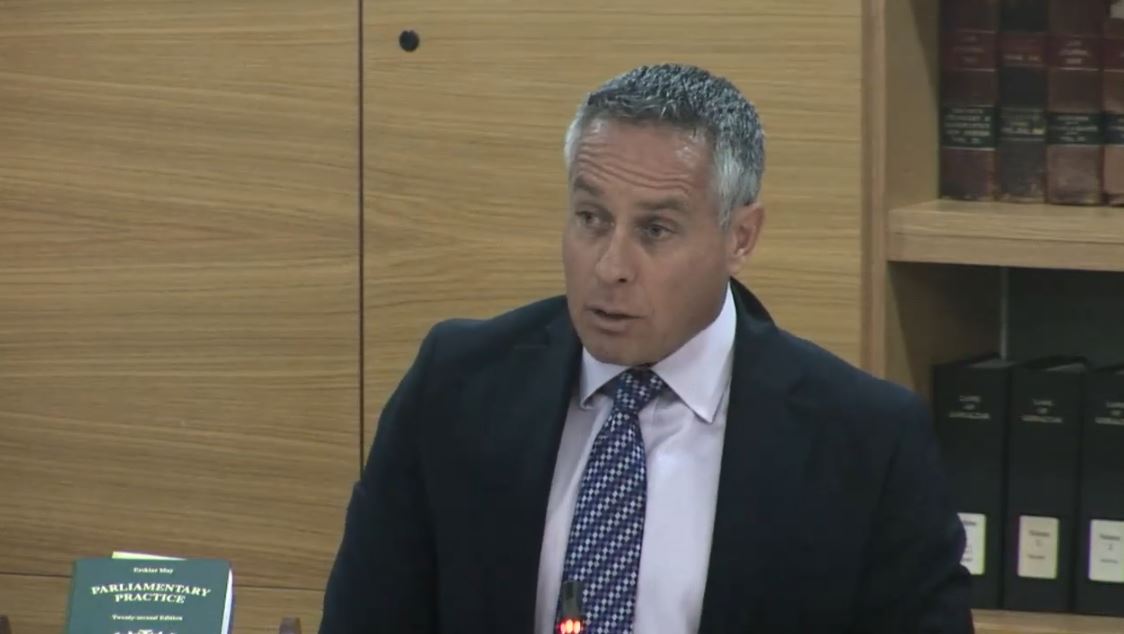
Mr Sacarello asked what direct economic return Gibraltar could expect once the data centre becomes operational.
Sir Joe said it was not possible to make a realistic calculation but suggested the principal benefits would come through company tax, with a smaller contribution from PAYE because data centres require relatively few employees.
"We are talking about a £2b investment once it becomes operational and profitable," he said.
"We will expect a return of an investment of that size to be at least 10%."
"Therefore the 10% profit on the £2b would be £200m, which would then produce £30m at company tax of 15%."
Sir Joe stressed that the figures were speculative but added that the potential returns were significant and described a 10% return as a conservative estimate.
"It’s difficult to think that anyone would invest that kind of money with anything less than what I have suggested because frankly it wouldn't make sense,” he said.
Sir Joe said the project already had customers committed and that he understood "a big US company" was in negotiations to take the entire capacity of the data centre and that the development was "more likely to be a success than not".
He added that imported electricity would be “considerably cheaper” than local rates due to the volume the data centre needs to operate, and that Gibraltar's reputation for security was another important factor in attracting customers.
"We will have a stream of income that otherwise wouldn't exist and at very little cost to us and at the same time the capacity to be able to obtain the electricity at a much cheaper rate so it doesn't need to be subsidised anymore, so it means a saving to the Government," he said.
"The data centre when it is finalised and functioning based on all the analysis we've done until now will do two things: it will reduce cost to the Government and produce more money to the Government."
Mr Sacarello questioned the move away from locally generated electricity towards it being imported from Morocco and asked what that would mean for Gibraltar's power station.
Sir Joe said it would be "extremely unwise" to stop generating electricity locally.
He said the generating station would continue to be staffed and ready to operate whenever required, with imported electricity feeding into the grid through the existing power station while a separate supply would serve the data centre.
"Instead of having a cost of electricity which we subsidise we would have a cost of electricity which is profitable," Sir Joe said.
He explained that if the imported supply failed, Gibraltar would then switch back to local generation.
When asked about projected savings, Sir Joe said imported electricity would cost around half as much as locally generated power.
Mr Sacarello also questioned whether the benefits of the development outweighed concerns when factoring in the location of a major data centre in a densely populated area.
Sir Joe said Gibraltar had to be realistic about the opportunities available to sustain its economy.
"People in Gibraltar need to face the reality of what this place is," he said.
"We live on a rock that has no agriculture, we have no fishing industry, no minerals and therefore we have an economy that is only here because of what we do in the global economy."
"For a place of our size and a population of our size to generate £800m a year in revenue is only possible because we are doing things that may have some consequential discomfort to somebody."
He said economic development had helped fund Government subsidised education and housing, adding that any change inevitably affects some residents.
"We need to be realistic, something like this is a miracle,” Sir Joe said.
“We would never have the money to do something like this."
"We happen to have a reputation in Gibraltar for security and we have society which compares favourably with other places in the world. Those are the two assets."
Sir Joe said Gibraltar needed to be "honest with ourselves" when weighing the scale of the economic opportunity against any inconvenience.
"If we lose it, we would lose the best opportunity for Gibraltar for its economic security."


