


History as crowds surge through border and last of old fence is torn down
Three former Chief Ministers, Sir Peter Caruana, Sir Joe Bossano and Adolfo Canepa are pictured alongside Chief Minister Fabian Picardo pulling down the last remaining piece of the old frontier fence, marking the lifting of immigration controls at the frontier. Photo by Johnny Bugeja.


Large crowds surged in both directions across the frontier in a historic and emotive moment when, at midnight on Wednesday, the UK/EU treaty on Gibraltar was provisionally implemented and immigration controls were lifted.
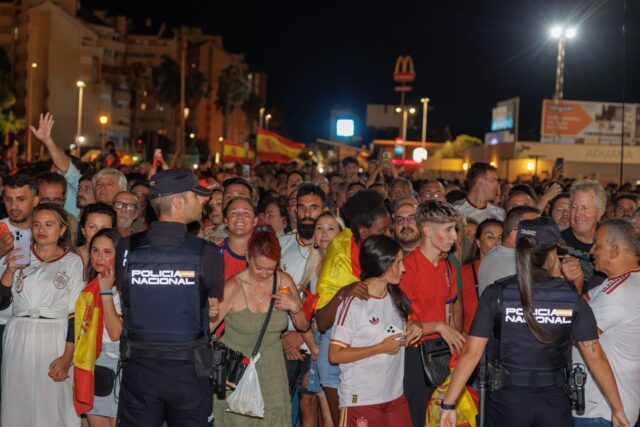
On both sides of the frontier, people were jubilant as they waved flags, chanted and clamoured to be amongst the first to cross without need to show any documentation.
For many, it was a seminal moment marking an end to drawn out queues and the healing of old wounds from the closed frontier era.
Gibraltarians and La Linea residents remarked how this was emotional, momentous and liberating, with many in a celebratory mood after Spain won against France in the World Cup semi-final match.
Many chanted “pueblos hermanos” (fraternal towns) and stood side by side with flags, but others fuelled by post-football intensity turned to less friendly chants. Even so, as this edition went to bed at past 3am there had been no reports of any serious incidents.
There was no official headcount, but Chronicle reporters estimated around 2,000 people attended.
Smita Karnani Gopwani was crossing the frontier as she spoke to the Chronicle, calling it “bittersweet".
“We’ve lived our lives holding a document to walk across and now I literally have my hands in my pocket and nothing in my hands,” she said.
“I’m 44 and I never thought I’d see this or even dream of this happening, it’s surreal.”
Cross-frontier worker Colian Perea was marking the occasion with his family and said it was a beautiful moment to witness.
"It is a bit liberating,” he said.
“We’ve been affected by queues, it affected our pensions amongst other things. This agreement will benefit workers but also Gibraltarians, and give Gibraltarians a freedom that perhaps they didn’t have before. I think it is beneficial to everyone.”
Waiting for the controls to be lifted was Heather Ferro who was feeling “nostalgic and emotional”, remembering how her father Joseph Ferro instigated for the flag to be erected at the border during the Second World War, 84 years ago.
“He was a silent hero,” she said.
“My father was here, a young 23-year-old serving in Gibraltar Services Police. The Spaniards flashed a flag and there wasn’t a flag here. So he got a Gibraltar flag with the port emblem and put it on scaffolding.”
Since then, she said, a flag has been erected. She added that she was raised under a closed border but that she is open to change.
“We are always scared of change, but perhaps it can be something good,” she said.
Also at the frontier was Andy Fortea who said this was a historic moment as, although he lives in La Linea, he spends much of his time with friends and family in Gibraltar, and this will improve his life, but added that he was concerned if this caused a loss to the Gibraltarian identity.
The event was poignantly marked by three former Chief Ministers, Sir Peter Caruana, Sir Joe Bossano and Adolfo Canepa, alongside Chief Minister Fabian Picardo pulling down the last remaining piece of the old frontier fence.
“We have the future at our doorstep now and we turn our backs on an important part of our history but one that had become old-fashioned and which was threatening to weigh down our future generations that I think we have liberated from that,” Sir Peter said.
“I think Gibraltar can now look forward with confidence to the future for the same degree of socioeconomic prosperity that we have enjoyed in the past and which was not guaranteed without this sort of agreement.”
Sir Joe said that although the border fence had been knocked down, the frontier “is still in the same place and Gibraltar hasn't moved an inch.”
Mr Canepa, who witnessed the closure of the border, said this lifting of controls was once “unimaginable”.
“I was here the night at the frontier closed in June 1969 with Maurice Xiberas and Aurelio Montegriffo and Joe Garcia,” he said.
“I never imagined that so many years later, I would be here again for this very auspicious, unique occasion. Amazing.”
Standing by the border, Mr Picardo thanked the Borders and Coastguard Agency officers for their service and asked them to withdraw.
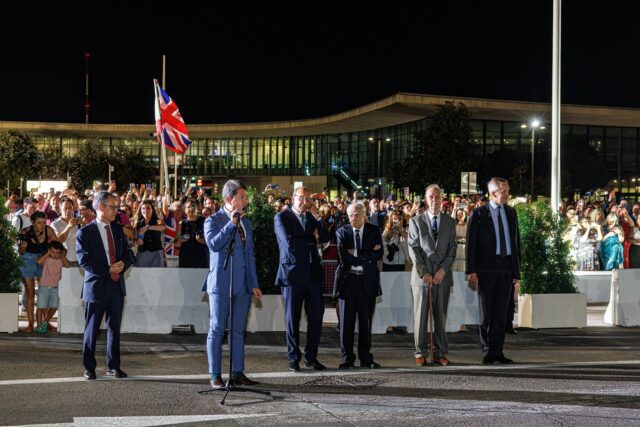
He then walked across the frontier and hugged the Mayor of La Linea, Juan Franco.
“I've said to many people and I've said to myself that I wouldn't believe it until I actually saw someone cross that frontier without showing a passport and without showing an ID card and it was Juan and me that did it first,” Mr Picardo said.
“Oh my God, it felt good, it felt like this is the way it should be.”
“It felt like this has taken far too long because this should be the new normal and it should always have been normal.”
“I'm very pleased indeed that we've been able to make it happen. I wanted to pay tribute to all of the Chief Ministers of Gibraltar and all of the administrations of the Government of Gibraltar because this is five years of negotiation, but it's been 60 years of resistance against the Franco restrictions and we've got beyond them today.”
Mr Picardo pointed to the crowds who were rushing the frontier.
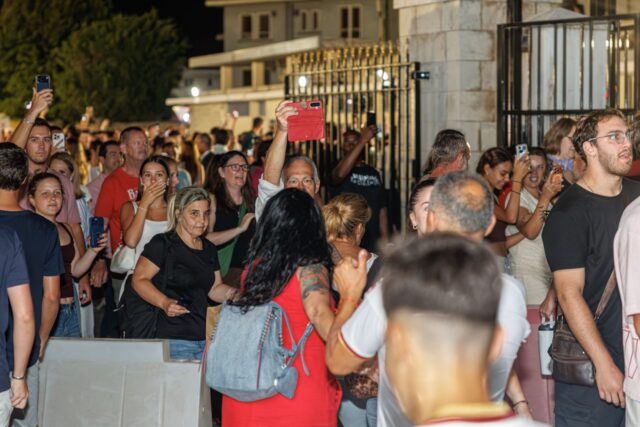
“What I want people to understand is that this deal that we have done, it honours the commitment and the bravery of the referendum generation who voted to stay British,” he said.
“It honours the sacrifice of the closed frontier generation that went through so much because they had the gall and the gumption to vote to stay British, and it raises the opportunity for the future generations to have the lives that we could not have.”
“And what could be better than that?”
Miriam and Alfred Brittenden said it was a momentous occasion, no matter what feelings people have towards the treaty, describing how they remembered waving to family in Spain through the closed frontier gates.
Kyrane Lia highlighted the importance of sharing Gibraltar’s history with the younger generations.
“One of the things I’m scared about the most is how the future generations are almost going to forget about the hardships that past Gibraltarians have gone through,” she said.
“My grandparents lived through the evacuation, my parents lived through the closure of the frontier, and now my part is seeing the frontier come down.”
La Linea residents Maria Jesus, Ana and Paqui said they thought it was a moment in history, describing how they hoped that physical infrastructure of the frontier would come down.
“Somo dos pueblos hermanos [we are fraternal peoples],” Maria Jesus said, adding that this should have taken place a long time
“Now that it’s happened, I am over the moon. I have family there [in Gibraltar] uncles, nephews, everything.”
Euan Strathearn was one of the first to cross the frontier. He has lived in La Linea and then Gibraltar over the past six years and just married a Gibraltarian three weeks ago.
For Euan, it was exciting to cross the frontier and mark this moment, having first watched the World Cup match before arriving at the border
Fiachra Crotty, 15, from Ireland who has family in Gibraltar described how he has crossed over a few times and had to show his Irish passport and had come to understand the importance of this event, and his brother Odhrán Crotty, 16, said the crossing was “chaos” but that the atmosphere was “electric”.
Mother, Caroline Crotty, added that it was great to be here on such an historic night.
“To have free travel between Spain and Gibraltar will be easier for everyone, because both countries have a lot to offer and it will be more convenient now to enjoy the cultures of both,” she said.
Father, Michéal Crotty who just crossed over into Spain, said this was “not about building barriers but creating better opportunities.”
Most Read
Rock’s digital security system sends warning beyond Gibraltar, Parliament told
Fri 16th Oct, 2026
New group to plan healthcare jobs and placements for returning graduates
Tue 13th Oct, 2026
Fourth Committee welcomes Gib treaty as UN approach to decolonisation faces US criticism
Fri 16th Oct, 2026

Today's Paper
15th July 2026
Read our latest newspaper by downloading our app from the link below.


