


Any time of year is a good time to walk in the Alameda ‘our’ Botanic Gardens


There is a certain kind of consistency that links us all throughout our lives to the Alameda Gardens - Gibraltar's Botanical Gardens. For many years it has retained its familiar structure, twirling and hilly paths. Its colouring and smells along its flower and plant beds. Its trees. Its concrete and wooden benches. Its playing areas. Its old bandstand area. To me it will always be a place of childhood and my memories of egg sandwiches, lemon squash and my mother’s sponge cake. Often when I was allowed to take my blue bicycle with its attached smaller wheels, we would have our tea having come from school along the narrow path to the side entrance. A favourite spot would be near the cannons that sit in the area where we often imagined we were riding on wild horses.
Now in adulthood it is a place to escape to for quiet downtime or to attend any number of performances at the Alameda Open Air Theatre.
This year the gardens, as we have featured on these pages over this year, through the changes in the seasons is celebrating 210 years of its existence and the great part it has played in this community.
So, we return to view the gardens and its life in the summer months. The gardens built and created through lottery funding under the time of the then Governor General Sir George Don is still a place - a small haven - in our fast, busy and vibrant cosmopolitan world.
Summer is the most difficult season for the Alameda Gardens. Gibraltar has a long drought period, and a lot of plants go dormant, conserving water and energy during these very warm months, Dr Keith Bensusan tells me – as he returns to Alice’s Table on another tour highlighting some of the most beautiful sections and features in the gardens at this time of year.
As director of the Alameda, he is adamant that there are always things of interest in these beautiful gardens.
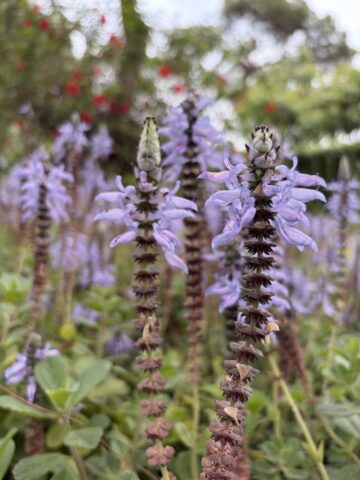
As he takes us on a tour – which we can easily follow this month and next month he talks of the Lobster Bush Coleus neochilus (1) from Southern Africa which begins to flower as early as March, but which continues to do so profusely well into the summer.
“The dense mats that it forms in areas of partial shade are covered in flowers and quite aromatic,” he says.
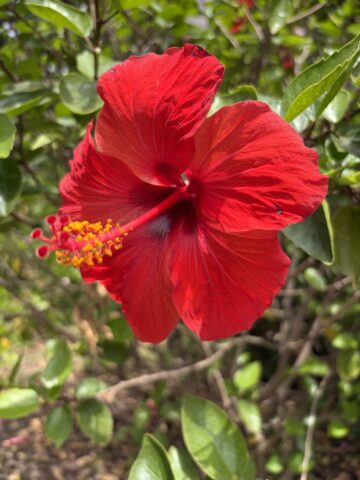
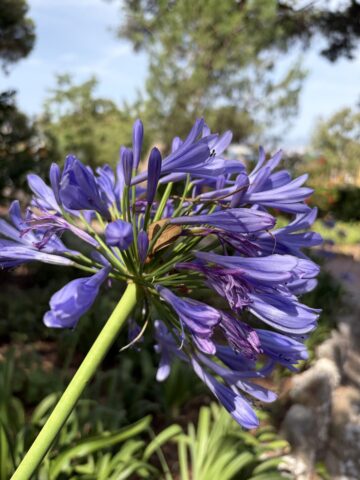
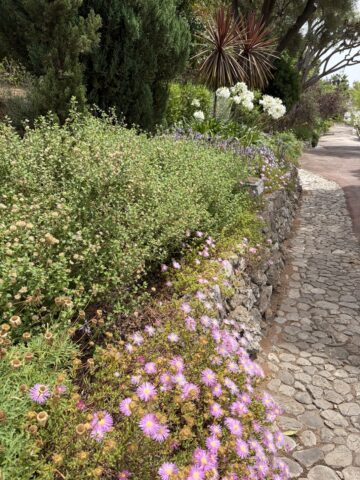
Another feature of the oncoming summer is the African Lily Agapanthus praecox (2), whilst a point of focus for many visitors are the beautiful flowers of the Hibiscus Hibiscus x rosa-sinensis (3).
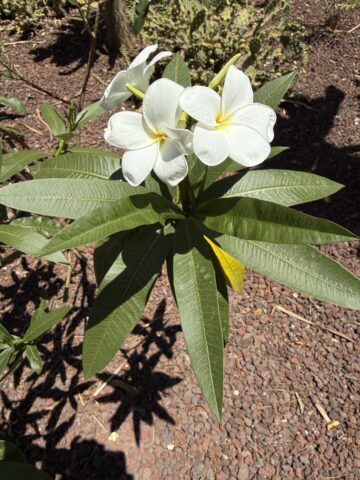
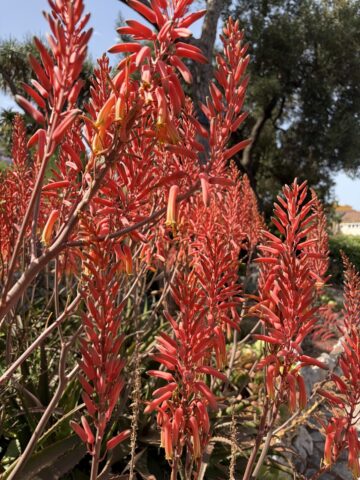
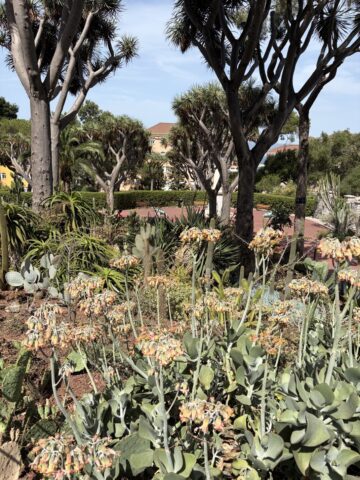
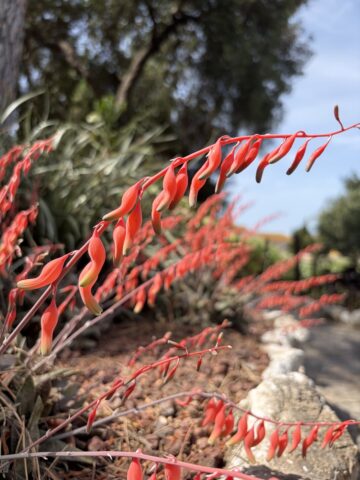
Although many of the succulents in the gardens flower during other periods of the year, some Aloes (4), Gasterias (5) and Crassulas (6), as well as non-succulent but still dry-habitat species such as Frangipanis (7), flower during this period.
“It is due to the intense summer drought and its demands on water that we grow so many of these at the Alameda,” he adds.
And when some of these are combined, a bed can be filled with summer colour (8).
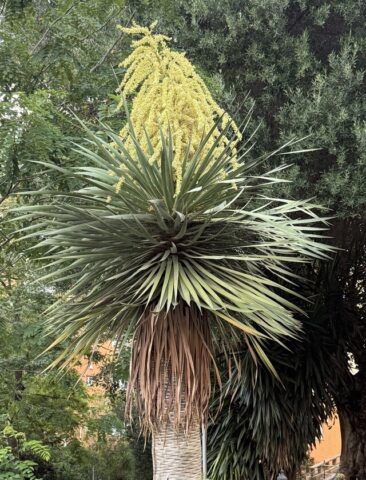
Keith highlights what he terms as the most iconic dry-habitat species in the Alameda which is surely the Dragon Tree Dracaena draco (9) and this year is producing a particularly good flowering episode. He believes this could be due to the heavy rains earlier in the year.
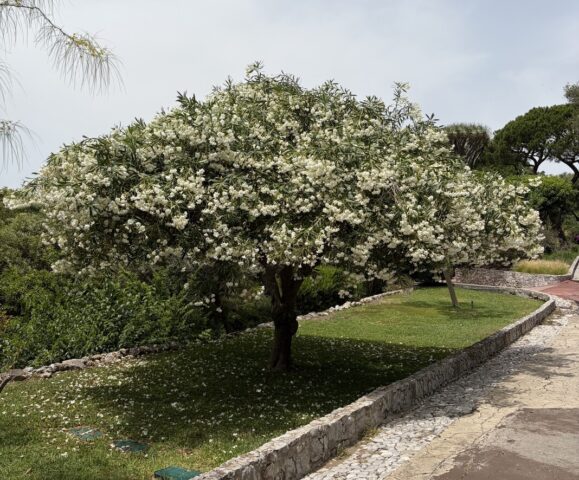
“Certainly, flowering displays have been particularly good during 2026. Oleanders Nerium oleander (10) are another example.”
As we talk of the “our endemic and near-endemic species” — that is, those found only in Gibraltar, or in Gibraltar and only a few other places in the world — most are now finishing flowering.
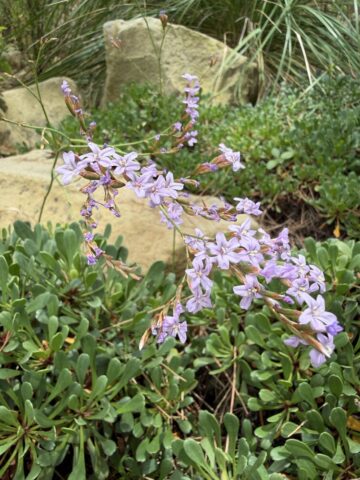
“The Gibraltar Sea Lavender Limonium emarginatum (11) however produces its attractive clusters of lilac flowers during the summer. As with the other special plants of Gibraltar, this species grows in the rockery,” he points out.
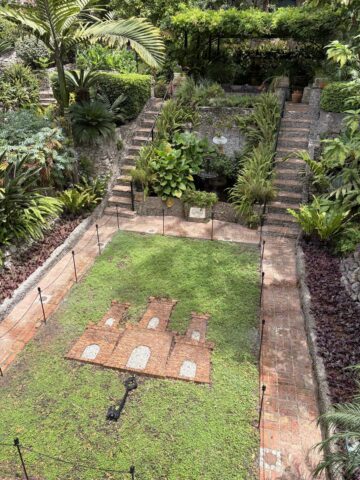
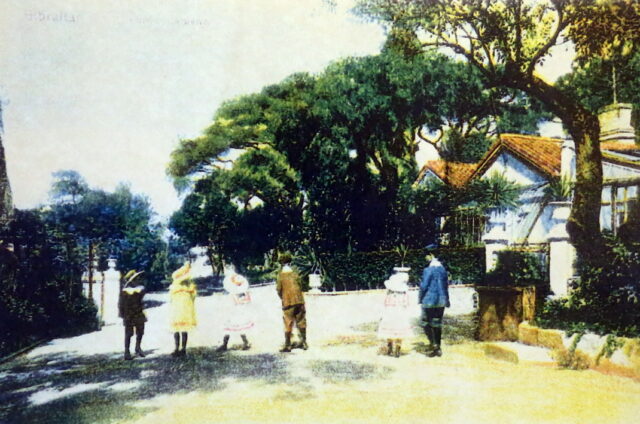
Without doubt a walk in the gardens will reveal The Dell (12) is probably the Alameda’s most beautiful feature. This and other shaded areas provide a much-needed, cooler environment during the hotter period.
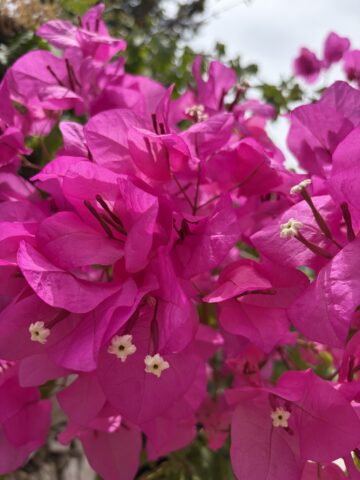
Keith tells me that if standing on the bridge overlooking The Dell, one should look out for the very old Bougainvillea Bougainvillea spectabilis (13), which is certainly well over a century old and is also in flower at this time of year.
“It’s not just plants and flowers that are on show in the Alameda. The summer is a good period for butterflies, notably the very large Two-tailed Pasha Charaxes jasius (14), for which feeding tables are provided. The butterflies are attracted to decomposing fruit and are a highlight for many visitors, particularly photographers.”
Time then to take a walk in the evening as the sun begins to set – probably the best time to now visit the gardens and enjoy in its full splendor.
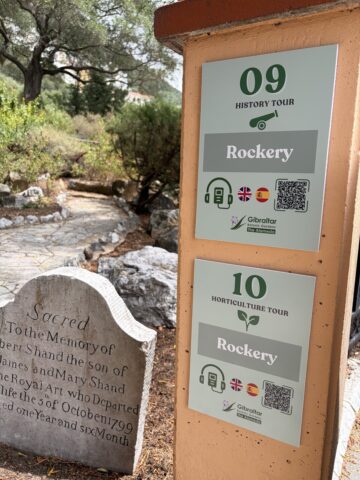
Just recently the Gibraltar Botanic Gardens have released their new audio tours for the gardens. There are two separate tours: one for horticulture and the other for history, reflecting the Alameda’s rich heritage. The audio tours are free, and you can listen to them on your mobile phones. Just scan the QR codes on the signs (15) throughout the gardens!
Try it out you – take a walk – you will not be disappointed… and when you do just imagine the many thousands of Gibraltarians whose footsteps you are following in.
Most Read
Local man arrested on suspicion of assisting illegal immigration after port incursion incident
Fri 4th Sep, 2026
Potential for new flights prompts Gib to discuss airport parking with La Linea
Mon 24th Aug, 2026

Today's Paper
23rd July 2026
Read our latest newspaper by downloading our app from the link below.


