


Armed Forces minister points to Rock’s ‘pivotal role’ as UK prepares for mine-clearing mission in Strait of Hormuz
Photos by Johnny Bugeja. (Photo of US Ohio-class submarine by David Parody.)


Standing on the deck of the RFA Lyme Bay in Gibraltar last Friday, UK Armed Forces minister Alistair Carns reflected on the Rock’s role in a troubled world as he pointed to empty tankers floating high at anchor in the Bay of Gibraltar.
The conflict in Iran and the closure of the Strait of Hormuz, a vital waterway through which much of the world’s oil flows, is having a knock-on economic effect around the globe, and that includes Gibraltar.
“The geopolitical situation in the world is more fractious than it's ever been and whether we like it or not, it affects us all,” Mr Carns told the Chronicle.
“You only have a look at the ships behind you that are racked and stacked, floating high in the water.”
“The probably reason they're all stacked here is because the Strait of Hormuz is closed.”
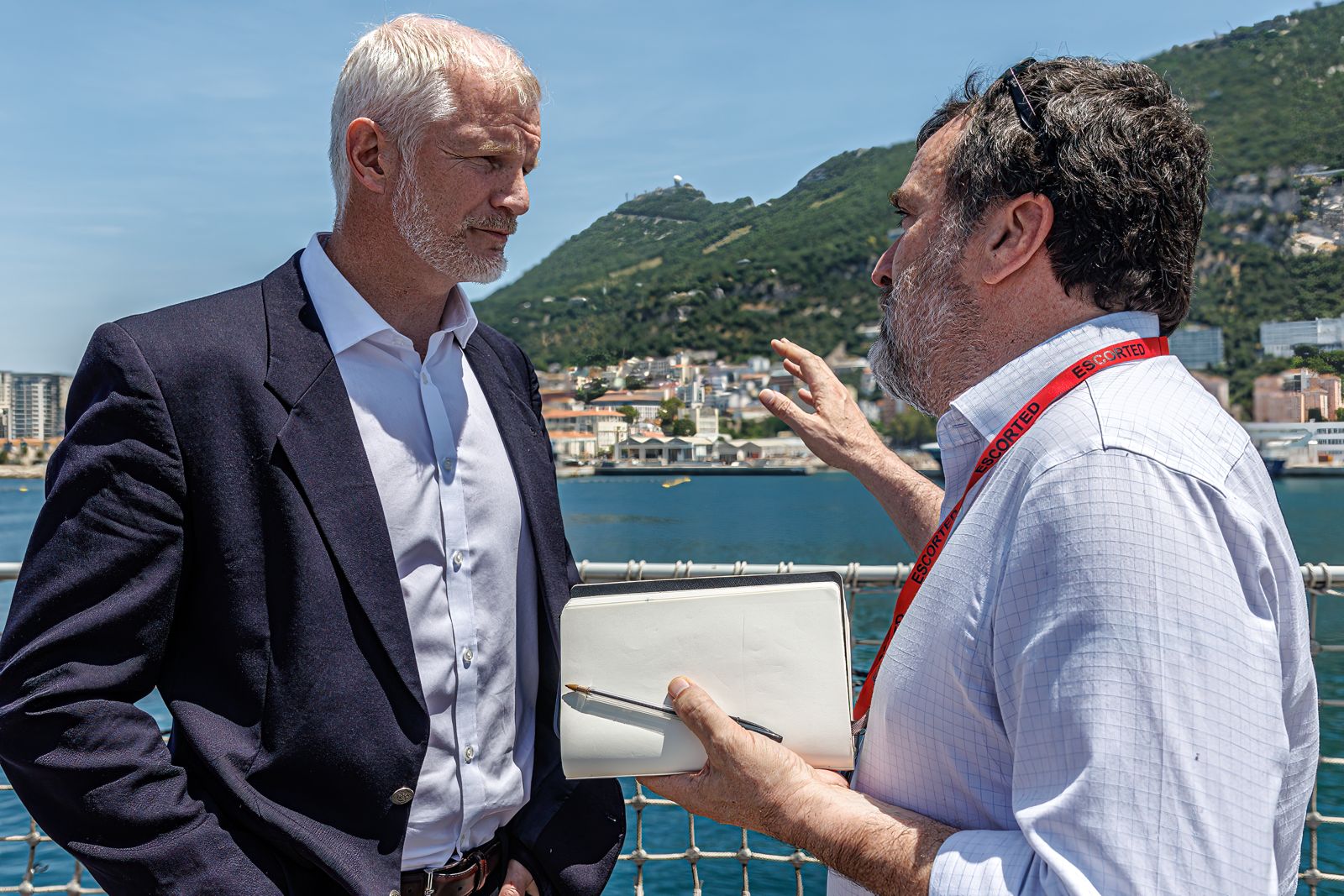
Mr Carns was in Gibraltar to see firsthand the conversion of the RFA Lyme Bay into a mothership for unmanned underwater drones that will likely soon be used to clear mines in the Strait of Hormuz and reopen it to commercial shipping.
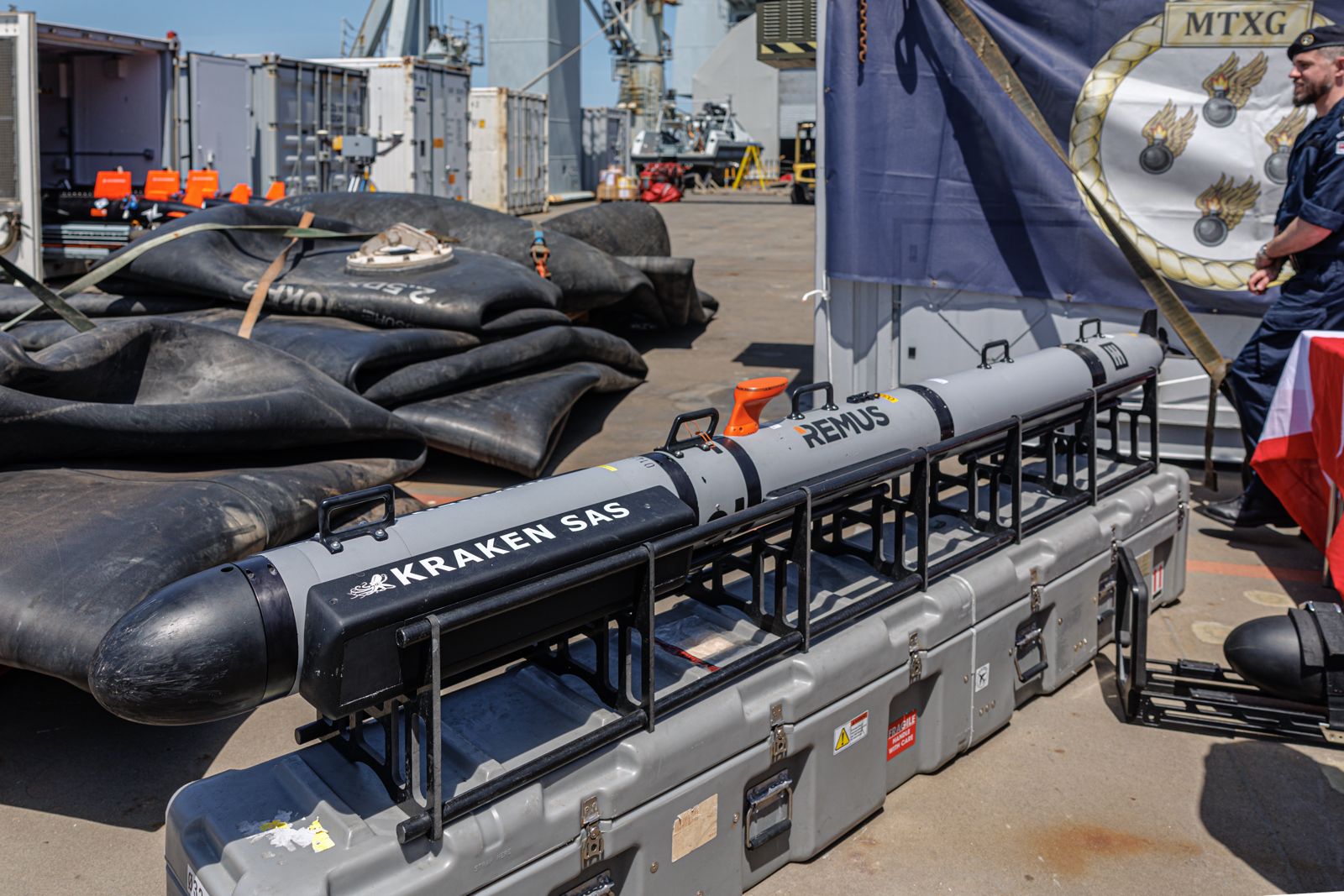
Arranged around him on the flight deck was a display of the drones and the unmanned vessels that will deploy them, alongside specialists from elite Royal Navy units that will operate them.
The UK, alongside France, will lead a multinational peaceful effort to reopen the Strait of Hormuz once hostilities end and it is safe to do so, and RFA Lyme Bay is expected to play a key role in that.
“The military capability here that will help clear the Strait of Hormuz will actually be felt directly here [in Gibraltar], because once those ships start flowing again, more ships will come in here for maintenance services, creating jobs in Gibraltar and making sure the economy stays alive,” Mr Carns said.
“So it's almost impossible for anyone in this day and age to avoid the implications of this conflict.”
The work carried out in Gibraltar to prepare RFA Lyme Bay for its mission served to underscore the Rock’s importance to the UK Armed Forces and its allies in a world marred by conflict.
That role was put under spotlight in recent days not just by this conversion work but by visits too from a Royal Navy nuclear-powered submarine and, just days earlier, a US Navy ballistic missile submarine.
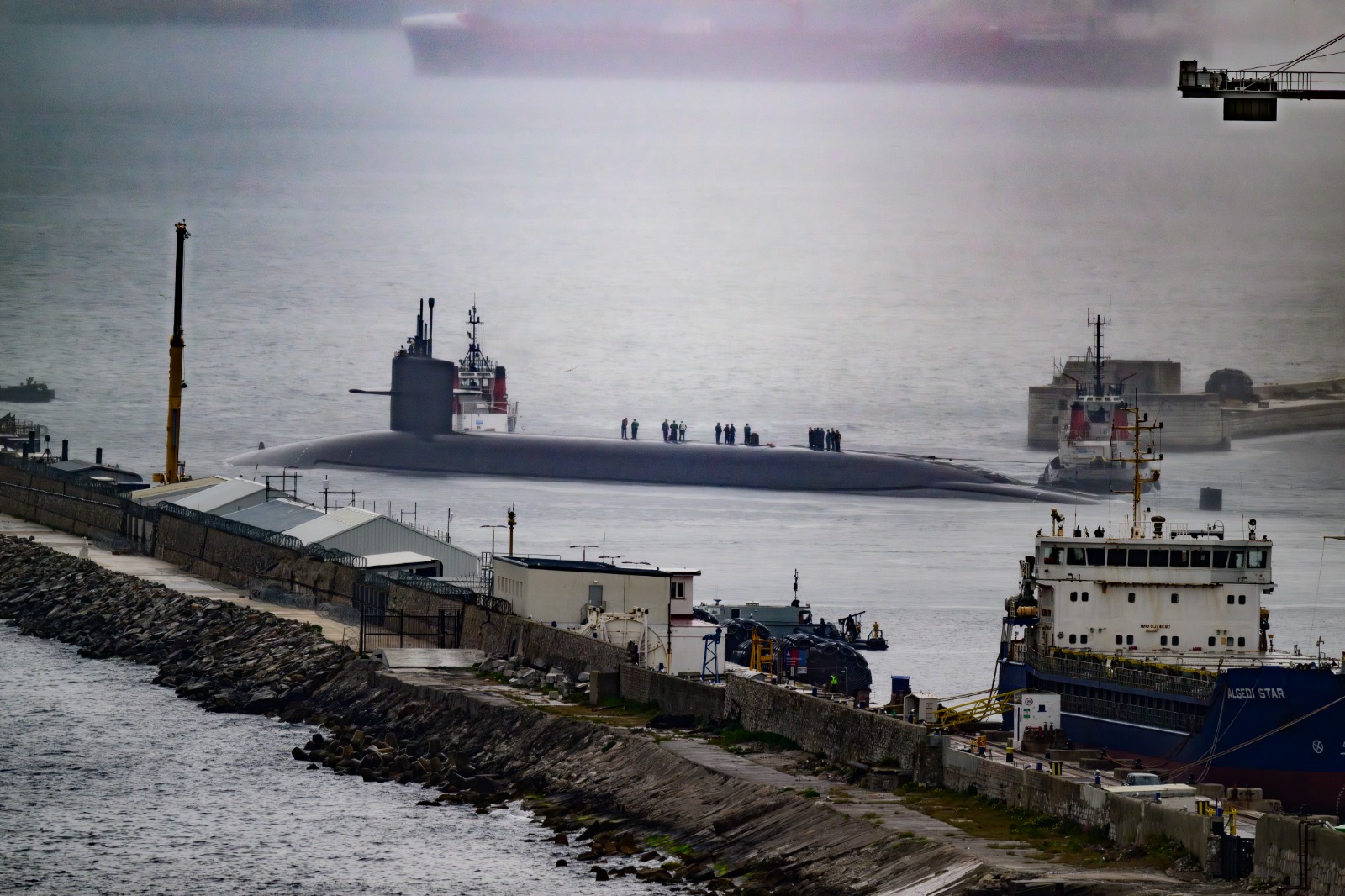
Both stopped in Gibraltar for logistical support, signalling not just military capability but also the strategic importance of the UK’s base at the gateway between the Atlantic and the Mediterranean, overlooking the Strait of Gibraltar, another of the world’s vital maritime chokepoints.
Mr Carns, a former special forces commander who completed five combat tours in Afghanistan, is no stranger to Gibraltar, having been here many times during his military career.
“The Rock for generations has been a pivotal part of our maritime strategy, and now it's a pivotal part of NATO's strategy as well,” he said.
“And you've seen US ships come in, British ships come in to resupply, restock, and then move east and west of the entrance of the Mediterranean.”
“I think it will continue to be so for a long time to come.”
“And I suppose my point would be thank all those in Gibraltar but also thank the Spanish as well as we move towards the treaty, hopefully later on this year.”
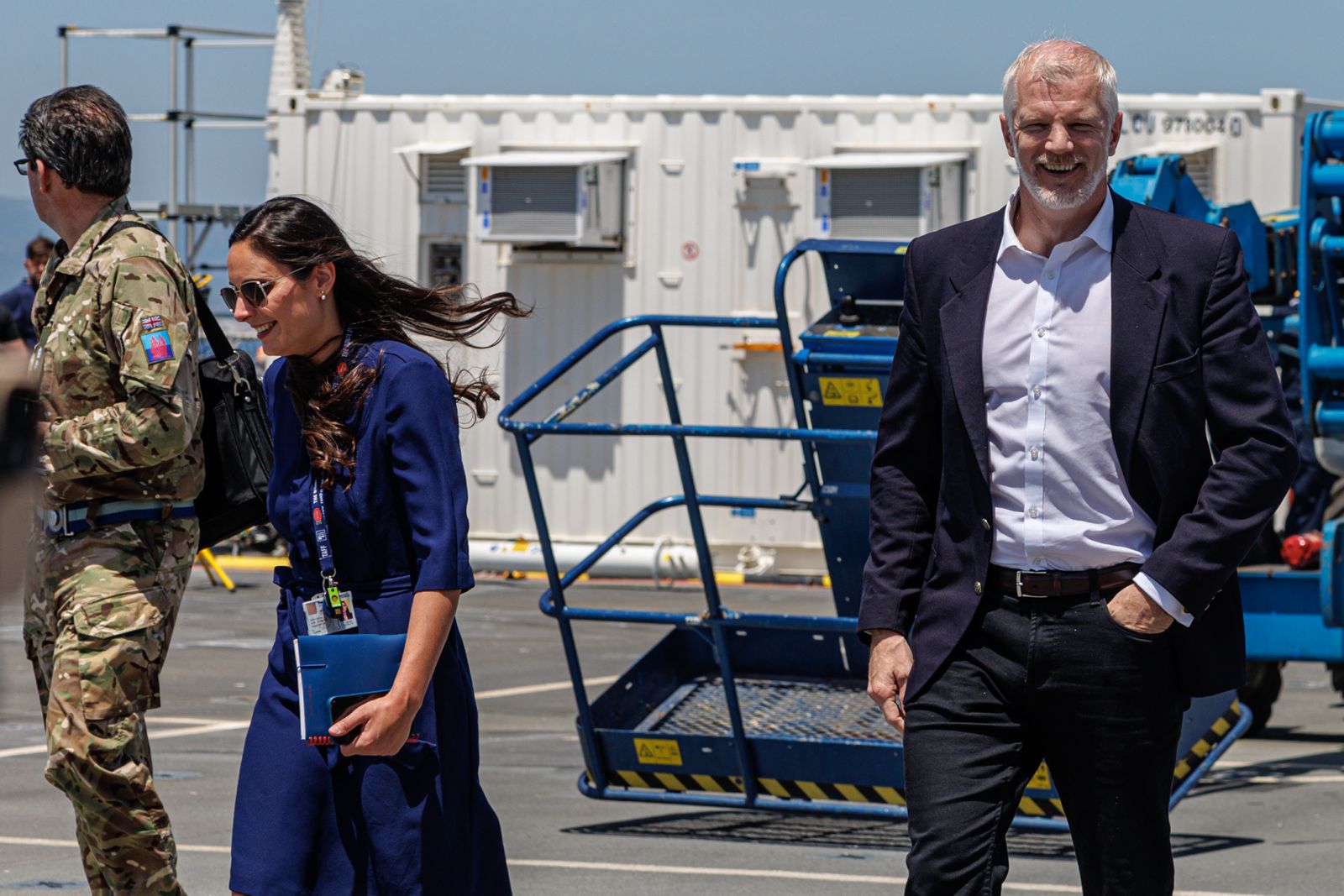
Mr Carns, whose name has been floated as a potential contender in any Labour leadership contest to replace Prime Minister Sir Keir Starmer, said the relationship between the UK and Spanish armed forces was important and that the treaty, once in place, would strengthen that further.
“The sovereignty of Gibraltar is not under question, but we've got to accept that we have a relationship with the Spanish and I think it's moving forward in a really positive direction,” he said.
“And that should provide peace of mind to those in Gibraltar and of course, those in Spain and importantly us in the UK as well.”
While he did not go into any detail, Mr Carns said “there are always plans for investment here in Gibraltar” as the UK reviews its defence spending plans.
“It’s one of the most critical overseas territories,” he added, offering words of praise too for the “hugely effective” Royal Gibraltar Regiment, whose soldiers had left him “really impressed”.
HORMUZ MISSION
Mr Carns was accompanied on the visit to RFA Lymes by a small group of reporters including from major US outlets such as the New York Times and the Associated Press, the latter a newswire agency that most US media subscribe to.
US President Donald Trump has been scathing over Britain’s reluctance to be drawn into the war, accusing Sir Keir Starmer of being weak and deriding the Royal Navy.
The Prime Minister refused to give the US free rein in its use of British military bases to carry out attacks against Iran, with permission limited to defensive strikes on missile sites.
There have also been tensions over the response of the UK and other countries to the crisis in the Strait of Hormuz, which was open to shipping prior to the US and Israel offensive against Iran.
Tehran’s stranglehold on the Gulf waterway has shocked economies around the world and seen a spike in oil prices.
Washington has previously argued Europe needs the sea route “much more than we do” and ensuring free transit of vessels was “much more their fight than ours”.
The plans being led by Britain and France to protect shipping in the strait once hostilities end have also faced US criticism.
The proposed future defensive mission would see the UK deploy the autonomous mine-hunting equipment on display in Gibraltar, as well as anti-drone systems and Typhoon jets, alongside the destroyer HMS Dragon.
On Friday, it was clear that the trip to Gibraltar was aimed at least in part to counter US criticism and signal the UK’s capabilities and commitment.
“Which other country can pull together 40 nations and come up with a solution to deal with a complex problem that we couldn’t predict because we weren’t involved?” the Armed Forces minister told reporters.
RFA Lyme Bay’s mission, should it be deployed to the Middle East as everyone expects, will be to work alongside allies to clear the Strait of Hormuz of mines that can be rocket-propelled, cabled or sitting on the seabed waiting be triggered by sound, movement or light.
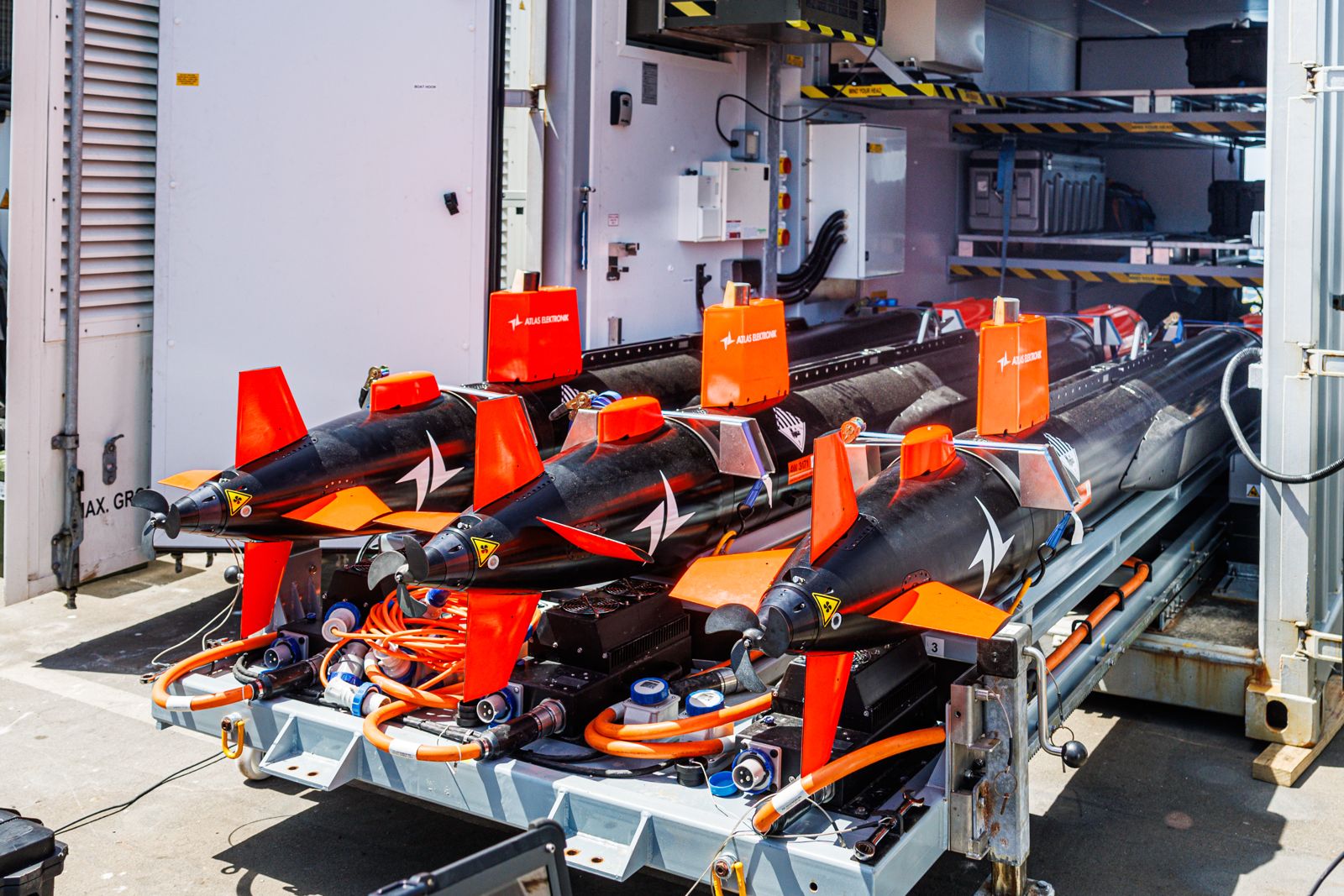
The autonomous systems on display on RFA Lyme Bay’s deck can scan the seabed and the water with sonar in about half the time it takes for a crewed vessel to enter and map potential dangers.
The sea drones equipped with sonar produce a picture of objects under the water that can be used to identify potential mines that can later be analysed in detail with advanced acoustic systems and cameras.
Some of the systems on the RFA Lyme Bay can be loaded onto smaller vessels that can be launched and piloted autonomously from the ship, which acts as a mother ship as it waits outside any potential minefield.
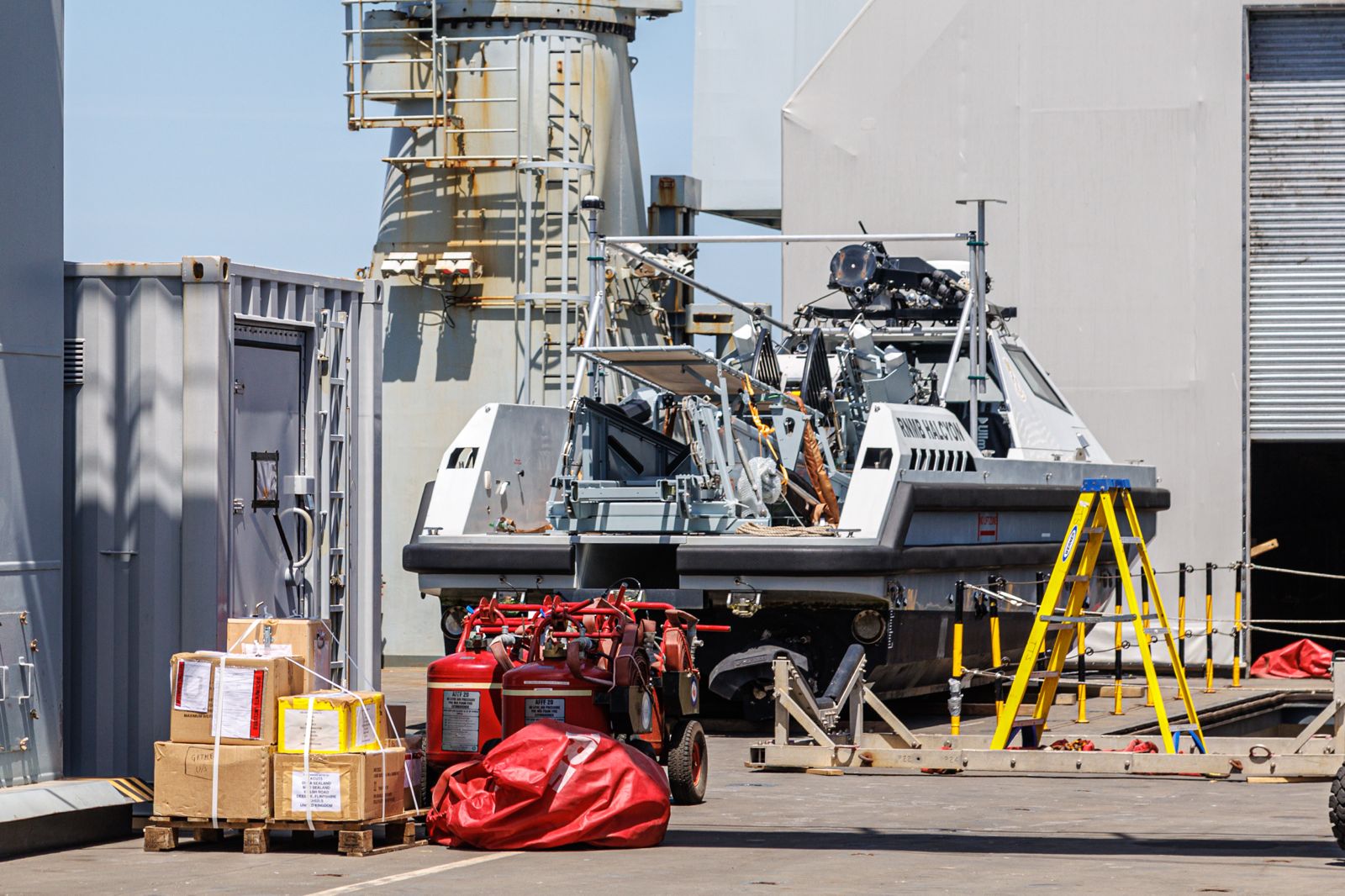
“It allows us to remove personnel from the minefield,” said Lieutenant Connor, one of the Royal Navy specialists who will operate the drones.
This hybrid operation reduces risk to navy personnel as they carry out their dangerous task, although not entirely.
Once a mine has been located, a diver with explosives normally places a charge on the mine before swimming away to detonate it.
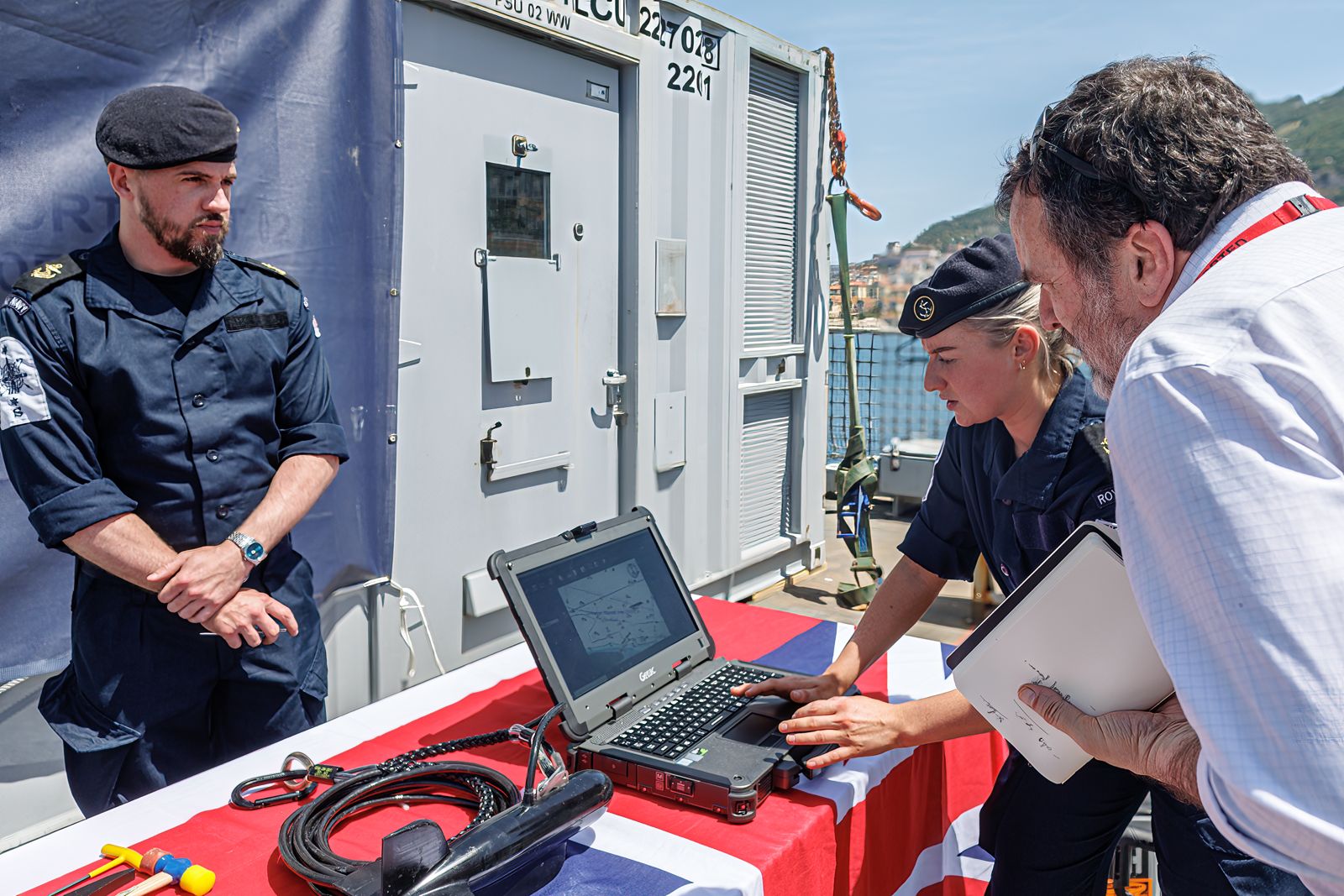
But the Royal Navy team on RFA Lyme Bay will also test a remotely operated vehicle able to place a charge by a mine before setting it off.
Mr Carns said commercial shipping companies required “absolute certainty” before vessels could start to transit the strait freely again.
“That’s what this capability will provide,” he said.
Most Read
Govt raises concerns with Taxi Association over weekend service outage
Fri 23rd Oct, 2026
ESG backs petition calling for full scrutiny of proposed Pelagos data centre
Fri 23rd Oct, 2026
Hospital capacity rises to 98%, but Director General assures no risk to patients
Thu 22nd Oct, 2026

Today's Paper
24th May 2026
Read our latest newspaper by downloading our app from the link below.


