Gib National Archives where our story has a home… Today, 80 years at the UN


I sometimes wonder how many people around the world have grown up knowing about the United Nations? At the very least aware that such an organisation exists. Well, for generations of Gibraltarians the United Nations has formed a part of their vocabulary from childhood. This is where our leaders since the 1960s have been frequent visitors –as they have so often put forward Gibraltar’s case to the Committee of 24 (the Special Committee on Decolonisation) in New York, and at the 4th Committee as well.
Today Alice’s Table steps into the Gibraltar National Archives – a place I can often be found looking through archival material. But more about that later. The other day I was asked if anyone – any member of the public - could carry out research there? The answer is yes. I have come across many people over the years, especially those interested in their own family histories trying to find details of their ancestors and piecing together their individual stories. It is a friendly place where you will always find help; a little cramped and hot in the summer but where there is treasure to be found.
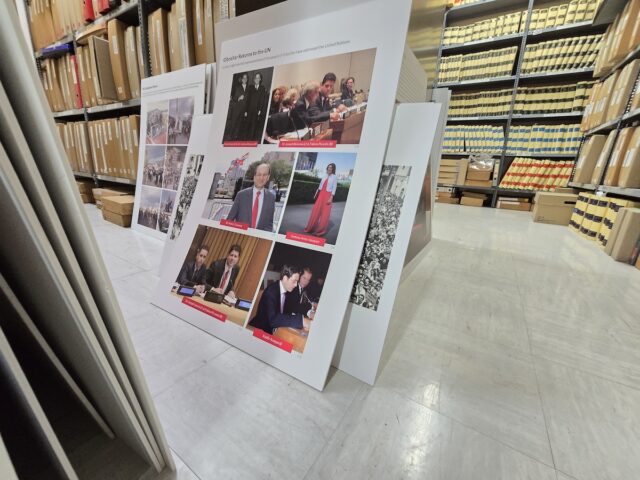
In the past year staff at the Gibraltar National Archives have been working towards an exhibition (which opened this week at the Gibraltar Fine Art Gallery) marking 80 years since Gibraltar was placed on the UN list of Non-Self-Governing Territories. Titled “Gibraltar at the United Nations 1946–2026” it features archival records, photographs, digitised historical UN film reels, and Sir Joshua Hassan’s speech notes and audio from his UN submissions.
You may recall that some months back the team at the archives called on the community to see if anyone owned any material or personal recollections in relation to the United Nations between 1946 and 2026.
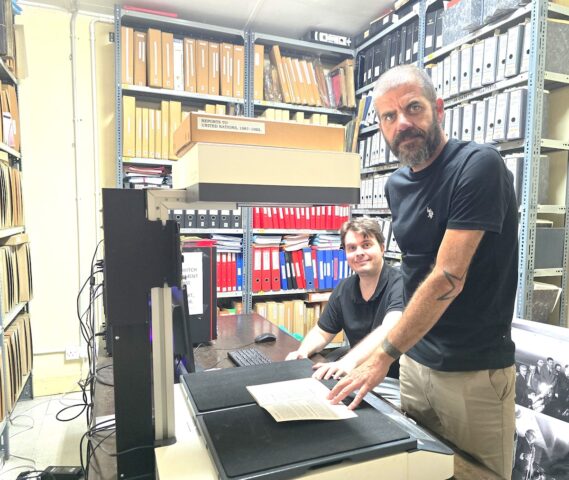
At Alice’s Table this week are Government Archivist Gerry Wood and Assistant Archivist Marcelino Linares – having seen them at work (as I conduct my own research on other matters) I wanted to know how they had gone about this exhibition in giving an opportunity to visitors to reflect on Gibraltar’s voice at the UN and how it continues to shape the future.
But I also wanted to know more about the Archives and the people who use them.
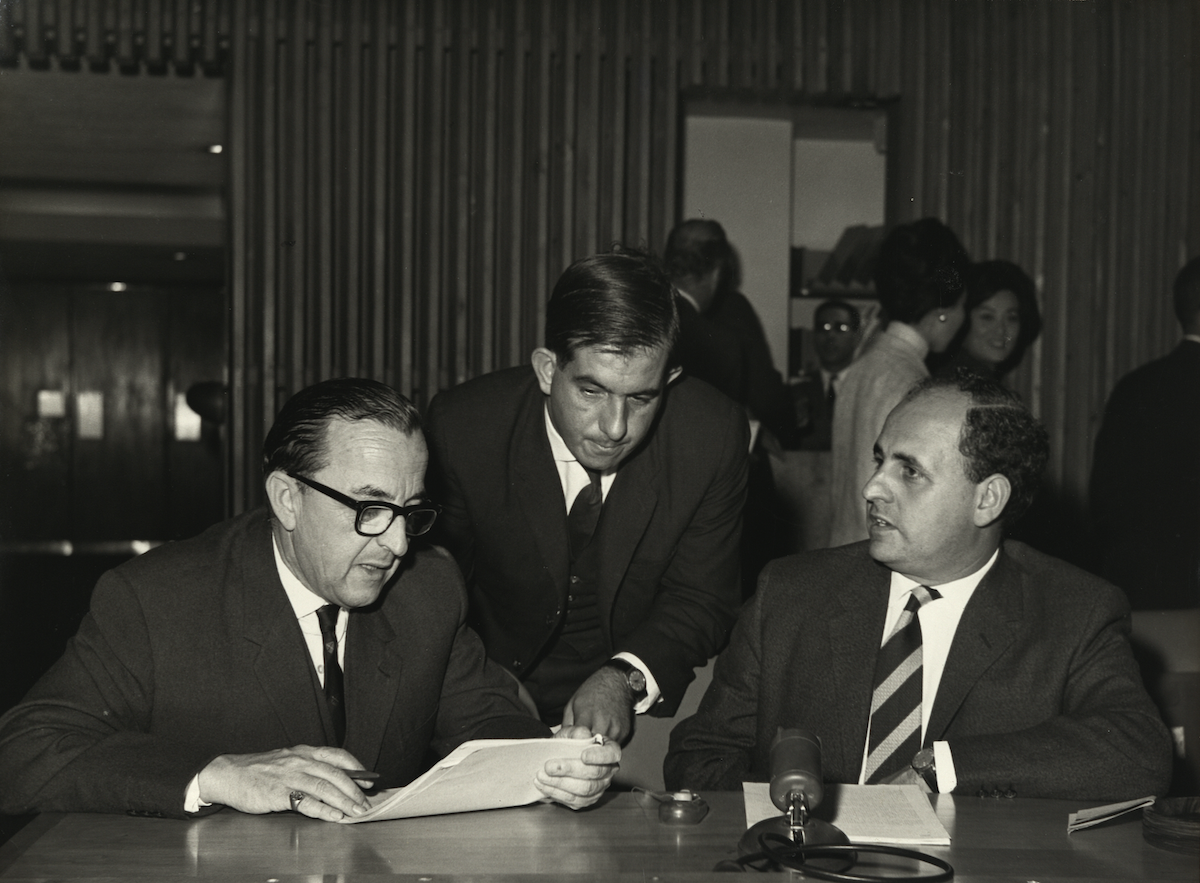
Sir Joshua Hassan and Peter Isola first travelled to New York in 1963, and a second time in 1964. In 1992 it was Sir Joe Bossano, as Chief Minister, who restarted the tradition of addressing the UN every year. And all Chief Ministers have followed this tradition. Sir Peter Caruana stopped going to the C24 after 2008, and our present Chief Minister Fabian Picardo went back to addressing both committees. For a long time now also speaking before these committees have been the representatives of the Self -Determination Gibraltar Group, SDGG.
Right at the start Chief Minister Sir Joshua Hassan and Opposition Leader Peter Isola first addressed the UN on 19 September 1963. This would be the first time that any elected representatives of the people of Gibraltar had stated their case before the UN.
It was Deputy Chief Minister, Dr Joseph Garcia, who said recently that this exhibition told the story of Gibraltar’s 80-year journey at the United Nations.
“A story of resilience, democratic expression and the determination of the Gibraltarian people to have their voice heard.”
But perhaps, for me, the most important thing he said was that this story, like so many others, does not just belong in official records or government archives. They belong to the whole community.
And this is the thing about the Gibraltar National Archives they really belong to all of us – and the archives hold our stories. No, let me rephrase that – the archives hold many of our stories.
I cannot tell you the times (and I have been a frequent visitor since the days of my good friend Tommy Finlayson when he was then Government Archivist) I have requested a document which has taken me down numerous paths and which in the end has seen me walk out the door with a whole lot of other stories which I have then gone on to share with you. Any archive is a maze. There is so much to take in and read about – but be warned when researching any period in history it is easy to stray... there is so much we do not know… there is so much to learn. I know I very often stray because there is so much to our story that has not yet been written and calls out to you from the pages of old, often faded documents.
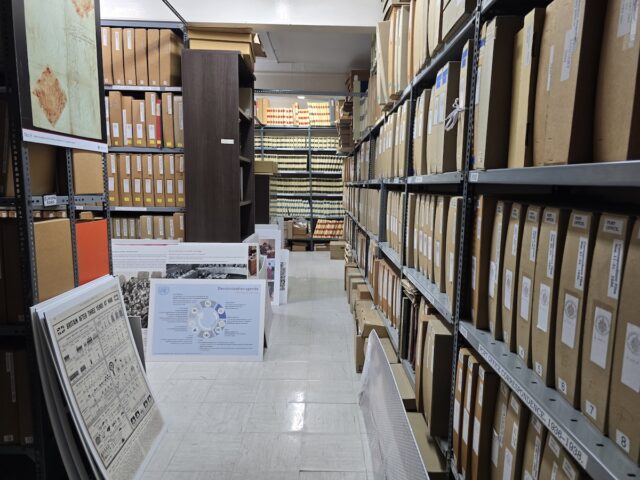
The Gibraltar National Archives were made responsible for the collection and preservation of public records as far back as 1969 in the days of the late Bill Cumming (Gibraltar’s first Government Archivist). Part of its remit was to, and is, to prepare and present our records for public access and academic and general research.
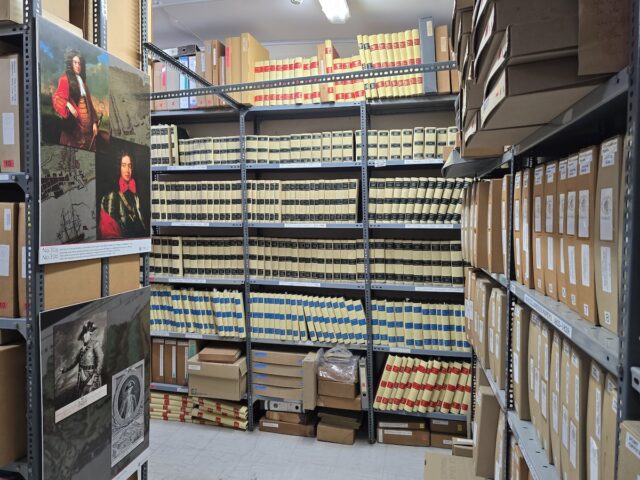
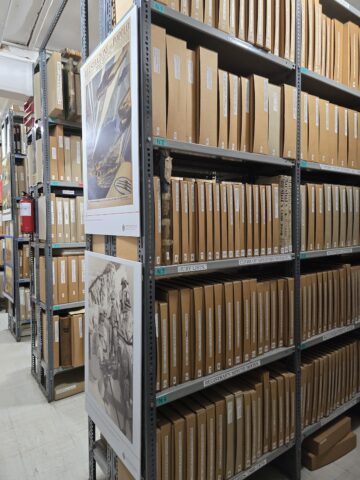
The Archives hold the documents, papers and records of the daily administration of Gibraltar - government records, official documents, correspondence, census data, newspapers, magazines, programmes and so much more looking at political, military, cultural, and every part of Gibraltar life mainly from the 18th, 19th and 20th centuries.
The oldest document however dates from 1577 in the Spanish period. The Acta del Cabildo is a letter of petition from the 15 most prominent citizens of Gibraltar at the time. It was a formal complaint of the arrival in Gibraltar of a ‘corregidor’ Don Juan de Ozeata who had taken part in numerous campaigns with the King of Spain and had his favour sending him to Gibraltar.
Government Archivist Gerry Wood says people come to research from all over the world – “also residents, people and researchers from Britain, Portugal and Spain. The research is very varied and there have been enquiries even about the weather and our climate over the years, earthquakes, and even patterns in the currents and current tides.”
He sees it the duty of the Archives and its team to offer all kinds of research to the public, to those undertaking a project or writing a book or carrying out academic research. The most common enquiries though are on genealogy (some 70% of daily enquiries). People wanting to find out about their own family history especially during the WWII evacuation; where their family was evacuated to; what ship they sailed on; when they made it back in the repatriation. In one way or another, we have a quiet obsession in knowing where we all come from… and where our stories begin.
Marcelino Linares tells me enquiries arrive at the Archive daily – and can build to some 1,000 on an annual basis. These come via emails or people just turning up at their doorstep to access the files physically.
“Some people have even been known to come on visiting cruise ships. There is undoubtedly a lot of interest from many people whose ancestors have been connected to Gibraltar and not just us the residents. Our main aim is to be as helpful and as accommodating as possible in aiding everyone’s research,” he points out.
Digitisation is the main ongoing project at the Archives with the area of preservation being a top priority as well.
Mr Wood acknowledges that “the continuing digitisation programmer of the material found in the Archives is paramount as it provides not just the Archives but researchers alike with an enhanced accessibility of what is housed here. And it also means that in presenting a digitised image the physical document is safeguarded.”
Presently, the digitisation of the old newspapers is a project in the making with the old Gibraltar Chronicle’s happening daily – this project in the hands of Mr Linares who gets help from regular volunteers. Their large scanner on site (donated by the Parasol Foundation) is one of the most important tools on the premises which is constantly in use.
“We have other important collections which are very valuable in terms of historical research which are now also digitised. Our aim is to enhance accessibility to researchers and the public alike. These scanners are crucial to our work… if we had another, we could double our digitisation programme,” adds Mr Woods.
Other documents already digitised include the Heritage Journals and the old Gibraltar Directories which we so often refer to on these pages on Alice’s Table.
Mr Wood and Mr Linares both agree there is a particular niche of people who are attracted to the Archives and although accessibility to its premises is not easy you will always find people reading through old documents in its ground floor room -the reading room. The Archives are located behind The Convent in the courtyard area as part of the complex. Easy to miss and somewhat hidden “somewhat obscure” not everyone is aware where the Archives are housed.
“We are not very visible to the public and this is one of the reasons why we work on our outreach programme and organise exhibitions – so that it puts us on the map,” says Mr Linares.
Over the years there have been exhibitions on Operation Torch, the Closure of the Border, and Llanito.
Education and especially educating younger generations of Gibraltarians they both acknowledge is one of the most crucial elements of their work. Schools visit the premises regularly where they are offered the inner workings of the Archives, demonstrated the digitisation process, the conversation of papers and shown some of the oldest and most vintage documents. The team also attend schools and give lectures on any given topic children may be working on in schools – the main topics are normally on WWI, WWII and the Evacuation.
This latest exhibition organised by the Gibraltar National Archives marking the 80th anniversary of Gibraltar’s listing as a Non-Self-Governing Territory at the United Nations in 1946 will remain on display until the beginning of October. The exhibition explores Gibraltar’s long-standing relationship with the United Nations, the development of Gibraltar’s political voice on the international stage, and the generations of Gibraltarians who have lived through, contributed to, and carried forward this important chapter of local history.
A recent Government press release said how since 1946, Gibraltar’s story at the United Nations has been one of “endurance, democratic expression and the continuing assertion of the wishes of its people. From the post-war years, through the closed frontier generation, to the present day, Gibraltar’s journey before the United Nations has been shaped not only by Governments and public representatives, but also by the lived experiences of ordinary Gibraltarians”.
The gathering of material from the Gibraltar National Archives and contacting the United Nations and other sources began a year ago. The Archives worked on another UN exhibition in the past, and this meant they just needed to add to the overall story with newly collected pieces to make it visually attractive and an enjoyable experience for the public. But even with some of the pieces already in place the work has been massive, and the team have pulled together new images not seen for many years. There is also exclusive footage from inside the UN dating back to 1963. The exhibition is in three sections: the story of how Gibraltar came to be listed, the return from the UN of Hassan and Isola, and the modern approach to the United Nations.
The importance of this exhibition is Gibraltar’s role on an international stage, explains Mr Linares, Gibraltar until this moment had not had a voice on a global stage.
“You could say it was the beginning of Gibraltar’s road to self-determination and putting the case forward with Gibraltar players. That was why there was a lot of jubilation at the time because when Hassan and Isola came back in 1963 and 1964 it felt like finally someone was listening to Gibraltar. In those days there was no knowing what could happen. In the exhibition we have wanted to put forward that story and the narrative of how it all happened and unravelled.
“The UN is very relevant to local identity. I feel it is important to know what’s going on because every year we are still represented and the Chief Minister speaks on our behalf.”
One important factor points out Mr Wood is our youth – “this exhibition is also aimed at them so that they are made aware of our history, and particularly our history with the United Nations. It is vital they know how it came about and why we are still represented at the UN.
“This is the very fabric of our identity and who we are as Gibraltarians and where we have come from. This has been a constant struggle, and the youth must know about this – and the efforts made by our leaders in taking it forward. In 1963 it brought hope for the people of Gibraltar… we just did not know how slow the road would be. But it shows our determination and resilience as a people.”
All the schools have been invited to attend this year’s exhibition with tours already in hand.
Once again, a booklet has been produced where you can follow the panels and images used in the exhibition.
Archivist Gerry Woods, reflecting on displaying this exhibition, spoke of the very great responsibility which sits on their shoulders at the Archives - to put the story across so that everyone understands it and learns from it.
“It is a very big responsibility for the Archives when you are tasked with an outreach event of this nature. One which reflects your town, your city, your people, your culture, your identity; you want to get it right so that everyone takes something from it, so that they understand the story, and for everyone to enjoy it as well.”
As we re-enter the doors of the Archives, I am reminded that there is a history for everyone within. Anyone can use the Archives to find their own history or to discover a new period in history.
Both Archivist and Assistant Archivist are unanimous in their approach: “We want to invite everyone to come to the Archives and carry out their own research. There is a history for every community on the Rock. Every community is represented in these Archives in some way, shape or form. Whether it is in the census or documents, every faction of Gibraltar’s community is represented.”
Another reminder that the Gibraltar National Archives may hold many official papers that will please academics but there are also the stories of the people who helped to build this community, which reveal their achievements, tell us about their aspirations, and reveal the spirit of this community... undoubtedly the Archives are a place where our history comes alive.
The “Gibraltar at the United Nations 1946–2026” is until 2 October at the Fine Arts Gallery.