


GibSams conference highlights workplace wellbeing


The GibSams Wellbeing at Work Conference took place on the Sunborn on Thursday morning with an interaction keynote address from Fanny Lam-Lacoste and five different breakout sessions as well as a panel discussion.
The conference was hosted by Marlene Dalli, Policy Development Officer Ministry of Equality, Employment.
Giving the welcome address was GibSams Chair Peter Montegriffo who called the conference “a tremendous forum for dialogue between ourselves, for the sharing of experiences and for continuing support and engagement within this growing ecosystem”.
He thanked corporate sponsors whose generosity “allows us to build from year to year” also noting that this support “is never forgotten”.
Organising such an event, he said, “is no mean task”, and he paid tribute to those who carried out the work, including the volunteers at GibSams and GibSilver.
“Without our volunteers, nothing that we do will be possible,” he said, adding that the organisation spends “a lot of time thinking about how we can make sure the work they do is properly valued and properly recognised.”
He recalled a discussion over dinner the previous evening with Ms Lam-Lacoste which made “clear to me that the challenges faced are not unique to us in Gibraltar… They are seen in Asia, they’re seen in Africa, they’re seen in all geographies.”
He added that change in the corporate and employment space was described as “a constant”, with the central question being how organisations and individuals can navigate that change “to produce better outcomes” for both.
Artificial intelligence was cited as a defining factor in this shifting landscape, framed both as a “huge opportunity” and a “potential problem” for how societies structure work and value human contribution.
He also noted that we live in an “increasingly competitive world with threats to what human beings do”, and that AI represents both a “huge opportunity, but let’s face it, a potential problem about how we structure our work and how we value what individual human beings do.”
He acknowledged that a safe, supportive workplace is now widely accepted as a basic standard, but that this should be only the starting point
“It should be our ambition that the workplace, our workplace, is much more than just being somewhere which supports and which makes people feel safe,” he said.
Instead, the goal should be to create environments “which nurture, release and truly fulfil an individual’s ambition and talents” and “truly empower them to genuinely develop their full potential.”
Work, he said should be “an intrinsic part of what people value in their lives, not something that is done as an adjunct to other priorities”, but “a central part of what defines us and gives us value.”
He acknowledged various dignitaries present, including the Deputy Governor, Marc Holland, the Mayor Nicky Guerrero, members of the GSD Opposition, Atrish Sanchez, Joelle Ladislaus and Roy Clinton, and the Minister for Employment, Christian Santos, who also addressed the attendees.
In doing so Mr Santos thanked the team at GibSams for their ongoing work in promoting community well-being. He noted that well-being was a broad concept spanning home, family, relationships and, crucially, the workplace, where most people spend the majority of their time.
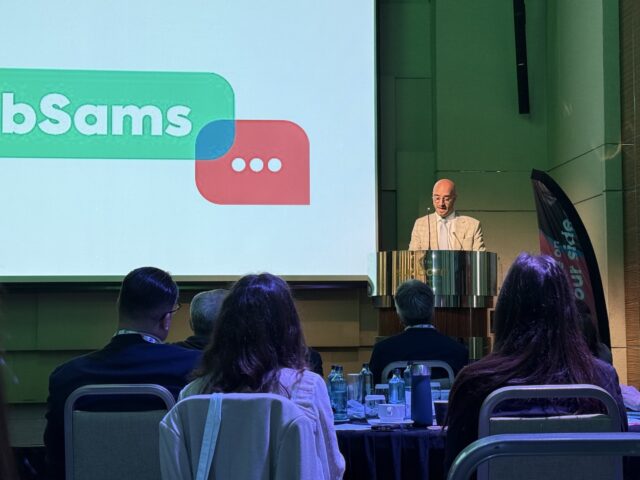
He spoke about the increasing strain of work-life balance, noting that many professionals are finding that work gradually encroaches on family life.
“We spend time at work, thinking about work, communicating about work, and sometimes it's hard to maintain a healthy work life balance,” he said.
Mr Santos also said it was up to individuals to monitor their own well-being, recognise when to step back, and seek help when needed. But, in addition, colleagues play a vital role in spotting when “something is not quite right” and in helping to restore balance.
From a business perspective, he said that a happy and healthy workforce is more efficient, engaged and stronger ambassadors for their organisations.
Employers were urged to listen carefully to their staff, watch for signs of burnout, and foster a culture in which people feel safe to speak up for themselves and for others.
“Happy, healthy workers make better workers, and once they leave work, they make a better community,” he said.
Following Mr Santos’ presentation was the first of two breakout sessions.
These were, Fostering Employee Engagement in the Workplace with Sadie Negron, Higher Executive Officer at the Government of Gibraltar and Kyle Bear, Human Resources practitioner also with the Government.
Introduction to Neurodiversity in the Workplace by Nicole Buckley, CEO and co-founder of PossAbilities Charity.
How Can We Unite Generations for a Healthier Workplace? By Alexandra Buhagiar, HR and Administration Manager, GRA. Beyond the Numbers: Measuring What Really Matters in Workplace Wellbeing by Aleks Girs, HR tech and People Lead. And Beyond Perks: The Real ROI of Employee Wellbeing by Fiona Young, from Ramparts.
In the Introduction to Neurodiversity breakout session Ms Buckley discussed neurodiversity, emphasising it encompasses various brain functions and behaviours, not just neurological differences.
She highlighted common neurodivergent conditions like ADHD, autism, and dyslexia, and stressed the importance of understanding and accommodating these differences in the workplace.
She also shared her personal experience with ADHD and the need for sensory accommodations, as did one member of the audience with his neurodiversity.
She also addressed misconceptions about conditions such as OCD or schizophrenia, and stressed the significance of using respectful language.
In the Beyond the Numbers: Measuring What Really Matters in Workplace Wellbeing session, the discussion focused on the discrepancy between high engagement scores and employee well-being, highlighting the issue of burnout.
Metrics such as productivity, absenteeism, and emotional levels were discussed, with only 20% of the global workforce engaged.
Tools like Microsoft Viva Insights and AI-driven weekly check-ins were suggested to measure emotional and social levels.
The emphasise on the importance of measuring pressure and stability, noting that 83% of workers globally struggle with burnout, was also discussed amongst the breakout attendees, as was the need for cultural changes, leadership transparency, and frequent employee check-ins was suggested to address these issues effectively.
The keynote speaker Fanny Lam-Lacoste is a change and transformation consultant, facilitator, and convener with over 20 years of experience partnering with organisations across Europe and Asia.
She has worked independently and in collaboration with boutique consulting firms, helping client teams-from C-suite executives to shop-floor staff-navigate complex change, improve processes, and strengthen collaboration.
Ms Lam-Lacoste highlighted that well-being often stems from how we relate to each other rather than programs or strategies.
She had people separate into small groups and everyone was given the same question, with three different questions being asked over the course of her presentation.
These were “What’s the crossroads you are facing at this stage of your life?”,
“What have I contributed to the situation that I’m complaining about?” and “What gifts did you receive in the conversation that you just had a few minutes ago?”
She encouraged deep, personal conversations to foster high-impact connections.
The panel discussion was moderated by Albert Isola a former Government Minister but presently a Senior Partner at Isolas. Joining him onstage was Angelo Cerisola, Care Agency, Zoe Trinidad, HR Director BVGroup and Gerry Kelly, Group CEO, Sovereign Group.
They discussed the balance between profit, productivity, and well-being in various sectors.
Between them they emphasised the importance of private ownership and honest communication with stakeholders, and the need for constant communication and policy alignment with organisational values.
The impact of COVID-19 on remote work was discussed, with a focus on maintaining personal connections with people to make sure they are ok and you can spot if things are different for them, as you would in person.
The role of technology and AI was noted, with a consensus that it brings both a challenge and an improvement.
The conversation concluded with the importance of leadership, open communication, and creating a culture that supports employee well-being.
Giving the closing speech was Kerstin Andlaw the GibSams Wellbeing trustee.
“Let's take a breath, and maybe even have a little look around room, because we spend a lot of time connecting with each other. And what we spend doing today together, we spend time thinking together, listening to each other, challenging each other and being challenged, perhaps,” she said.
“And that is wellbeing at work, not the idea of it, but the actual practice of wellbeing.”
“So well being in the workplace is shared. It lives in space between people, employees and the organisation, with each carrying different responsibilities for it, coming together to create the conditions for people and the organisation to flourish collectively.”
She added that Ms Lam-Lacoste helped us realise that wellbeing and change starts with connection and the quality of our conversations, the quality of our questions and our curiosity to listen.
She also noted that the panel touched on AI as a big part of the change we are experiencing right now, and what this technology is asking of us right now.
“And I think it again, echoed what we already been talking about, hearing about in the keynote and in the breakout sessions, is to really hone in on being human, being truly present and in relationship with each other, so that we can shape the future together and deliberately,” she said.


