


Parliament hears whistleblower claims of past misconduct in RGP


Statements made by police whistleblowers alleging misconduct including criminality in the Royal Gibraltar Police under past senior management teams were set out in Parliament on Wednesday by Sir Joe Bossano.
In a tense session, Sir Joe described allegations made by the officers in statements that had been submitted to the McGrail Inquiry but were regarded by its chairman, Sir Peter Openshaw, as not relevant to his core task, which was to establish the reasons and circumstances surrounding the early retirement of former police Commissioner Ian McGrail.
Sir Joe insisted the content of the statements was important to understanding the wider context of the matters reviewed by the Inquiry.
The claims in the whistleblower statements had been strongly denied by Mr McGrail, who alleged they had been submitted in return for benefits including jobs in other areas of public service.
But Sir Joe said whistleblower legislation was designed to protect those making protected statements, adding claims they had been “bribed” had been investigated by an external senior police officer, who decided there was not enough evidence to meet the criminal threshold for an offence.
That decision was later validated by the UK National Crime Agency and a London King’s Counsel.
Among the allegations in the statements were claims that a covert device had been found in an interview room in New Mole House used by lawyers to meet their clients and that senior managers had blocked any investigation; that GPS trackers were fitted to cars and vehicles in Gibraltar, including by Spanish officers, despite no legal framework or judicial oversight; that RGP officers had been sent to Spain despite raising concerns about safety and jurisdiction; that a vehicle stolen from a retired Commissioner was recovered using an informant in the tobacco smuggling world; that police protection officers guarding the Chief Minister had been asked to report on his movements and meetings; and that a complainant in a police investigation had received preferential treatment.
Sir Joe stressed that the claims related to the force in past years under “previous senior management teams” and not to the current RGP or its Commissioner Owain Richards.
But he left no doubt as to the gravity of what was contained in the protected disclosures, which he said included some that were not part of the whistleblower statements made in the context of the McGrail Inquiry.
He added they included statements from some officers who were at higher ranks in the RGP and had many years of service.
“I don’t think you can have something more serious than a situation where there are criminal offences committed in the institution that we finance in this Parliament to stop criminality,” Sir Joe said.
Sir Joe said the 2006 Constitution had entrusted the police to operate to “the highest standards of impartiality” by ensuring the law was applied equally to all.
He said that trust had been “betrayed”.
“It seems as if what had developed and had been created in the RGP was as if they were not part of Gibraltar,” Sir Joe said.
“That is, they're not subject to the same conduct and behaviour that the rest of us have.”
And he added: “This is something that clearly has been happening under our noses.”
“I don't know if it goes as far back as the previous administration, but I know that it has been like a cancer that is not treated and spreads.”
“And if there is a cancer in our society, we in this House have got to cure it and we have to make sure that it doesn’t come back.”
The Opposition acknowledged the serious nature of the claims in the statements but said they should be investigated by the relevant authorities, adding that raising them in Parliament under parliamentary privilege threatened to undermine Gibraltar’s institutions and constitutional protections.
The GSD also questioned why they were being brought to light now and what steps the Government had taken when it first learnt of the allegations, adding that to make them public now appeared to be a smokescreen to deflect from the serious findings against the Chief Minister contained in the McGrail Inquiry report.
Sir Joe had first tried to raise the substance of the protected statements during a debate on Tuesday on the McGrail Inquiry, but he was stopped by Speaker Karen Ramagge following an intervention by Keith Azopardi, the Leader of the Opposition.
He responded by tabling a motion specifically asking for the content of the reports to be set out in Parliament.
Addressing Parliament on the motion, Sir Joe said “most if not all” the protected disclosures related to the “top echelon” at the force.
Sir Joe told Parliament he had seen the impact on officers who raised concerns, saying he had spoken to many in his office “who were a nervous wreck” and who “left eventually on medical grounds”.
He said those officers had described fears about retaliation.
“I have had in my office police officers of many years, some of whom have not made disclosures, who were a nervous wreck, who left eventually on medical grounds, who were saying to me, look, I am scared to go back to work because these people there are capable of putting drugs in my locker and then finding the drugs and ruining me,” he told Parliament.
Sir Joe claimed that when some had raised issues internally, they said they were told to “look the other way and shut up”.
Sir Joe said he believed the disclosures, taken together, described “a sustained and deeply troubling pattern of alleged misconduct spanning many years, multiple operational demands and successive senior management teams”.
“It's not that they wanted to leave the RGP, it's that they could no longer continue because they were people who genuinely believe in the profession that they had entered,” he told Parliament.
“They do not concern isolated errors of judgment.”
He told Parliament that the disclosures pointed to a situation where the law was applied differently “depending who you are”.
“We have to make sure that what had been happening in the RGP in recent years never ever happens again,” he said.
Sir Joe said he hoped MPs would want “that we get to the truth and nothing but the truth, and that we apply the law equally to everybody”.
COVERT RECORDING
Sir Joe raised allegations made by whistleblowers relating to covert recording equipment discovered in October 2015 in a police interview room “commonly known as the cave”, which he said was used for suspect interviews and for “confidential consultations between detainees and their legal representation”.
He said several whistleblowers alleged that “a covert pinhole camera and microphone was secretly installed inside an electrical box within the interview room wall”, adding the device was “capable of recording both sound and images”.
He said it was further alleged that the device was described as “having been used or intended to be used to monitor defence lawyers and their clients”.
“If true, this represents an exceptionally grave abuse of power and a direct attack on the fundamental constitutional right to a fair trial,” he told Parliament.
Gibraltar had no legal framework authorising such covert surveillance, particularly within the police station, and no authority permitting the interception of legally privileged lawyer client communications, Parliament was told.
He said the whistleblowers alleged the device was “discovered accidentally” by officers who “immediately recognised its illegality”.
Senior officers were informed but their response was “to suppress the matter”, Sir Joe said.
Sir Joe said the protected disclosures alleged the senior officer in the case, Mr McGrail, “forcibly removed the device from an exhibit bag, discarded the bag and ordered that no written record be created”.
He said officers were instructed not to document the discovery or escalate it and that this conduct was alleged to amount to “deliberate suppression of evidence which can amount to perversion of the course of justice”.
“Senior management are alleged to have ignored the issue, discouraged further inquiry, allowed the organisation to carry on as if nothing had occurred,” he said.
Sir Joe said he was not a lawyer but raised the issue of potential miscarriages of justice.
“I mean, what happens with those convictions when this is discovered?” he said.
“How is that redressed?”
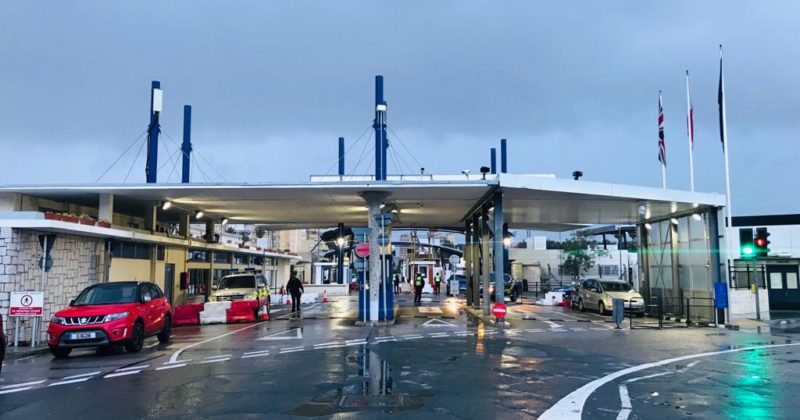
Archive image of the frontier. Photo by Johnny Bugeja.
CROSSBORDER
Sir Joe said “multiple” whistleblowers had provided sworn evidence alleging a sustained pattern of “unlawful conduct” within the RGP involving the use of covert tracking devices and collaboration with foreign law enforcement agencies, mostly from Spain, conducted “outside any clear statutory framework”.
One statement alleged that “from at least 2018 onwards”, senior officers approved and facilitated the purchase of technical surveillance equipment including GPS tracking devices “despite explicit awareness that no legislation in Gibraltar exists governing their use”.
“Authorisation is alleged to have been granted informally, described internally as a carte blanche, by-passing judicial oversight, written warrants or lawful safeguards,” Sir Joe said.
“Whistleblowers state that GPS tracking devices were covertly installed on vehicles, vessels, sometimes repeatedly, without the knowledge of the individual concerned and without any clear legal authority.”
“These devices were capable of monitoring movement over extended periods and transmitting live data.”
“Officers describe being instructed to deploy or assist in this operation despite raising concern about legality and personal liability.”
“The evidence alleges that foreign law enforcement officers, particularly from Spain, were permitted to operate within Gibraltar territory and within Gibraltar police facilities.”
“This included access to police buildings, custody areas, seized vessels, sensitive data, as well as joint operations conducted without formal mutual legal assistance arrangements, judicial approval or transparency.”
Sir Joe said the whistleblowers described Spanish officers installing or removing tracking devices on vessels in Gibraltar marinas, “sometimes in public areas, creating risk to public safety and sovereignty”.
Several statements also described RGP officers being directed to cross into Spain “informally” to collect evidence, conduct searches or retrieve items “without lawful authority” and without proper recording of evidence, despite “clear safety and jurisdictional concerns”.
Some statements also described “unsanctioned surveillance” of other RGP officers, Parliament was told, alleging that some investigations were initiated for “improper purposes including retaliation”.
“Across the statements, whistleblowers consistently described a command culture in which legality was subordinated to operational expediency,” Sir Joe said.
“Officers who raised concerns were dismissed, criticised or marginalised.”
Decisions were made at senior levels “while risk and liability was pushed downwards onto the junior officers expected to comply without question”.
CLOSE PROTECTION
Other disclosures in the whistleblower statements related to the police close protection around the Chief Minister and included claims that information about “private meetings was routinely recorded and shared within the police management”.
The allegations included that “photographs taken covertly during private meetings” and records of individuals attending meetings were passed to senior officers, creating what one whistleblower described as “a surveillance-like environment around the Chief Minister rather than a protection one.”
He said one whistleblower alleged pressure on Special Branch officers to prioritise loyalty to the organisation over responsibility to the Chief Minister and that attempts were made to distance the whistleblower from the role after he resisted those practices.
Sir Joe said that according to the protected disclosure, officers were expected to report “not only on security matters but also on private meetings, conversations and movements” of the Chief Minister, something he described as “unethical” and incompatible with protection duties.
According to Sir Joe, who said he never accepted police protection when he was Chief Minister, this amounted to a Chief Minister “being spied on by the police”.
OTHER CLAIMS
Sir Joe also referred to a protected disclosure from a Detective Inspector who claimed the complainant in the Operation Delhi investigation had been given “preferential treatment”, including a meeting with former Commissioner Ian McGrail, other senior officers and a Foreign Office official during the early stages of the investigation and before any arrests.
The officer said it was the first time in 19 years of service that he had been called to the Commissioner’s office as a result of an ongoing investigation or had seen a Commissioner dealing directly or indirectly with a complainant.
Sir Joe also said the RGP had also “falsely” claimed in a press statement that the investigation relating to Gibraltar’s security system had stemmed from a complaint from Bland and the Gibraltar Government, but had failed to correct the situation when he called to say the Government had not complained.
Another incident raised by whistleblowers related to the alleged theft of a vehicle belonging to a former Commissioner who at the time was retired, Parliament was told.
The statements alleged that the Commissioner in charge at the time “set up a process” to recover the vehicle, involving using an informant involved in tobacco smuggling to find out who had stolen the vehicle and retrieve it.
The allegations included that overtime was paid to put increased police pressure on smuggling and ensure “not a packet of cigarettes moved” until the car was recovered.
The informant was “never formally registered or protected”, Parliament was told.
‘SMOKESCREEN’
In responding to Sir Joe, Keith Azopardi, the Leader of the Opposition, said the allegations should be investigated by the proper authorities and that it was “not for this House to investigate” or to decide whether criminality had occurred.
Mr Azopardi said “no one is above the law” and argued that Gibraltar’s constitutional protections and separation of powers existed “for good reason”.
“If something has happened which is wrong, it should be investigated,” he said, adding that any decision to prosecute was for prosecuting authorities.
“Let it be investigated and let the conclusions flow,” he said.
“Let their consequences be whatever they are.”
“But it is not the function of this House, because otherwise we are simply a kangaroo court.”
Mr Azopardi questioned the timing of the Government’s decision to raise the protected disclosures in Parliament, arguing it was “not a coincidence” that the matter had arisen after Tuesday’s debate on the McGrail Inquiry.
He described it as “a bit of a smokescreen” and said the Government had known about the allegations in the statements “for a long time”.
Mr Azopardi said the “pinhole camera” allegations being referred to were not new, adding the issue had been reported “many years ago” by Panorama and had also been examined in court proceedings.
He questioned whether Parliament should “second guess these things”, adding too that police Commissioner Owain Richards had recently said the Chief Minister asked him to review the investigation into the pinhole camera and that he was doing so.
Repeatedly, he questioned what steps the Government had taken in respect of the allegations.
“Apart from the use in the Inquiry, what else have they done with it?” he asked.
“If they're so shocked, why did they have to wait until [now]? Forgive me for thinking that they wanted to derail the findings or create a smokescreen.”
Mr Azopardi noted that the McGrail Inquiry chairman had considered the statements and ruled most of them irrelevant to his core task, adding the Inquiry report recorded this and also that Mr McGrail “strongly denies the allegations”, while the “government parties believe that they are true”.
He accused the Government of using the disclosures as a political device but that this risked “trashing” institutions and undermining constitutional protections.
He urged ministers to exercise power “reasonably, in a measured way, in a responsible way”.
Mr Azopardi said parliamentary privilege existed to allow members to speak freely “in the public interest” but not for “private or political interests”, describing the move as “an abuse of the parliamentary privilege”.
He said that if wrongdoing was alleged, the correct course was to give the complaints to the proper authorities to investigate and allow the matter to proceed through established processes, rather than revisiting issues “years after” in Parliament.
Power, he said, “should not be used for vendettas or to create smokescreens from your own improper action” because that is “an abuse of power”.
Mr Azopardi’s arguments were echoed by GSD MP Damon Bossino, who told Parliament the Government was using the protected disclosures to divert attention from the findings of the McGrail Inquiry report, which he said should have led to the Chief Minister’s resignation.
Mr Bossino also acknowledged the “very serious” matters being raised but argued the way they were being introduced in Parliament was political.
He described the government’s approach as “to obfuscate, to confuse and to introduce issues which are wholly and utterly irrelevant, as far as we are concerned, to the political issue at the moment”.
Mr Bossino said the Inquiry report was “a political earthquake” and argued there was “only one result”, which he said was “the resignation of the leader of the House”, meaning the Chief Minister.
He said ministers were seeking to “reopen certain issues” and to “relitigate” matters that had already been considered, including issues he said were ruled irrelevant to the Inquiry chairman’s remit.
He said Sir Joe’s motion was being used to “muddy the waters” after an “inconvenient truth” had emerged from the Inquiry.
While accepting the allegations appeared serious “on their face”, Mr Bossino said the key questions were why action was not taken earlier and why the matters were being raised now.
“Why is it that they didn’t take action at the time?” he said, adding that the issue was being raised now because it was “convenient for them in order to pursue their narrative”.
Mr Bossino said the Opposition was not seeking to block transparency but wanted the allegations investigated properly, arguing Parliament was “not a court of law” but “a political chamber”.
He accused the Government of “use and abuse of power” and said the Opposition’s position remained that serious allegations should be pursued through proper processes.
‘WORSE THAN SHOCKING’
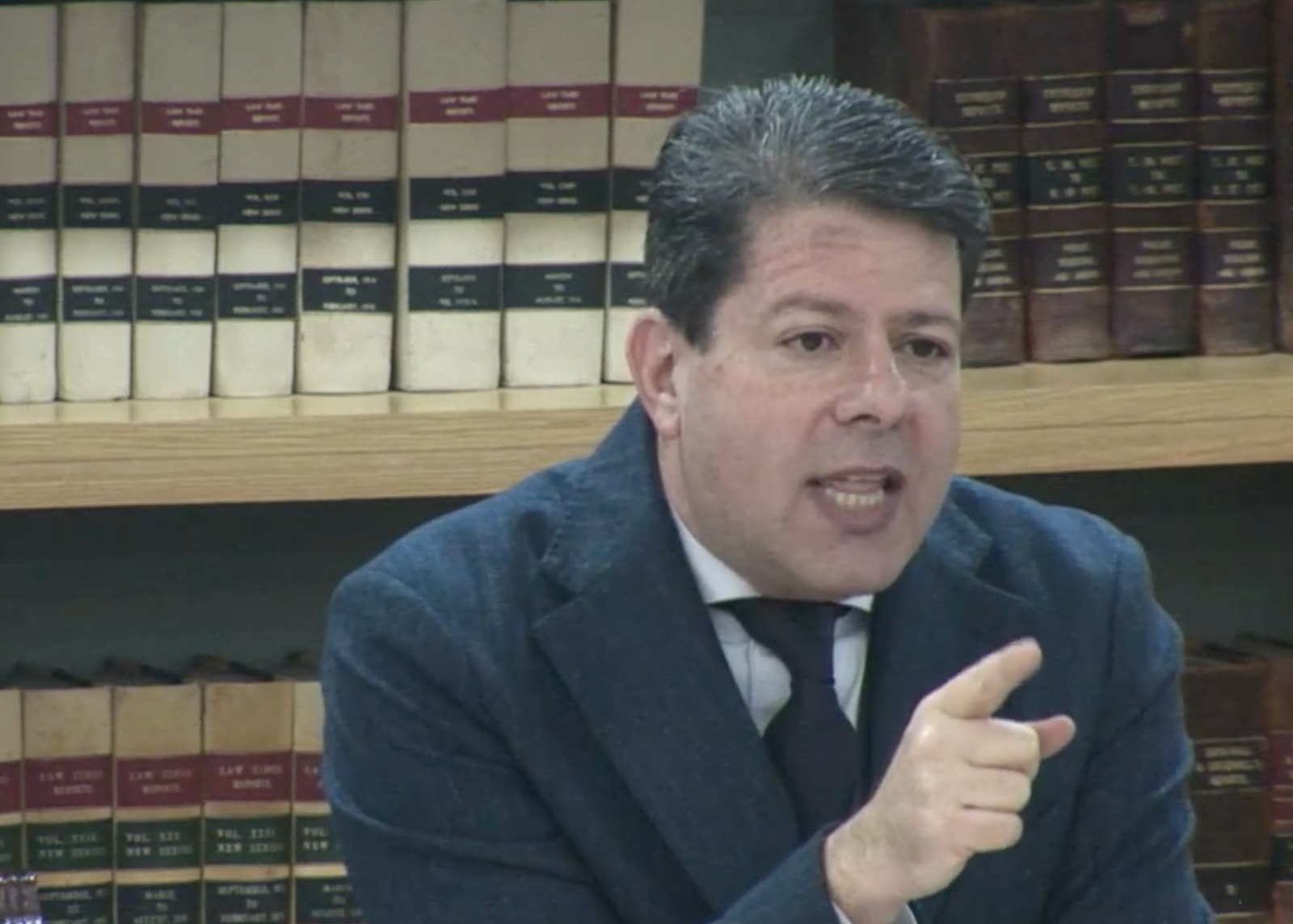
Speaking to Sir Joe’s motion, the Chief Minister told Parliament that anyone impacted by allegations of a “pinhole camera” and “listening device” at New Mole House should have redress, adding the claims potentially raised serious breaches of constitutional and European Convention rights.
Mr Picardo said the issue went beyond politics and required clarity on whether confidential discussions between defendants and lawyers had been eavesdropped on.
“The issue of the pinhole camera and the listening device is worse than shocking,” Mr Picardo said.
He said he had asked Commissioner Owain Richards to look into the matter again, arguing that the allegation had not been disproven and that earlier explanations had not provided consistent answers.
Mr Picardo also raised the question of remedy for any person whose case may have been affected, including those who may have been fined or otherwise penalised.
“If there are people in the HM prison today, if there were people at some stage in HM prison, [or] somebody has paid a fine, been subject to a penalty or further investigation as a result of that pinhole camera or whatever it was, or a derivative of that pinhole camera, we need to know and that person needs to have redress,” he said.
He said there could be “no excuse” for leaving uncertainty around allegations which, if true, would amount to serious rights breaches.
He told Parliament that he had not used statutory powers to compel a response from the Commissioner of Police, saying he had confidence he did not need to do so in order to obtain clarity.
Mr Picardo’s intervention came as he defended the decision to air the claims raised by whistleblowers and argued that the community was entitled to know about allegations of misconduct affecting police officers.
He said Parliament had heard “issues of potentially serious human rights abuses” involving police officers and “a generation of defendants and their counsel” at New Mole House.
Mr Picardo also reflected on what he said was a separate and deeply troubling episode involving alleged surveillance of him as Chief Minister.
He told Parliament that some members of his close protection team had been asked to provide intelligence to senior management within the RGP about what he was doing.
“This is before Mr McGrail and I fell out,” he said. “This is before any of those issues and not for my protection.”
Mr Picardo said his calendar was open to ministers and that he did not hide who he met, but he described the alleged request to his close protection officers as a breach of rights affecting him and others.
He said he raised the matter with the then Governor, citing the Governor’s responsibilities for internal security and the police, and told Parliament he had considered ending the use of RGP officers for his personal security.
Mr Picardo said the matter was resolved, adding that he continued to trust the close protection officers assigned to him, while portraying the alleged episode as evidence of conduct he believed required scrutiny.
Addressing GSD questions as to why the Government had not acted sooner, Mr Picardo said this was because “some things have had to wait to the end of the Inquiry”, adding that raising them while it was under way would have prompted accusations that it was trying to “poison the well of the Inquiry”.
He said Parliament should not treat allegations raised by whistleblowers as issues to be set aside and argued they deserved investigation and clear outcomes.
Mr Picardo said the allegations and whistleblower claims were “all about people”, arguing that behind the political arguments were individuals whose rights, safety and lives could be affected.
He told Parliament that one whistleblower would only provide a statement directly to him and the former Governor because it “involved matters leading to a disappearance and a potential murder”.
He said the level of sensitivity meant the whistleblower insisted the account be shared only with the Chief Minister and the Governor, citing the “seriousness of what’s at play” and what he described as potential danger to the whistleblower’s family. He stressed this danger arose not from the police but “from a third party”.
Mr Picardo said the matters were investigated and that a second whistleblower later substantiated the statement.
“These matters are that serious,” he told Parliament,
Most Read
RGP records 582 domestic incidents, with women disproportionally affected
Mon 9th Mar, 2026
Man jailed for a year for voyeurism and possession of indecent images of children
Mon 9th Mar, 2026

Today's Paper
22nd January 2026
Read our latest newspaper by downloading our app from the link below.


