Peregrine falcon rescued from sea after being found injured near Rosia Bay


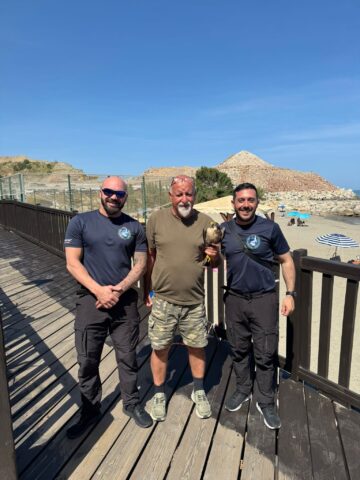
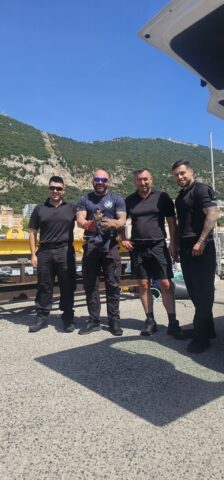
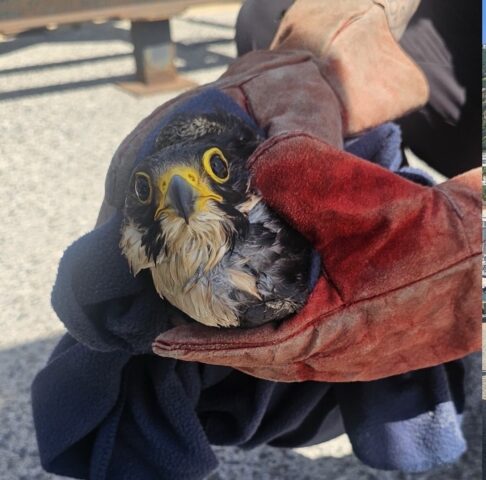
A local nesting male peregrine falcon was recently rescued from the sea near Rosia Bay after being found injured and struggling in the water, “where he faced certain drowning.”
The bird was recovered by Gibraltar Defence Police Marine Base officers, who brought it safely ashore before contacting the Environmental Protection and Research Unit.
The falcon was then transferred into the care of the GONHS Raptor Unit and taken to the Birds of Prey Rehabilitation Station at Lathbury.
Vincent Robba from the Raptor Unit said “a potential tragedy for one of Gibraltar’s local nesting peregrine families was narrowly avoided” following the dramatic rescue operation at sea.
An examination found the peregrine had a wound to its left wing.
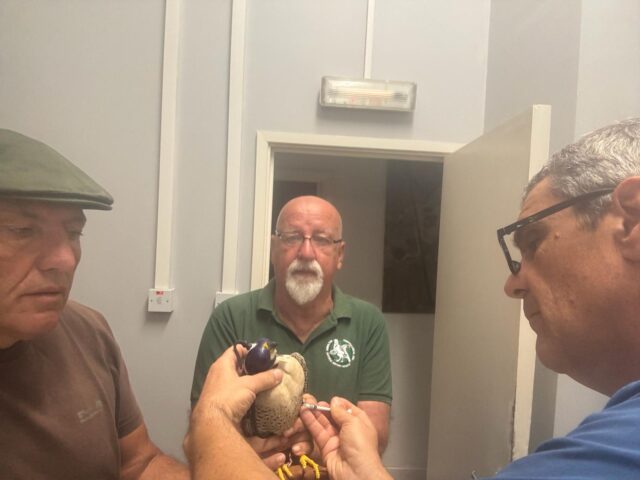
The bird was later taken to a veterinary clinic for X-rays and further assessment by veterinarian Mark Pizarro.
No fractures or broken bones were found, and the falcon was treated with antibiotics to prevent infection before being kept under observation.
“It is believed the injury may have resulted from a territorial confrontation with another peregrine, where he seemingly came off worse, although the possibility of being attacked by yellow-legged gulls when he was carrying larger prey cannot be ruled out,” said Mr Robba.
“The situation was especially concerning because the male had a mate and four recently fledged young waiting at the nest for food. Had the bird perished, the consequences for the survival of the eyasses could have been severe.”
The wound was found to be minor and the falcon was released the following morning so that it could return to its nesting site as soon as possible.
By studying the bird’s colouration and feather pattern, the team established that it was likely to be the male from one of the monitored nesting sites.
“The falcon has since been positively identified as the very bird suspected, and most importantly, he is now safely back with his family,” said Mr Robba.
“Thanks go to everyone involved in the rescue, treatment, and rapid release of this magnificent bird.”