


Royal Navy surveillance ship sails into Gib, as Lyme Bay set for mine countermeasure refit
Photos by Johnny Bugeja


A Royal Navy ship that serves as a mothership for drones and underwater remotely operated vehicles sailed into Gibraltar on Sunday.
The RFA Proteus, a Multi-Role Ocean Surveillance Ship, is the first of a new generation of survey and surveillance ships harnessing leading-edge technology and dedicated to monitoring underwater in areas of UK sovereign interest.
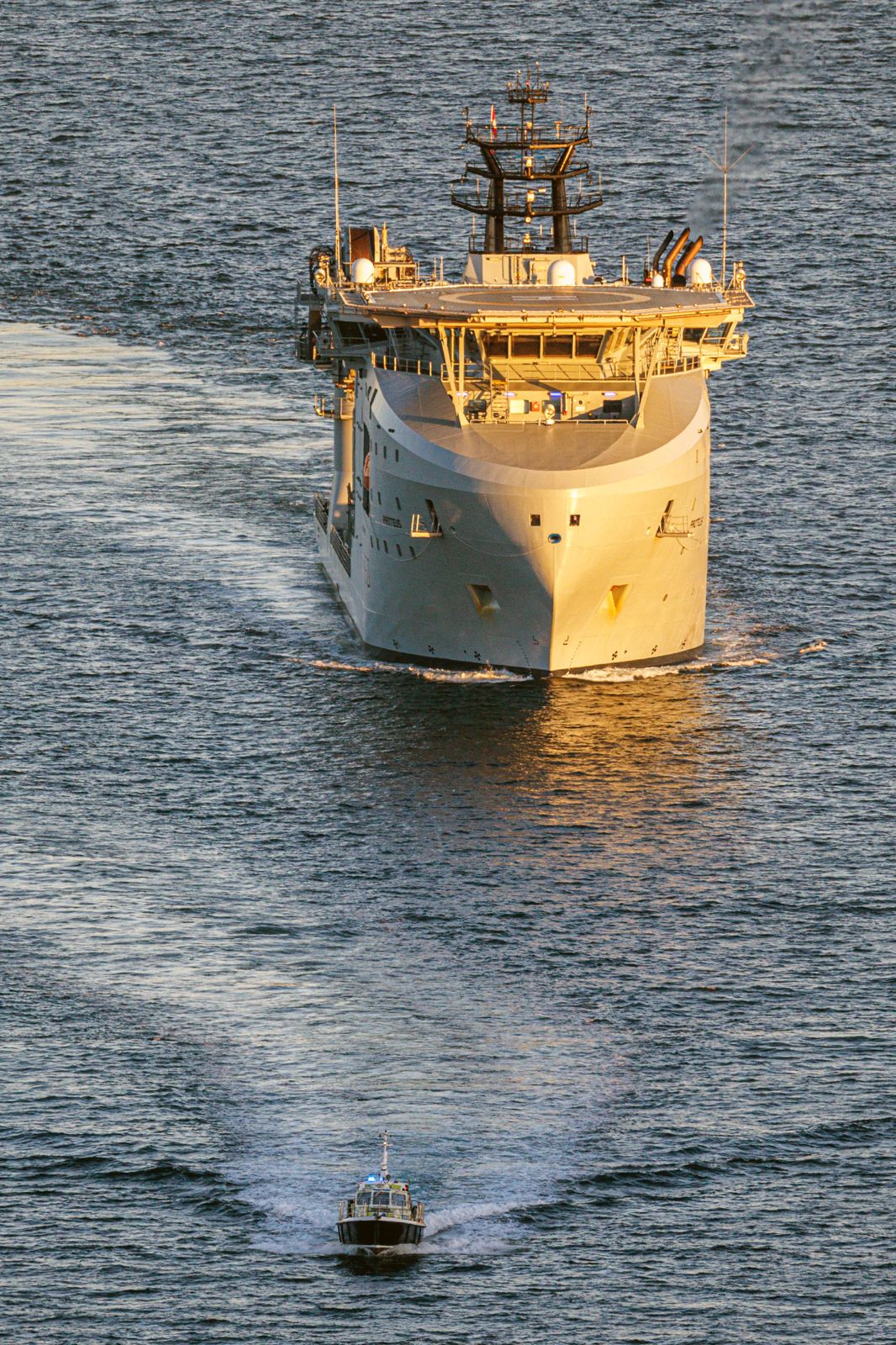
The vessel’s drones and ROVs can act as a deterrent and monitor and protect undersea infrastructure.
This was its maiden stop in Gibraltar.
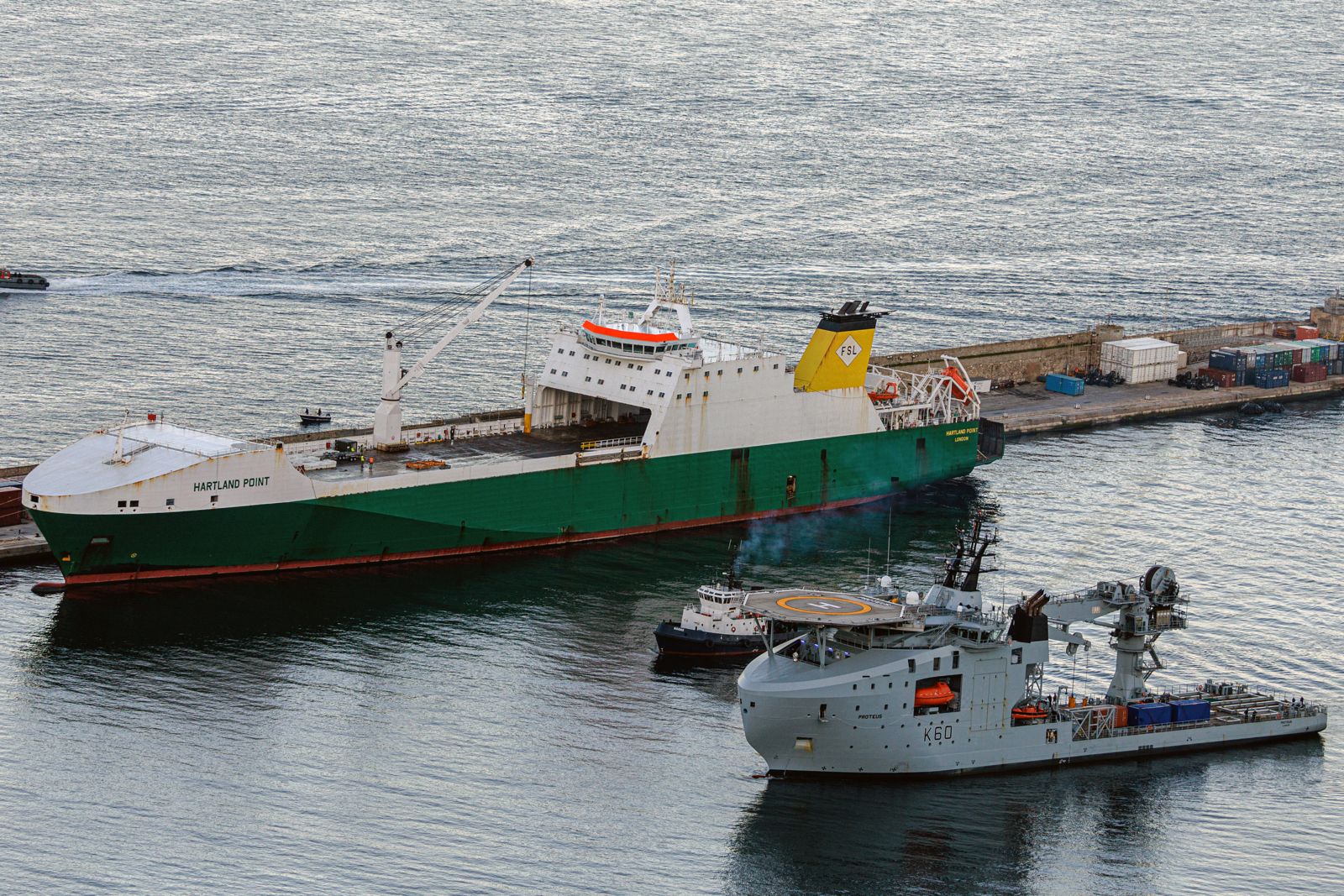
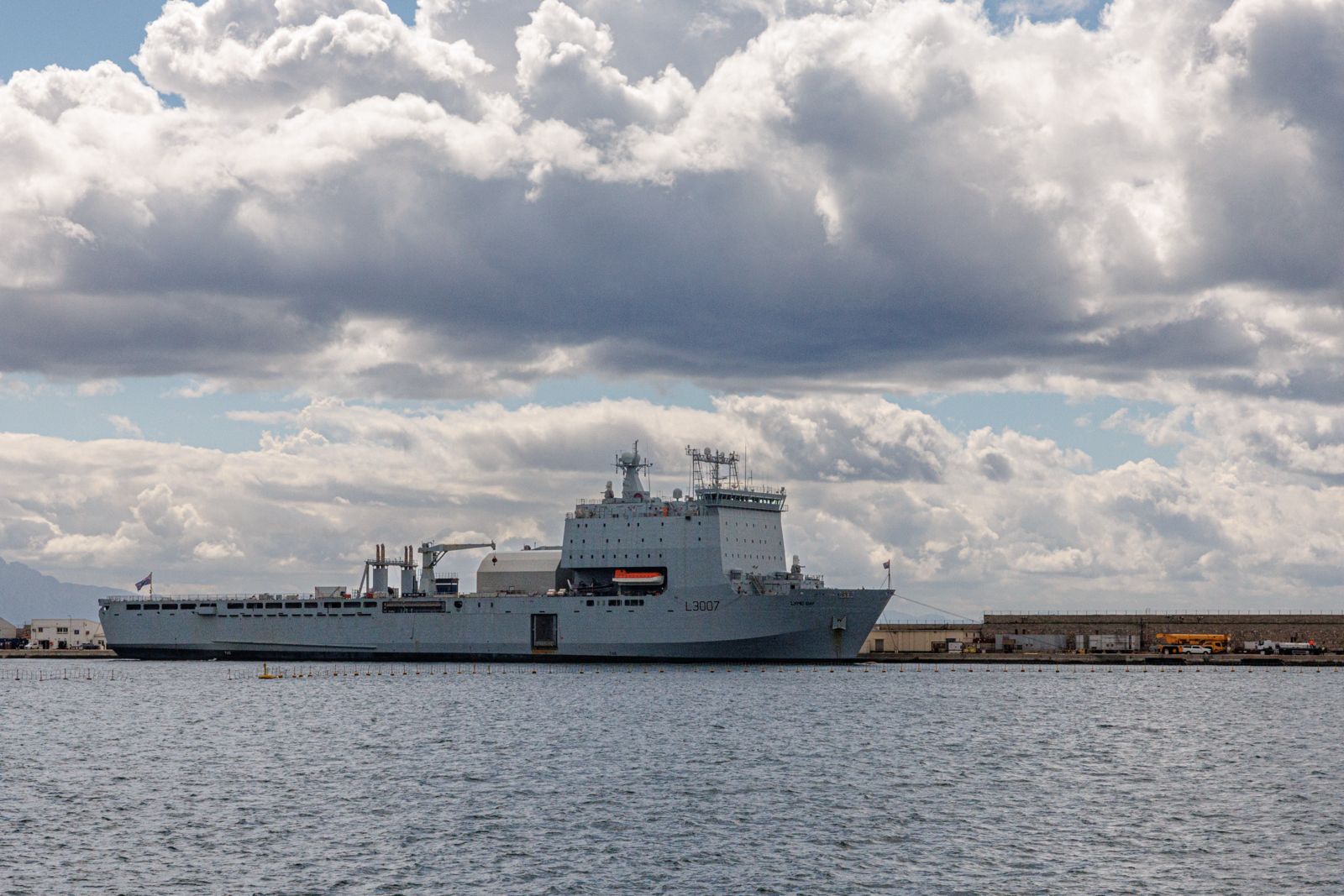
In a separate development, the Royal Fleet Auxiliary landing ship RFA Lyme Bay, which recently sailed from Gibraltar on “heightened readiness” amid mounting tension in the Middle East, is to be fitted with minesweeping drones as UK ministers weigh their options for helping reopen the Strait of Hormuz.
The plans will see the ship fitted with high-tech kit to enable it to act as a “mothership” for underwater drones and crewless mine-hunting boats.
It is understood that the refit is part of the Navy’s plans to use autonomous minehunters to help clear the vital Strait of Hormuz, should such an operation become necessary.
The refit will be done in Gibraltar, though the ship is currently off Crete in the eastern Mediterranean, according to AIS data from the ship tracking website Marine Traffic.
“The Royal Fleet Auxiliary Bay-class ship will be fitted in Gibraltar to be ready to be the Royal Navy’s mothership for an array of hi-tech mine countermeasures (MCM) kit,” the Royal Navy said in a statement.
“The RFA plays an important role in supporting Royal Navy operations across the globe and turning into a command centre for the innovative technology showcases another way the service can contribute to operations.”
“With a plug-and-play Command and Control system, the technology can be deployed where needed and the RFA ship makes an ideal base for future [mine countermeasure] operations.”
“While at the Rock, Lyme Bay will also undergo inspections to ensure she is ready for more time at sea.”
The UK is currently working with allies on developing military plans for reopening the Strait of Hormuz, a crucial shipping route for oil and gas that has been effectively blockaded by Tehran.
Donald Trump had demanded allies send warships to the region to help reopen the strait, but Western nations have so far declined to do so.
Any deployment of RFA Lyme Bay to the strait is unlikely to take place until the situation stabilises, with the risk from Iranian drones and missiles deemed too great for the moment.
A defence source told the PA news agency: “Whilst no decisions have yet been taken on whether these capabilities will be sent to the Strait of Hormuz, this preventative step gives ministers options should they be needed to help resume the normal flow of merchant shipping.”
Part of the Royal Fleet Auxiliary, RFA Lyme Bay is primarily a landing and transport ship and has previously been used to deliver humanitarian aid in the Caribbean and the Middle East.
The ship had been undergoing routine maintenance in Gibraltar, but was brought to a heightened state of readiness following the outbreak of the Iran war and has been undertaking training drills in the Mediterranean in recent days.
It is understood that the decision to equip the ship with anti-mine equipment followed a reassessment of the risk that civilians would have to be evacuated from Lebanon, following a ground invasion by Israeli forces.
It also follows the arrival of the destroyer HMS Dragon in the eastern Mediterranean to assist in defending Cyprus from potential missile and drone attacks.
Until the beginning of 2026, the Royal Navy had a permanent minehunting presence in the Middle East, based in Bahrain.
But the last of those vessels, HMS Middleton, was withdrawn from the region shortly before the outbreak of war for maintenance.
General Sir Gwyn Jenkins, the First Sea Lord, said the conversion of RFA Lyme Bay to a minehunting “mothership” was “a perfect example of how we are building a hybrid navy – one where crewed ships and cutting-edge uncrewed systems work together seamlessly to keep our people safe and our seas secure”.
The ship’s commanding officer, Captain Mark Colley, said: “I am proud of the work my ship’s company has done to prepare RFA Lyme Bay, and be ready to embark this kit.”
“Having recently returned to high readiness, we have been put through our paces but I know we are ready to support this autonomous uncrewed kit so as to play an important role in its use.”
In another development this weekend, the French navy amphibious assault ship FS Mistral sailed briefly into the Nay of Gibraltar before sailing on into the Mediterranean.
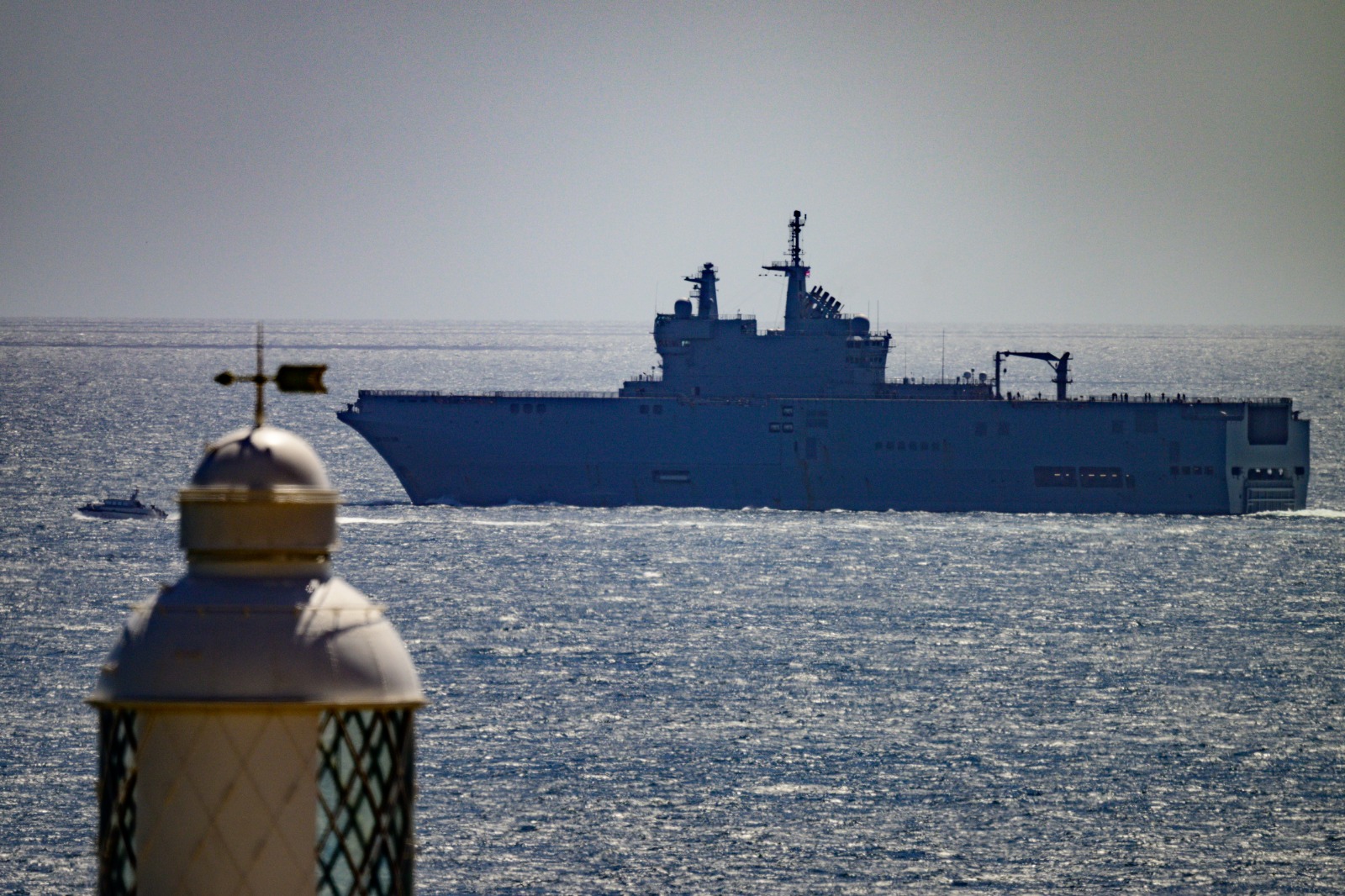
(Photo by David Parody).
Most Read
Treaty Bill published in Gib as Spanish cabinet approves emergency spending on border infrastructure
Wed 25th Mar, 2026
Elysium Bayside groundbreaking marks new chapter in Gibraltar’s urban landscape
Thu 26th Mar, 2026

Today's Paper
29th March 2026
Read our latest newspaper by downloading our app from the link below.


