Where education meets football and everything else in between


Our community for centuries has been made up of people from every corner of the globe from all walks of life. Our long-standing cosmopolitan world has in many respects made us part of who we are today. And even now we continue to grow our community with a rich diverse population of peoples born here and those who have arrived (without knowing much about Gibraltar) and made this home - they liked what they found and stayed. Adopted sons and daughters. I have often used this phrase on these pages.
My own ancestors in the early 1800s arrived here from Portugal and Italy – and I have often wondered - what it is they saw here, what did they find and why did they stay? My only answer is that they found a community here and they connected, and in finding a new home could not let go of their newfound attachment to this magnetic Rock of ours.
On Alice’s Table this week we welcome Paul Lyon –that is exactly what happened to him. A man with a strong personality who is one of us even though he was born in Sleaford - a small market town in Lincolnshire - before spending his formative years in the farming village of Caythorpe, which was also small enough to know everyone. Maybe, that is why he knew within days of stepping off the plane as a young student teacher on his summer holidays with Gibraltarian friends, that Gibraltar would be his new home.
“When I first arrived here, within a week, I thought, I love this place. It was just like my village. Bigger and with much better weather but everybody knew everybody,” he says.
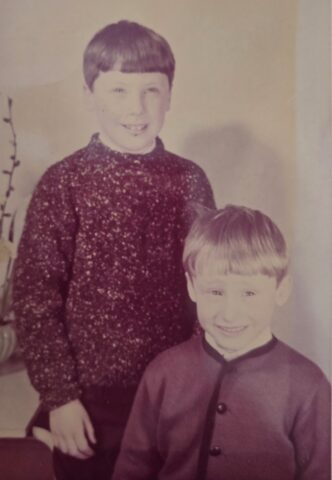
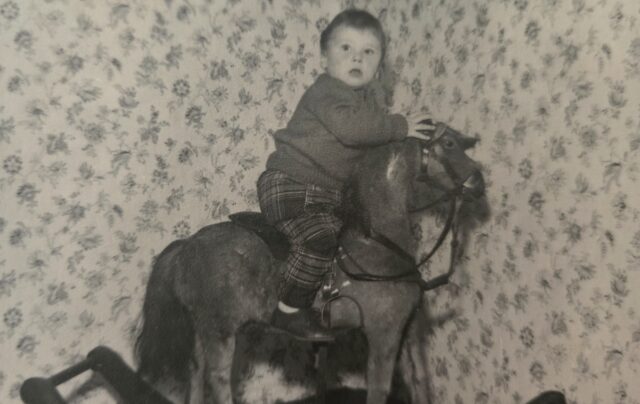
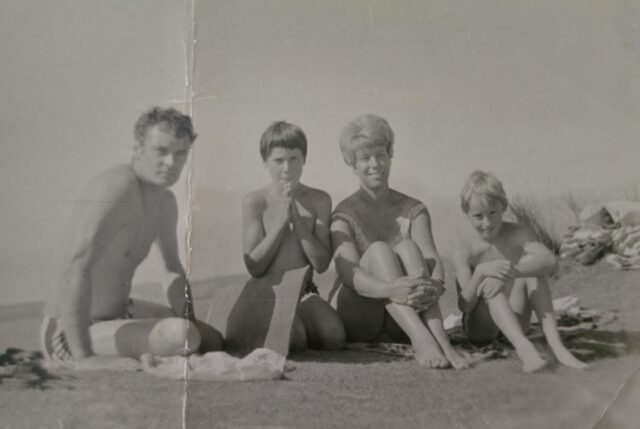
Most of us will know Paul from his teaching days – as headmaster of Bishop Fitzgerald Middle School from 2002 to 2015, or from his role with UEFA as a match delegate where to date he has overseen over 80 matches, including four in the 2024 Euros in Germany, or his overall involvement in sports. And from one job to another there are, as we will discover a good number of achievements and so much more. Paul comes from a working-class family – his father Joseph a mechanical engineer in the army who was stationed in Malta with his wife Ena where Paul was conceived before they moved back to the UK. Just to put you in the picture, Caythorpe is near the East Coast from where the family visited the seaside - Skegness and Mablethorpe - on family holidays. They lived in a very small farm cottage with no hot running water or flush toilet but where every day his grandfather had to empty the chemical toilet outside. His paternal grandfather James would form a big part of his upbringing taking care of him when his parents went out to work. His mother worked a variety of odd jobs whenever she could, he recalls at the age of six or seven after school going with her (with his younger brother Richard) to the potato fields where she would work with other women for the local farmers and pick potatoes. His maternal grandparents lived nearby in the next village and when his mother worked as a midwife they often he and his brother often stayed with them.
On leaving the army his father worked as an engineer for a local company ‘Aveling-Barford’ in Grantham. Later he built his own earth-moving company.
“Ours was a very rural upbringing – I remember one winter the weather was so bad, we were snowed in, that the local farmer with his horse and cart would bring milk to us and everyone else in the village – it was a small village mentality where everyone helped each other. All of us from the village went to the local primary school, we went to each other’s birthday parties, and everyone knew everyone. I was called young Joe after my father.”
He describes his world up to the age of nine as being “quite limited” until his father had the opportunity to go to Paris for two years to help set up an office for the company he worked for.
“It was a cultural shock, but we got the chance to go to a French school where we mixed with French children. Paris was a very magical place. We lived on the outskirts, and it got a bit scary in 1968 with the student riots back then and my mother decided (because they came close to our flat) to take us back to England. My father stayed but she felt our education was suffering. My mother’s dream was for me to go to a Grammar school. My brother was not so academically inclined. I wasn’t academic but I showed a little more potential and she wanted to give me a chance. I took my 11-Plus which I passed and went to the local boy’s grammar school.”
By then the family had moved into a modern bungalow in Caythorpe. Paul enjoyed the discipline the all-boys grammar school offered him – even now he believes those years at school from the age of 11 “was the making of him”.
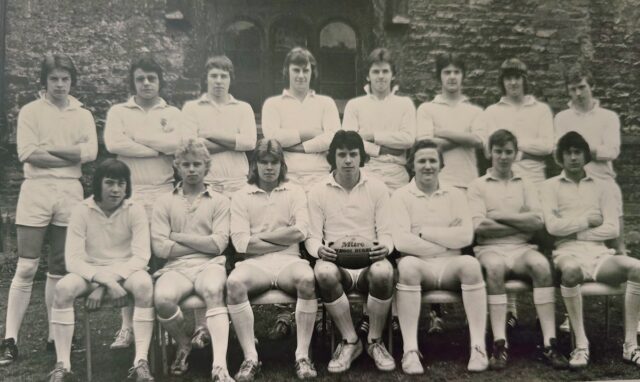
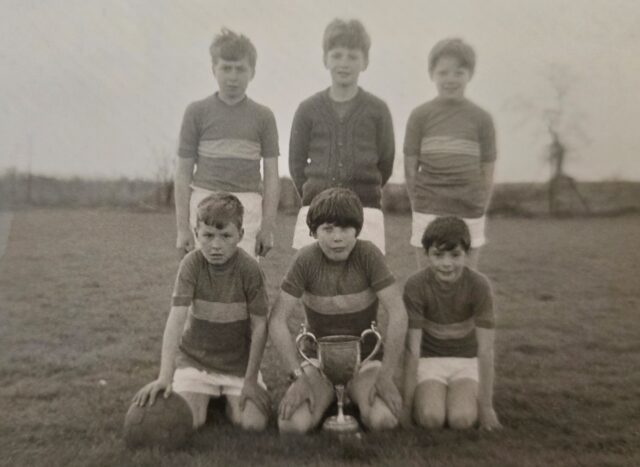
Every day he took a 10-mile bus journey to get to school by 08.30am. For the first three years he went to school on a Saturday. Latin as a subject was compulsory. And then he was introduced to the game of rugby, at which he would excel. He was already playing football and cricket for the local village teams. And at 15 he was working on the local farms at weekends and during the holidays, as well as a few summers at a local iron foundry.
Paul was the first in his family to be educated at a Grammar school “it was a big thing for the family”– and then found his way into the teaching profession by helping his PE teachers and teaching lessons himself from the age of 17.
“I instantly knew teaching was for me. I applied for teacher training as a PE teacher and in September 1978 – started a three-year teacher-training course at Padgate College, Warrington,” he says but at 18 he decides to take a gap year working in the local iron foundry with people who had been in prison “an education in itself”, worked on local farms, and worked at the engineering company where his father worked in the accounts office. He had an interview to join the Falcons Parachute Regiment and at Liverpool’s Maximum-Security Prison but in the end he knew he had found his vocation in teaching.
On the first day of the course, he encountered Gibraltar, and met Kenneth Saez, who was to become a major factor in the way his life would turn out.
Rugby, football, badminton, water polo, swimming and basketball, – he loved his sports.
In rugby he would be selected into the England schoolboy squad and played at county level and would also be selected for the East Midlands at Under19 level.
Knowing nothing about Gibraltar he joined Kenneth and his family during a summer holiday at 21 years of age in 1980. The following year during that summer he would meet his wife to be Chuti, and the rest as they say is history. He had made many new friends, and Gibraltar was the place to be as far as he was concerned. In the summers he worked as a lifeguard on Eastern Beach, and he even played volleyball for Glacis in the summer league having been introduced to the late Tony Avellano. He then came at Christmas, and he even learnt Spanish practising his newly learnt phrases with Kenneth’s grandmother.
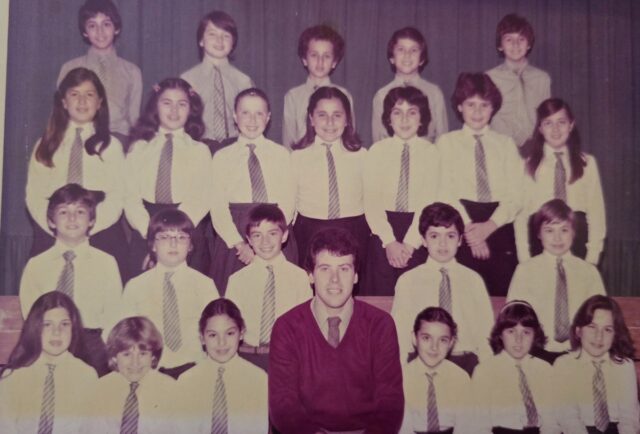
As his final teacher training year was nearing, Paul had already been offered a position as a teacher at St. Mary’s Middle school in Johnston’s Passage -even though he had specialised in PE and Mathematics at Secondary level – he decided to try out teaching in middle school – and he never looked back. He liked the variety in teaching at this level, he liked the respect teachers had locally, the sports on offer and the approach to teaching.
“I went to the school to visit Dorita Montegrifo, my head teacher, and she showed me my classroom at the time where a gentleman called Dennis Matthews was leaving teaching, and I was taking over from.”
Deputy head then Antonia Gladstone would go on to be head at Bishop, and years later Paul would take over. Chatting to him it is easy to see why he fitted in so well locally – likeable, confident and committed – always aiming to achieve his very best and always with people in mind – and especially his pupils.
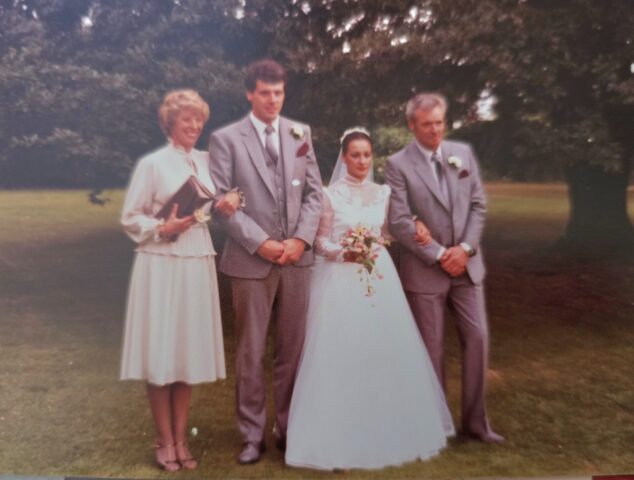
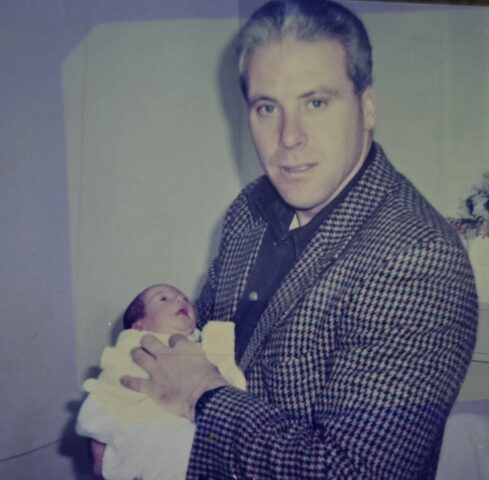
So, he left Padgate on a Friday and flew to Gibraltar on the Sunday. And as it happened then – the year was 1981, Chuti’s parents gave him a room in the apartment they lived in Schomberg until they married the following year in the Catholic church in Grantham, opposite the grocer shop which used to be run by Margaret Thatcher’s parents. Paul and Chuti have now been married 43 years and have a daughter Emma.
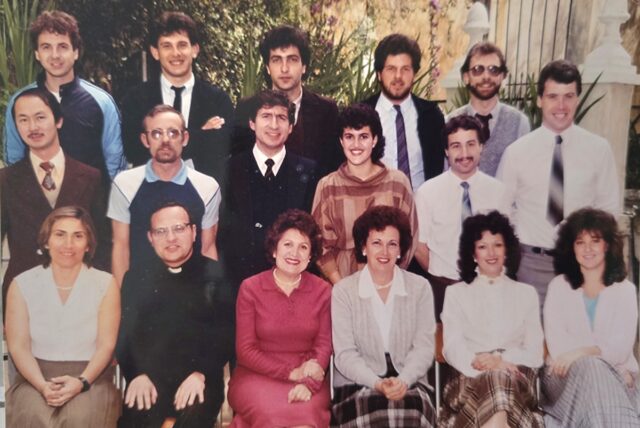
In 1996 he became an Advisor in the Education Department. At the time he felt he wanted another challenge and moved into management – there were changes within the department and a new team of advisors was being created. He was successful and remained for six years. Then in 2002 he decided to return to teaching and took up the headship at Bishop Fitzgerald Middle School until his retirement in September 2015: “I felt I wanted to run a school. I wanted that challenge. It was a big school, and it was becoming bigger and bigger. Nothing prepares you for the headship of the school at such a senior level. I took two years to really get into it, but I knew that was what I wanted to do. The challenges were the many changes in education since I had first started – technology and children becoming more tech savvy, and parents wanting more answers about their child’s progress,” he explains.
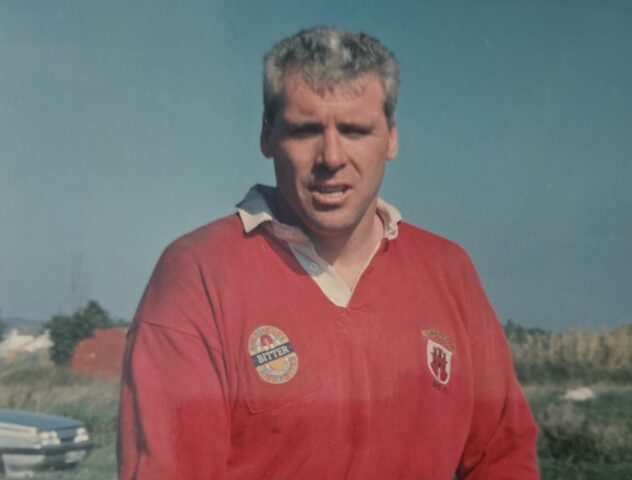
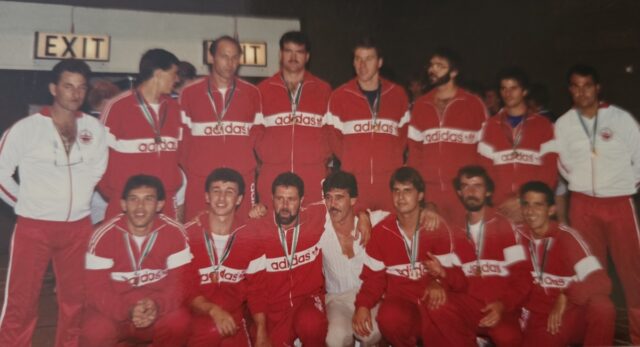
Throughout all this time Paul engaged with the Gibraltar community – sport was always high on his agenda and over the years has represented Gibraltar internationally in Basketball, Volleyball and Football. With volleyball he was part of the team that won a bronze medal at the Island Games. In Rugby he played in the 1990s for Gibraltar and in teams in Spain playing in the Spanish League, and as part of the football veterans’ team in the 2000s he played for charity against Liverpool and Manchester United – as the Legends.
But there were many other areas he was also interested in and in 2000 he got involved with the local branch of Save the Children. His love of history took him to The Convent where for some time he gave tours as well. For many years he was a leader with the Duke of Edinburgh scheme.
Even now he continues links with Bishop Fitzgerald School as one of a number of catechists who go in to deliver lessons that prepare the children for the Sacrament of Confirmation. Five years ago, he became an associate governor of Prior Park School Gibraltar and is also a Trustee of Prior Park educational trust, which is based in Bath and tasked at overseeing the school in Gibraltar and two in Bath.
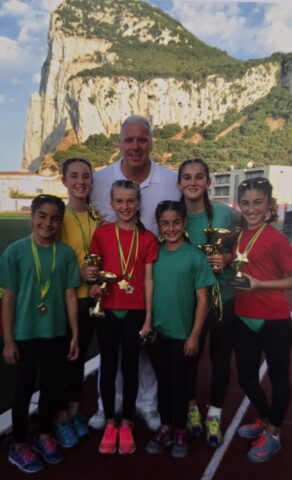
Appointed a Justice of the Peace he now sits in court once every five weeks. He also sits on the GHA Clinical and Governance Board. Remaining in contact with pupils as they have grown into adulthood, he says, is very special. He is often stopped by his former pupils and enjoys those conversations confident he left them with some happy memories of their time in school. This is very important to him.
“I always used to tell young teachers that children might not remember what you teach them, but they will always remember how you make them feel. When past pupils come and tell me about some experience in school or that trip to London that they still remember – that is what always gives me a big kick.
“All that makes me feel very much a part of this community and I don’t consider myself English any more – I am a member of the community, people have adopted me, and I feel this is me – born a Giri, and I’ll die a Llanito – as I said in the Gib Talks. I feel blessed.
“When I retired, I wanted to give back to the community as much as possible because I feel Gibraltar has given me everything – and now it is time to give back.”
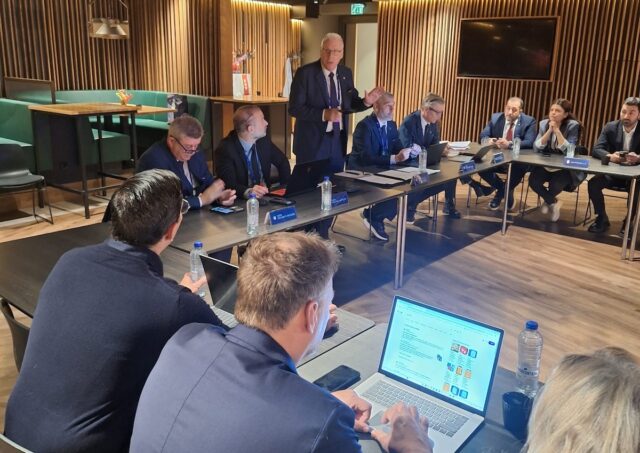
It was on retirement that the GFA came knocking on his door – and he soon became Vice President. Then he went to work for UEFA as part of the Amateur Youth Development Committee. At his first conference he was asked to become a match delegate – it was a baptism of fire - and to date Paul has now overseen over 80 football matches around the world. For Gibraltar, this job is important, he says, because it shows the GFA is contributing to the bigger UEFA picture.
Many years ago, he took an opportunity which even now keeps on working for him. He now wants to give opportunities to others – and help in whatever he can. I can tell he is proud to be part of this community – adopted right from the start – and he feels thankful and blessed.
“Passing on knowledge – that is what is important to me – being able to help and sharing my experience with others, other members of this community, at the end of the day that is what counts,” he acknowledges.
Stopping all he does – at least for the time being is not on the cards, he tells me. And I know he will be the first to say there is still just too much to do.