


Gibraltar’s UN story is ‘unfinished business’, Garcia says
Archivist Gerard Wood [first left] is seen with Dr Joseph Garcia, the Deputy Chief Minister, at the opening of an exhibition charting 80 years of Gibraltar and the UN. Photo by Brian Reyes


The future of Gibraltar must be “freely and democratically decided” by its people, the Deputy Chief Minister, Dr Joseph Garcia, said on Monday as he opened an exhibition charting 80 years of the Rock’s relationship with the United Nations.
The Gibraltar National Archives exhibition, Gibraltar at the United Nations 1946–2026, opened at the Fine Arts Gallery in Casemates just days after National Day and marks the 80th anniversary of Gibraltar’s inclusion on the UN list of Non-Self-Governing Territories.
Through documents, photographs, correspondence and other records held by the archives, alongside material submitted by members of the public, the exhibition traces Gibraltar’s engagement with the UN and the development over those decades of its political identity and demand for self-determination.
Dr Garcia said the timing of the exhibition shortly after National Day was fitting because the subject was about more than Gibraltar’s dealings with an international organisation.
It was, he said, the story of a people whose political development had been affected by the international framework established by the UN after the Second World War.
Gibraltar was placed on the list of Non-Self-Governing Territories in 1946 at a time when the UN itself was new and decolonisation and self-determination were emerging as central principles of the post-war international order.
“There were 72 territories on that list then. Today there are 17. Gibraltar remains one of them,” Dr Garcia said.
For the Deputy Chief Minister, that continuing presence on the list underscored the “unfinished business” of Gibraltar’s decolonisation.
The exhibition looks back across that period through official records but, Dr Garcia said, behind those documents was the story of Gibraltarians seeking to ensure their own voice was heard internationally.
He highlighted the appearances by Sir Joshua Hassan and Peter Isola before the Committee of 24 in 1963 and again in 1970 as significant moments in that process, when Gibraltar began speaking directly for itself at the UN.
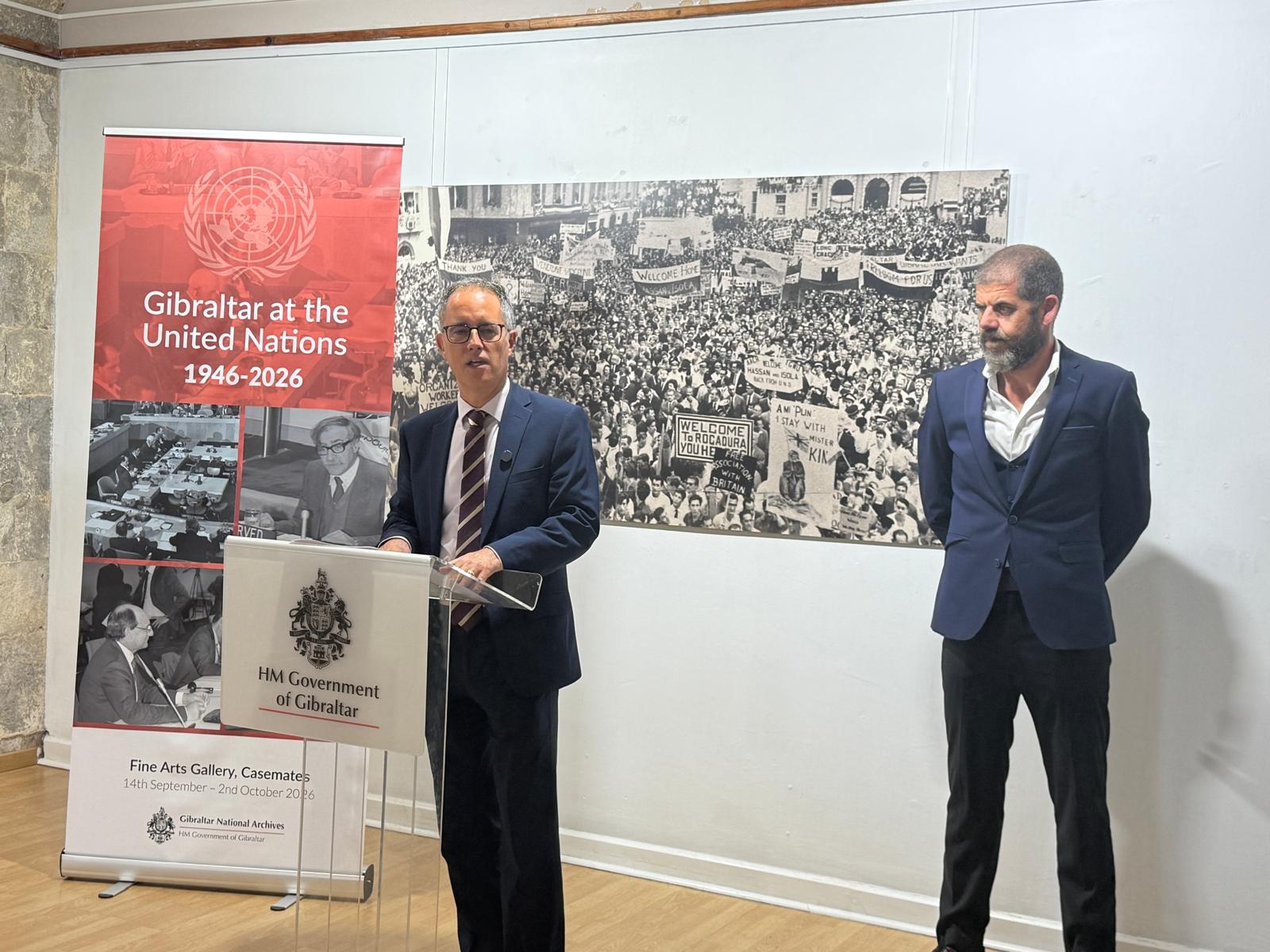
Dr Garcia described those interventions as important in the development of Gibraltar’s political identity and its international projection as a distinct people, a process continued by successive generations of political leaders.
“It was a defining moment in the political awakening of Gibraltar, in the development of our sense of identity, and in cementing our international projection as a distinct and separate people,” he told guests at the official opening of the exhibition.
“It demonstrated something fundamental, that Gibraltar should no longer be an object of discussion between others.”
“Gibraltarians had found a voice of their own.”
Dr Garcia linked Gibraltar’s presence on the UN list to many of the defining political events that followed, including the 1967 referendum and the closure of the border in 1969, as well as the continuing aspiration for self-determination and democratic decolonisation.
Despite changing political circumstances and constitutional arrangements over the decades, he said one principle had remained constant.
“The future of Gibraltar must be freely and democratically decided by the people of Gibraltar,” Dr Garcia said.
“That is why Gibraltar cannot remain on the UN list forever. The unfinished business of decolonisation must be addressed.”
But Dr Garcia said the exhibition was not simply a record of resolutions, constitutional documents and diplomatic exchanges.
“It is also about identity,” he said.
“We know who we are. We know where we have come from. We are proud of our British identity. We are proud too of our Mediterranean heritage.”
“We are proud of our European connections. And we are proud of our role of leadership.”
“None of those factors are mutually exclusive or contradictory.”
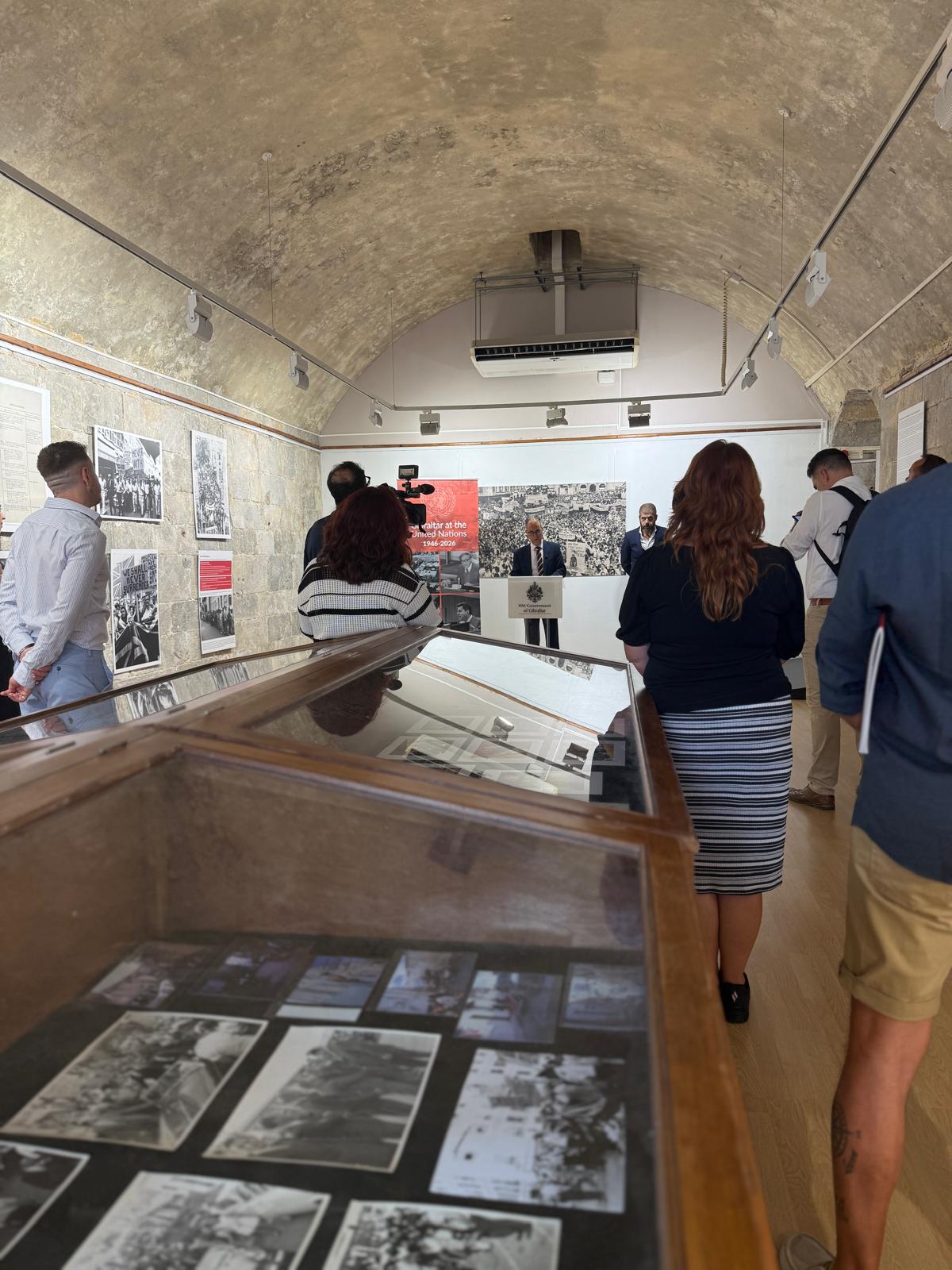
The exhibition sets those questions of identity alongside the political and diplomatic record of the past eight decades, documenting how Gibraltar’s representation internationally developed alongside its own democratic institutions.
Dr Garcia said the Gibraltar of today was very different to that which was first listed at the UN in 1946, or which voted overwhelmingly in the 1967 referendum.
“Gibraltar is not the place it was in 1946, nor is it the place it was in 1967. We have grown up. We have developed our own democratic institutions and our own political identity.”
“We only ask for the same right to decide which others have already exercised.”
The Deputy Chief Minister said the photographs and documents on display were therefore not simply about looking into the past but also about understanding Gibraltar’s present position and its aspirations for the future.
He thanked Gibraltar National Archives archivist Gerard Wood and his team for putting together the exhibition, as well as volunteers and Gibraltar Government staff who had assisted with the project.
Their work, he said, would allow future generations to see the human story behind decades of international diplomacy.
Dr Garcia said he hoped visitors would reflect on a journey that had taken Gibraltar from being discussed by others to speaking for itself, while maintaining that the wishes of the people of Gibraltar must remain paramount.
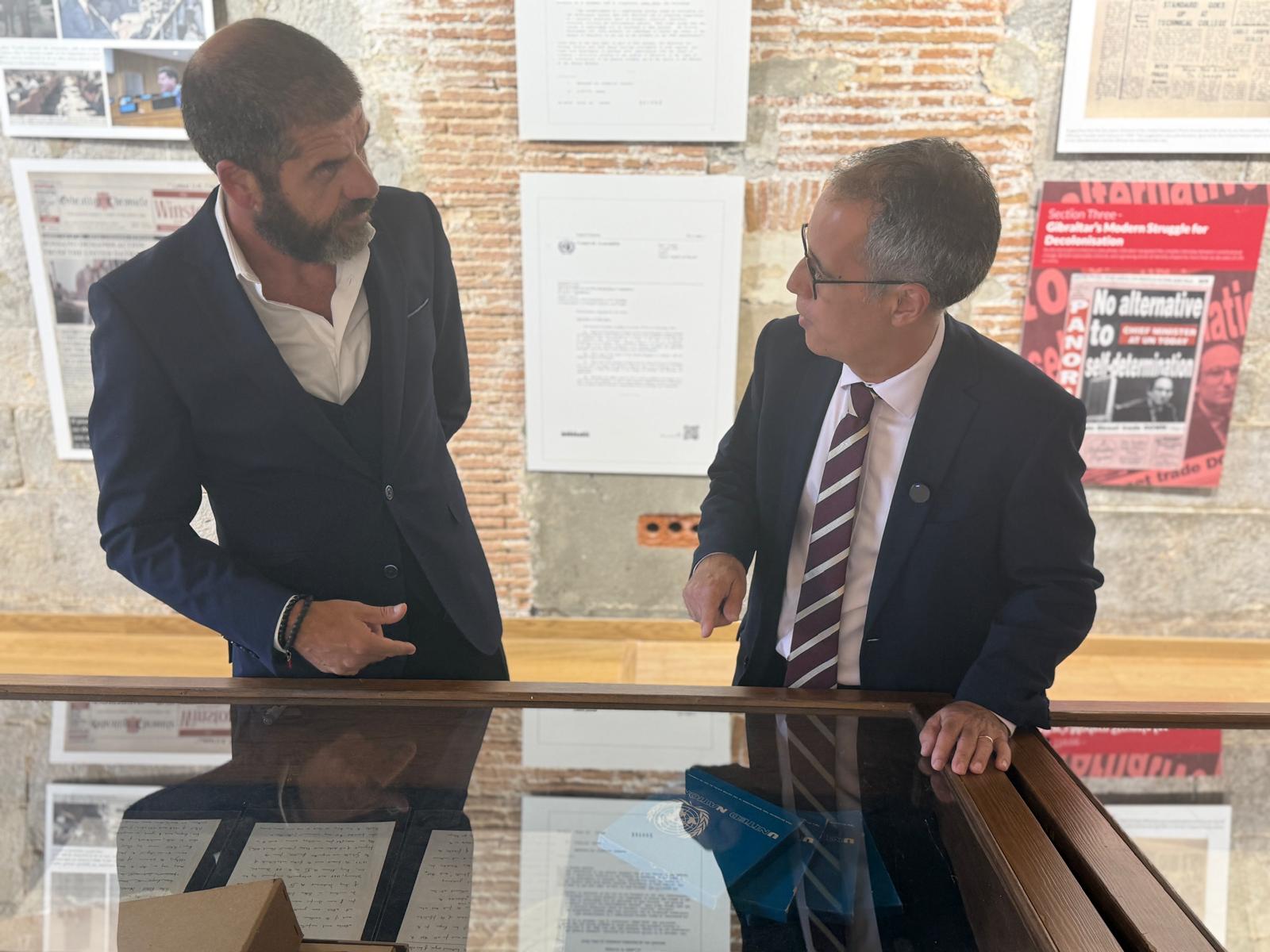
Mr Wood also thanked his archive team and the Gibraltar Government staff involved in preparing the exhibition, a process he said had occupied much of the year.
He said his team had been “working hard throughout the year” and expressed the hope that the exhibition would be enjoyed by the public.
Gibraltar at the United Nations 1946–2026 is open at the Fine Arts Gallery in Casemates until October 2 and admission is free.


