


Kieron Prescott: "Not everything unpleasant is a problem to be solved”


In The Brightest Lie, Kieron Prescott brings the story of Mr Crow to its conclusion, drawing together fantasy, philosophy and psychology to explore the complexities of the human experience. Following on from The Shadows We Call Home, the novel delves into self-deception, our resistance to life’s less comfortable realities, and the possibility that the things we struggle against may have a purpose of their own. We spoke to Kieron about completing Mr Crow’s journey, the thinking behind his two-book story, and his plans for what comes next.
Q. The Brightest Lie is the conclusion to the story you began in The Shadows We Call Home. When you wrote the first book, did you already know where the story would ultimately end, or did this second book take you somewhere unexpected?
A. I didn't know exactly where the story would ultimately end, no, but I knew what still had to be said. The Shadows We Call Home was written to stand on its own, and what it said was true, but it wasn't the whole truth.
I actually felt a little uncomfortable leaving it there because, in a way, I felt like I'd lied to the reader. I'd deliberately left out another side of the philosophy, and that's really where the title The Brightest Lie comes from.
I wanted the second book to complete that philosophy and bring both sides together into one coherent whole. So, while I knew what I wanted it to say, I didn't necessarily know how the story would get there.
A lot of the journey developed as I wrote it and took me in directions I hadn't originally anticipated.
Q. You’ve said The Brightest Lie explores self-deception and the parts of ourselves we sometimes see as adversaries. What interested you about addressing this in this book?
A. We seem to have this idea of what life should be, and then resent or resist the parts that don't fit that picture, even when they're an inevitable part of being human. If we're constantly fighting against things that are naturally going to come our way, we're almost choosing to live in a state of struggle.
A lot of philosophies and ideologies seem to focus on conquering the things we consider undesirable, whether that's something about who we are or something we experience or feel.
I wanted to explore a more sympathetic approach. Rather than trying to eradicate these things, perhaps we can understand why they're there and find sensible and constructive ways of incorporating them into our lives.
That's something Mr Crow has to confront throughout the book. It doesn't mean we shouldn't try to improve or find better ways to live. If anything, I think accepting ourselves and our experiences more honestly gives us a better foundation from which to do that.
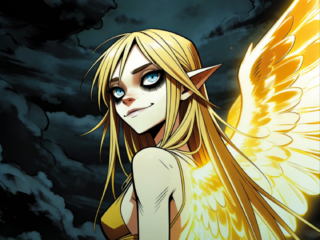
Q. Without giving too much away, what do you hope readers will question about themselves after reading the book?
A. I suppose I'd like readers to question how often we place conditions on being content with our lives. We tell ourselves things would be better if we were different, if we had something we're missing, or if we could just avoid certain experiences altogether.
We tend to divide everything into positive and negative, desirable and undesirable, and naturally try to maximise one while eliminating the other. But I'm not sure life really works that way.
Not everything that feels unpleasant is necessarily bad, and even the things that genuinely are negative often only have meaning in relation to their opposite. You can't really understand pleasure without discomfort, or the good without some conception of the bad.
I'd like people to question whether everything we dislike about ourselves or our lives necessarily needs to become something we're fighting against.
Some things can be changed and perhaps should be, but not everything unpleasant is simply a problem to be solved. Sometimes those things have their own place and purpose too.
Q. Your writing combines fantasy with philosophy and psychology. How do you make those ideas work within a story without allowing the philosophy to overwhelm the characters and plot?
A. I think fantasy actually makes that easier.
Philosophy and psychology can become quite abstract if you discuss them in isolation, whereas fantasy gives me a way of turning those ideas into characters, places and situations that the reader can actually experience.
Rather than simply explaining an idea, I can have Mr Crow meet it, argue with it, misunderstand it or be challenged by it. That allows the philosophy to become part of the story rather than something sitting on top of it.
I also try not to take it all too seriously. There's quite a lot of humour in both books, and the characters can be strange, exaggerated or occasionally ridiculous. I think that helps make some fairly heavy ideas more accessible and keeps the books feeling like stories rather than philosophical lectures.
Ideally, the books work on both levels. You can follow Mr Crow's journey as a strange fantasy adventure and leave it at that, or you can dig a bit deeper, because almost everything he runs into means something more underneath.
Q. What is next for you?
A. Right now, I'm just enjoying having finished Mr Crow's story. These two books lived in my head for a long time, so it feels good to have finally pulled it all together and said what I wanted to say.
I'll probably continue exploring these characters through other kinds of media, particularly something more visual. I'd like to turn the story into an animated film someday, though that's probably a long way off.
I might also try my hand at a non-fiction book that lays out the philosophy behind both books more directly and practically. Though, funnily enough, I'm not totally convinced that would work as well.
As I’ve said, part of why I went with fantasy in the first place is that ideas tend to stick better when they're attached to a character or a story rather than just explained outright.
So we'll see. I've got a few ideas floating around, but I'm not in any rush. For now, I'm giving myself a bit of space before I get consumed by whatever the next idea turns out to be!
Most Read
CM pitches Gibraltar’s ‘next phase of growth’ in final Guildhall address
Mon 19th Oct, 2026
Revolut says Rock's ‘clear and stringent’ regulatory framework offers solid base for crypto innovation
Mon 19th Oct, 2026

Today's Paper
21st October 2026
Read our latest newspaper by downloading our app from the link below.


