


Landport Tunnel conservation work uncovers ‘archaeology you can walk through’
Photos by Eyleen Gomez


Works are currently underway at Landport Tunnel to reveal long-hidden historic masonry, offering a rare glimpse into the layered construction of one of Gibraltar’s most important northern gateways.
The removal of modern cement render from the tunnel walls and vault has exposed original rubble masonry and historic brickwork, confirming that significant early fabric has survived beneath later finishes.
Conservation specialists involved in the project say the discoveries underline the tunnel’s phased development and reinforce its importance within Gibraltar’s wider defensive landscape.
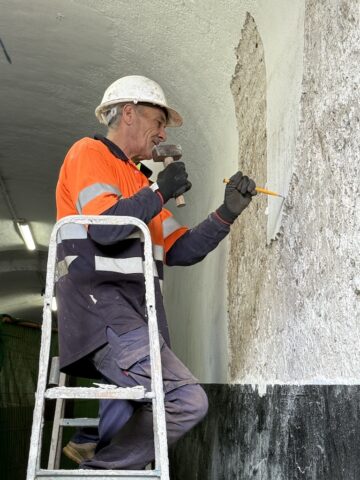
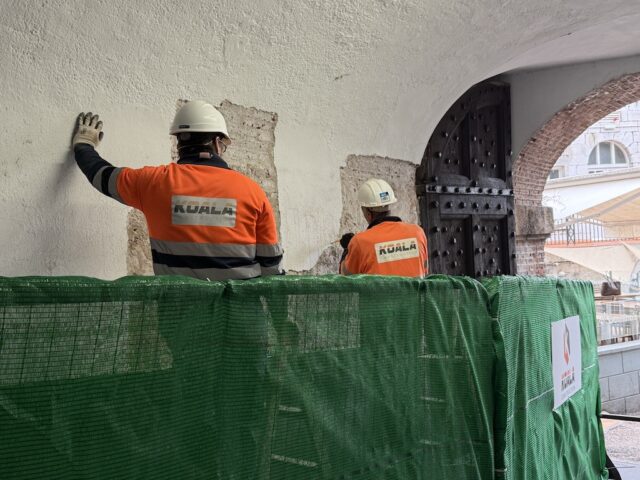
Project Director Carl Viagas described the findings as both encouraging and significant.
“What we are seeing now is the authentic fabric of Landport Tunnel emerging after decades of being sealed behind cement,” he said.
“This is exactly why sensitive conservation matters. Beneath those modern coatings is the real story of Gibraltar, hand-built stonework, lime mortars, and evidence of historic repairs that chart how this structure evolved over centuries.”
The newly exposed walls display irregular rubble masonry bound in traditional lime mortar, with shell inclusions and varied stone sizes typical of pre-modern construction techniques, he noted.
In one section of the vaulted ceiling, a rectangular brick patch has also been revealed, believed to represent a historic repair or infill dating to the 18th or 19th century.
According to Mr Viagas, features such as these provide tangible evidence of the tunnel’s changing role through time.
“Landport Tunnel was never a single-phase build. It has been adapted, repaired and strengthened as Gibraltar’s defences developed,” he said.
“That small brick panel in the vault tells its own story, it’s likely linked to an earlier intervention, perhaps a former opening or structural repair.”
“These details help us piece together how the tunnel functioned during different periods.”
He added that the wider tunnel structure also illustrates this layered history, combining rubble masonry side walls with brick arches and heavy timber doors fitted with iron studding, all characteristic of Gibraltar’s fortified northern approaches.
According to Mr Viagas, beyond their historical value, the works also carry important conservation benefits.
The removal of hard cement render allows the original lime-based masonry to breathe again, reducing trapped moisture and lowering the risk of long-term decay caused by salt crystallisation.
“This is a major step forward for the health of the structure,” said Mr Viagas.
“Cement traps moisture and accelerates deterioration in historic stone. By removing it and moving back toward lime-based finishes, we’re not just revealing heritage, we’re actively protecting it for future generations.”
A programme of photographic recording and fabric mapping is now being undertaken to document the exposed areas, identify construction phases, and inform future conservation decisions.
Consideration is also being given to retaining selected reveal panels so visitors can see original masonry firsthand as part of the site’s interpretation.
Mr Viagas believes the discoveries strengthen the case for presenting Landport Tunnel as more than simply a passageway.
“This isn’t just infrastructure, it’s archaeology you can walk through,” he said.
“Every layer reflects a different chapter in Gibraltar’s military and urban history. Our aim is to conserve it properly and, where possible, allow the public to engage directly with that story.”
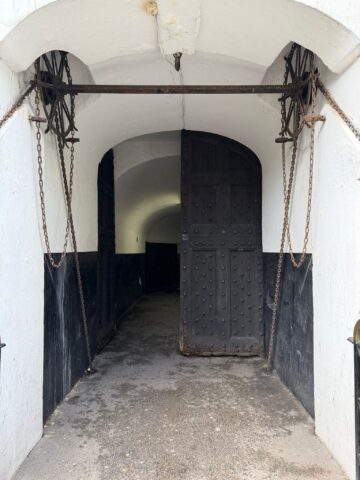
The works form part of the wider Northern Defences project, which Mr Viagas said seeks to conserve, research and interpret Gibraltar’s historic fortifications while improving access and visitor experience. As investigations continue, further insights into the tunnel’s construction and use are expected to emerge, he noted.
“For now, the newly revealed stone and brickwork stand as a powerful reminder that Gibraltar’s past often lies just beneath the surface, waiting to be uncovered,” he said.


