Buried Alive: Gibraltar’s Secret Wartime Plan


By Richard Clements (*)
If the Rock had fallen during the Second World War, six men were prepared to remain hidden inside it. Their task was to watch the surrounding waters and report enemy movements by wireless.
There is a room inside the Rock of Gibraltar that was built for six men who, fortunately, never had to live in it.
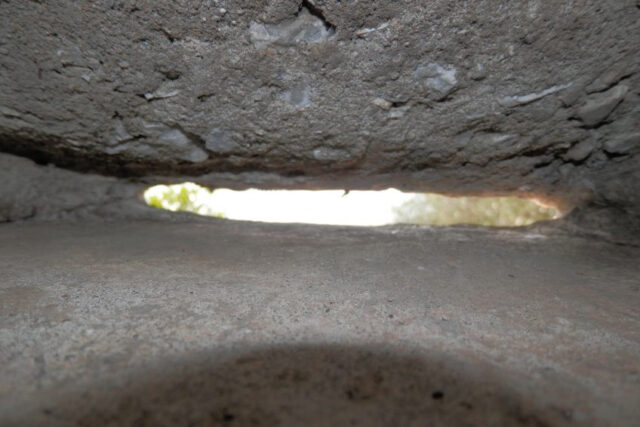
Had the fortress fallen during the Second World War, they would have entered the room and allowed the passage behind them to be sealed. From then on, their world would have consisted of a chamber, a radio, stores of food and water, and two places from which they could look out without being seen.
This was Operation Tracer, one of the more unsettling plans made for Gibraltar during the war.
The reason for it lay in the Rock’s position at the entrance to the Mediterranean.
In 1940, with France defeated and Britain under considerable pressure, German planners considered an attack on Gibraltar through Spain. Their proposed operation was known as Felix. Whether such an attack would take place depended on events beyond Gibraltar, but the possibility could hardly be ignored by those responsible for defending it.
Rear Admiral John Henry Godfrey, Britain’s Director of Naval Intelligence, wanted a way of continuing to gather information even if the fortress was captured. The answer was to place a small observation team inside the Rock before any enemy assault. Once concealed, the men would watch shipping in the bay and the Strait, passing reports back to Britain by wireless.
That sounds straightforward until you consider what it meant for the men inside.
The hidden post had to support them for an unknown length of time. It needed water, food, sanitation and a reliable means of communication. It also had to be quiet enough to escape detection by anyone occupying the tunnels outside.
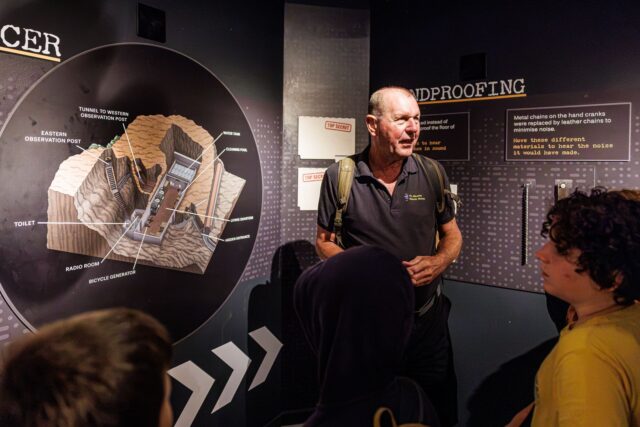
A chamber was prepared near Lord Airey’s Battery, connected to separate observation points facing the Bay of Gibraltar and the Mediterranean.
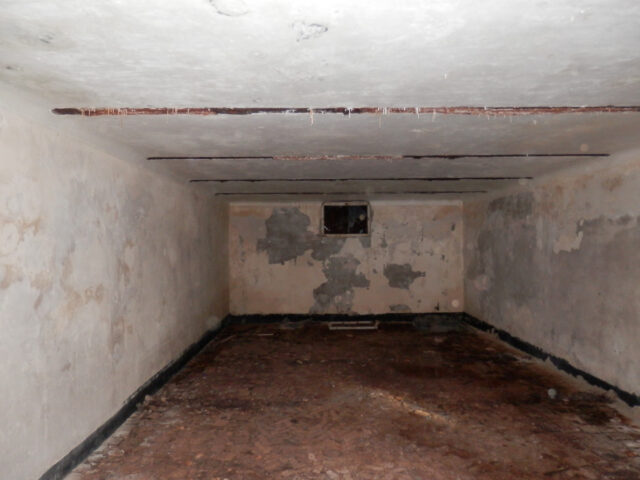
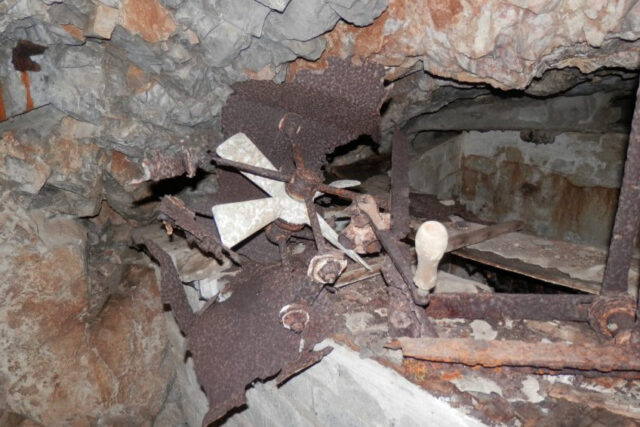
The main living space was roughly 18 metres long and 5.5 metres wide. Cork tiles covered the floor to help muffle sound. There were toilets, a water supply and a small room for the wireless equipment. Batteries could be charged using a bicycle-powered generator, which also helped with ventilation. Another generator could be worked by hand.
These arrangements were practical, but there was nothing comfortable about the prospect. The original plan allowed for a year of concealment. Later preparations provided enough supplies for as long as seven years. No one could tell the volunteers when they might come out, or what Gibraltar would be like when they did.
Six men were chosen: a senior officer, three wireless operators and two naval doctors, Bruce Cooper and Arthur Milner.
Royal Navy surgeon George Murray Levick advised on how they might survive together in confinement. Levick knew something about isolation. As a member of Captain Scott’s Antarctic expedition, he had endured a winter in exceptionally harsh conditions.
For Tracer, he considered diet, exercise, ventilation and the psychological strain of living in a small group with no ordinary escape from one another.
He also had to consider what would happen if a man died inside the chamber. It was a contingency the planners could not avoid.
The team trained for the assignment, but the order to enter the cave never came. Allied advances in North Africa and Sicily changed the course of the war and reduced the prospect of an attack on Gibraltar. In August 1943, instructions were issued for final wireless exercises, the closure of the cave and the distribution of its supplies.
The chamber was left behind. So was a story that, over the following decades, became difficult to separate from rumour.
People in Gibraltar had heard accounts of men who were supposed to be sealed alive inside the Rock, but where was the room?
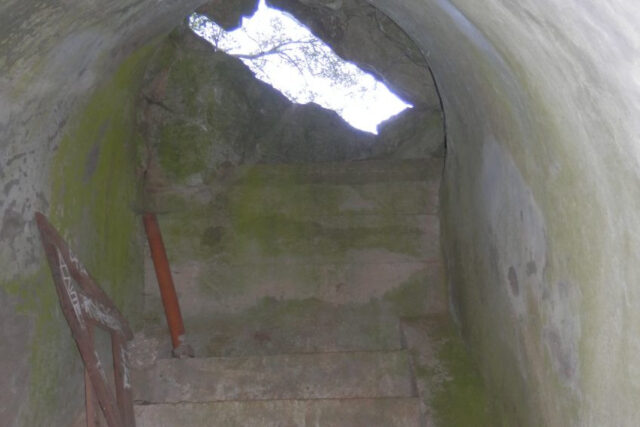
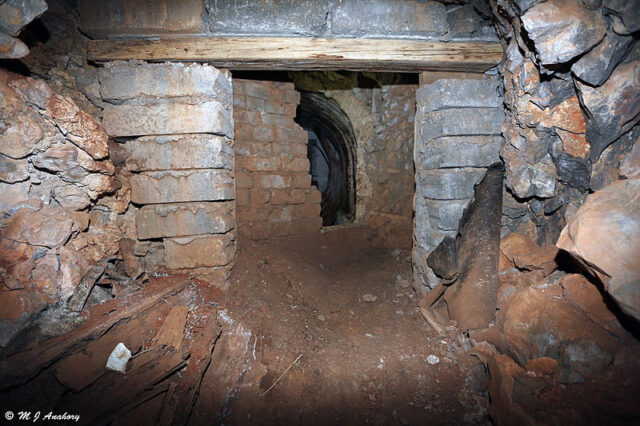
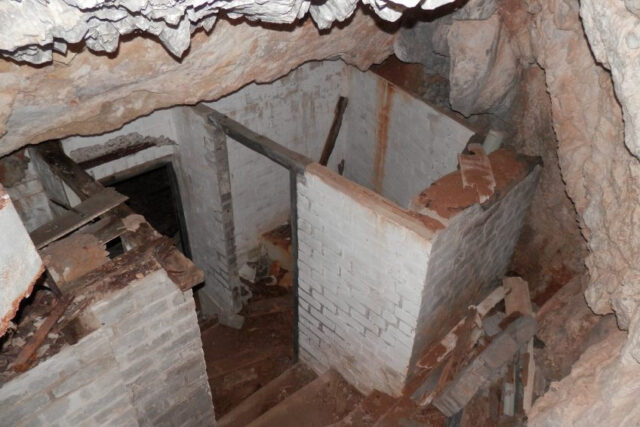
In the 1990s, members of the Gibraltar Caving Group searched the tunnels near Lord Airey’s Battery. Behind old corrugated sheeting, they found a brick wall. Beyond that wall lay the passage to the chamber.
What they found was more persuasive than any rumour: the living space, the radio room and the observation points. The western slit still looked out across the bay. The room had never served its intended purpose, but it had survived.
Bruce Cooper, one of the doctors selected for the mission, later returned to Gibraltar and confirmed that this was the chamber prepared for him and his colleagues. It brought a human voice back to a story that might otherwise have remained a curious feature of the Rock’s wartime defences.
When I began writing about Operation Tracer, it was the demands placed on those six men that held my attention. Gibraltar’s military importance explains why the plan was made. It does not make it any easier to imagine stepping into that chamber and hearing the entrance closed behind you.
The men were never asked to make that sacrifice. The room they might have occupied is still there, though, and it offers a striking reminder of what Britain was prepared to do if Gibraltar fell.
(*) Richard Clements is a British history writer and independent researcher publishing as The History Alchemist. He writes about unusual and overlooked episodes from the past.
Website: https://www.thehistoryalchemist.com/
Facebook: https://www.facebook.com/profile.php?id=61582877043520
Instagram: https://www.instagram.com/the_history_alchemist/
X: https://x.com/HisAlchemist
Podcast: https://thehistorynetwork.org/3902-buried-alive-operation-tracer-and-the-secret-of-gibraltar/