


Bus ID card system planned alongside new routes and vehicles


A new bus ID card system and live tracker are expected to be introduced within the coming months as the Government continues to make changes to Gibraltar's bus network including new routes, new vehicles and more bus drivers.
The Minister for Transport, Dr John Cortes, said the new ID card system was currently being tested. The system would see passengers tap their ID cards upon entry of the bus.
The new units for the ID system have arrived, and training and installation are the next steps before introduction.
The system will be updated daily with information on valid ID cards, allowing the bus network to check whether a card remains valid when tapped.
“Basically, the way it's going to work is that every day we will send a new spreadsheet with valid ID cards. It's updating the databases into the system,” Dr Cortes said.
“If your ID card is no longer valid, you tap it, you're going to be rejected.”
The ministry is testing the system to ensure that the daily flow of information was working correctly and updating as intended.
The new system is expected to provide the Government with more detailed information on bus usage, allowing routes to be adjusted according to demand.
“If you have a route that at certain times is virtually empty, then you can redirect resources somewhere else. That will help us tremendously.”
The ministry is also working on a new live bus tracker, with an improved GPS system.
ROUTE 6
The Ministry is planning changes to route 6 with an additional 6X route following complaints from passengers who had previously relied on a service travelling through town.
Dr Cortes said responses to the new route had been positive and that, for now, Route 6 would likely be retained.
“The majority of responses have been positive towards the new bus route 6,” he said.
“People have liked it, there have been some people who feel it hasn't been quite convenient but the overall majority is positive.”
There had been some problems maintaining the preferred frequency, particularly during August, because of a lack of drivers.
“There have been issues on particular days and this is a problem which I don't mind admitting, particularly in August when people are on holiday, that we have had to reduce the frequency from our preferred frequency due to a lack of drivers,” he said.
Dr Cortes said additional drivers would now be recruited to service the route more efficiently.
The four buses currently operating on Route 6 will also be divided, with one operating as Route 6X and travelling through town while the other three continue through Queensway.
Dr Cortes said the change was intended to address concerns raised by passengers, particularly elderly people who had previously been able to travel directly into town.
NEW BUSES
The ministry is looking into changing the bus fleet and is also preparing to receive six smaller buses, expected in about a month's time.
Some of the existing smaller buses would be retained as part of plans for a new route linking the South District and St Joseph's area with Europa Road and Lathbury.
He said a new route or shuttle was being developed by the team at the Gibraltar Bus Company.
Dr Cortes said Lathbury had become an important hub for sports but that the existing road infrastructure created challenges for larger buses.
“It's not provided for, it's the bottom of the hill, and Lathbury has a tunnel, so you can't get a big bus through there,” he said.
“Hopefully these smaller buses, which are more nimble, can link up the Lathbury area to the St. Joseph's area, the Europa Road area.”
Dr Cortes is working on possibly replacing the current fleet of large buses gradually.
“We are hoping to identify new electric buses for the large bus routes,” he said.
He said the Government could potentially purchase two buses a year over several years as part of a rolling replacement programme.
Older buses in good condition could then be retained as back-up vehicles to increase capacity when needed, and additional drivers would be required.
Dr Cortes said recruitment of new bus drivers to service these routes had already begun.
The Gibraltar Bus Company is also preparing a new livery and logo as part of a rebranding exercise.
New bus stop signs based on the London style will shortly be installed.
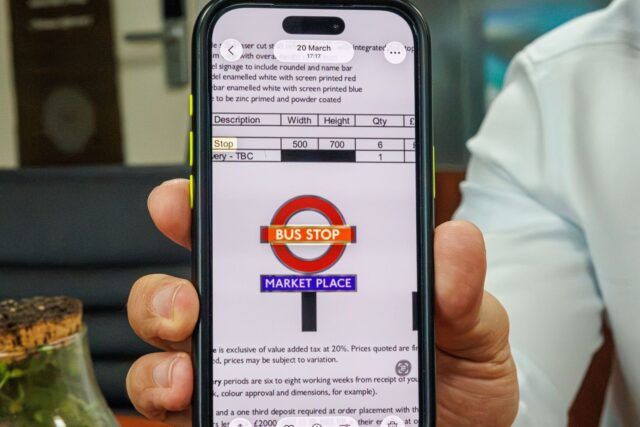
“The British look, it goes with the London taxis,” Dr Cortes said.
Changes are also being made to bus shelters, and Dr Cortes said there were currently two shelters next to each other near Eroski, with one due to be moved to the air terminal where there is currently a bus stop there without a shelter.
The remaining shelter will be moved closer to the wall after concerns that the space behind it was being by people to relieve themselves.
“People were using it as a urinal virtually, and it was smelling and so we pushed it against the wall, so there's no room for someone to go in there,” he said.
BUS FARES
The Ministry is considering increasing bus fares for non-residents, although Dr Cortes said a balance would have to be found between encouraging tourists to use public transport and ensuring buses retain capacity for residents.
“We want tourists to use our buses, but we want the buses to have space for Gibraltarians,” he said.
“This is why I'm seeing that when we get new buses, we may not be able to get rid of the old ones.”
He said making the service too expensive could encourage visitors to drive into Gibraltar, creating a different transport problem.
“We can't make it too expensive, but we've got to make it expensive enough for them to want to walk rather than use the bus so that it's not full of tourists.”
He said the Government was still considering where fares should be set.
“It's a very delicate balance, and we're trying to figure out where to pitch it.”


