


Playing for a World Cup dream


Gibraltar’s women’s national team will step out onto the field this evening to play for the first time in a World Cup qualifying group match.
Having already debuted in international competitive tournaments through their participation in the Nations League, Gibraltar’s women will now be playing with an equal chance as all other nations to qualify for a World Cup.
Twelve years on from Gibraltar joining UEFA and FIFA, the journey for women’s football has been long and, at times, seemingly slow. For many who played those first matches in the inaugural UEFA Development Tournament held in Gibraltar — hoping one day to line up in front of their home fans and stand beneath their flag — the journey was never completed. Opinions differed on whether women’s football was ready or not. The debate, even today, continues as to whether women’s football should have been allowed to play at international level much sooner. For those who had to hang up their boots before the day arrived, but whose efforts paved the way for this first qualifier to take place, it will be a bittersweet moment — one they can nevertheless look back on with pride.
Gibraltar football won its battle to be recognised and accepted into UEFA and FIFA. However, the battle for women’s football was far longer, having to meander through debates that for decades kept the women’s game sidelined — not just in Gibraltar, but globally.
Ironically, Gibraltar face Kosovo in their first group match — a reminder of how much time and experience has been lost, with Kosovo having joined the ranks of UEFA and FIFA at the same time as Gibraltar.
Five players will walk onto the field as part of the national squad having progressed from that first squad selection which played in the inaugural UEFA Development Tournament.
Paula Costa and Naomi Victor were already establishing themselves as key figures. Joelle Gilbert, Tiffany Viagas and Charlyann Pizzarello were, at the time, young girls coming through the youth ranks and on the very fringes of selection.
Notably, the latter — Charlyann Pizzarello — has since become one of the central figures of Gibraltar women’s football, having ventured to play in the United States before later playing in both Spain and the UK.
A bumpy road it may have been, with the now-veteran player recently even contemplating hanging up her boots. Her experience and commanding presence in defence have provided what is still a relatively young side with a solid spine, one which has seen Gibraltar play with confidence.
Long gone are the days when a young Charlyann sat shyly among a group of senior players — most of whom never played a full official competitive match for Gibraltar.
The twelve-year wait will, however, see players such as these finally walk onto the field to compete on equal terms for the one dream most footballers share — to one day play in a World Cup.
Whether Gibraltar succeeds or not is not what matters. What matters is that you can dream and work towards it — that the pathway is open for those willing to climb through the obstacles.
While participation in the Nations League opened those doors, the match against Kosovo represents the ultimate recognition of Gibraltar women’s football on the international stage.
Gibraltar women’s football has entered a new era — one which today sees the game, at least for now, run by women for women.
With Arianne Risso as Women’s Football Development Officer, and Stell Gotal the latest Women’s National Team Head Coach, the ambience feels very different. It is becoming a women’s game, and rightly so. It is not thanks to the men’s game, but despite it, that women’s football is finding its feet and paving its own pathway.
The effort, the debates, the sweat, the sacrifices — but most importantly, the determination of those who played the game and persevered — have made this possible.
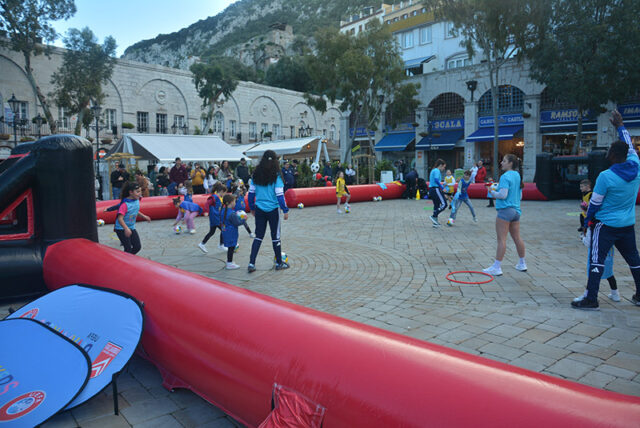
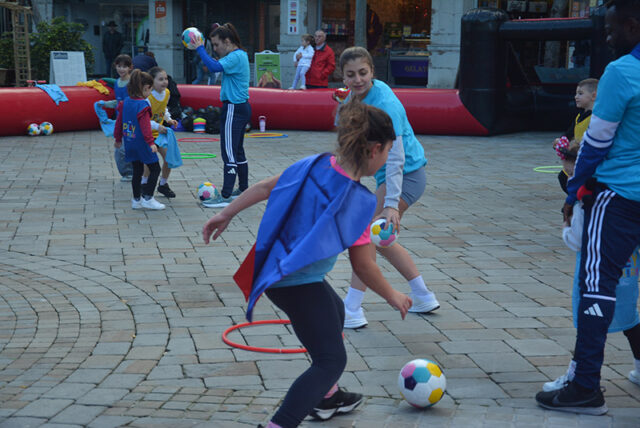
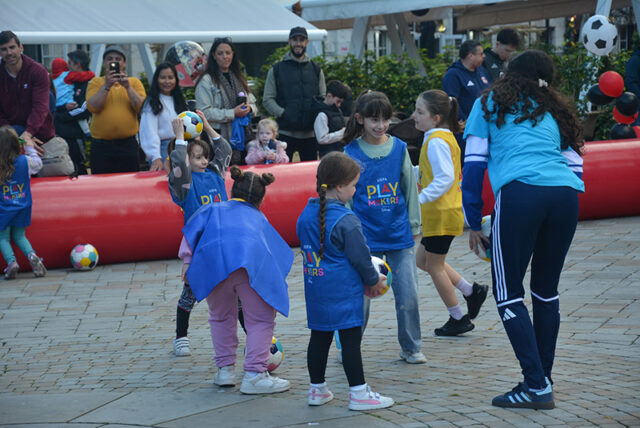
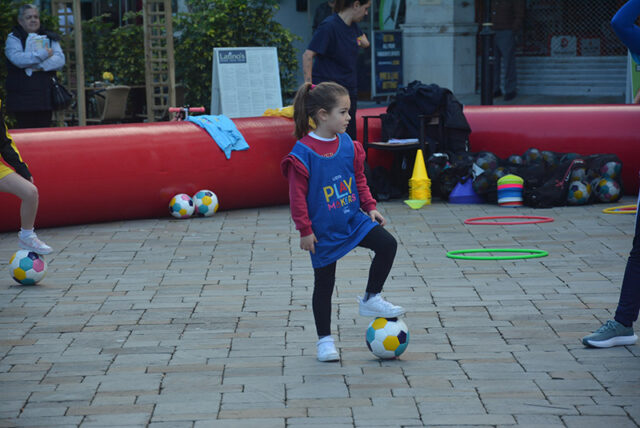
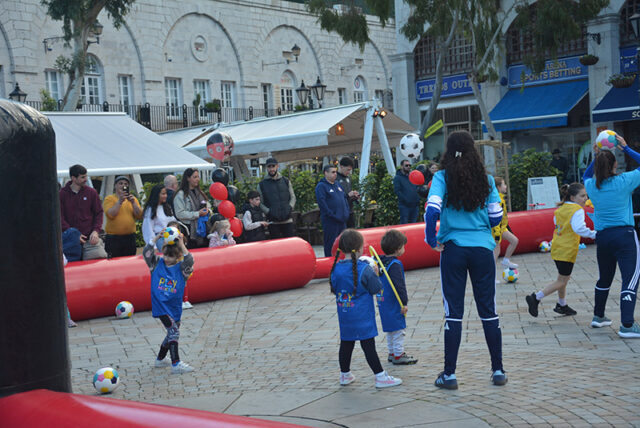
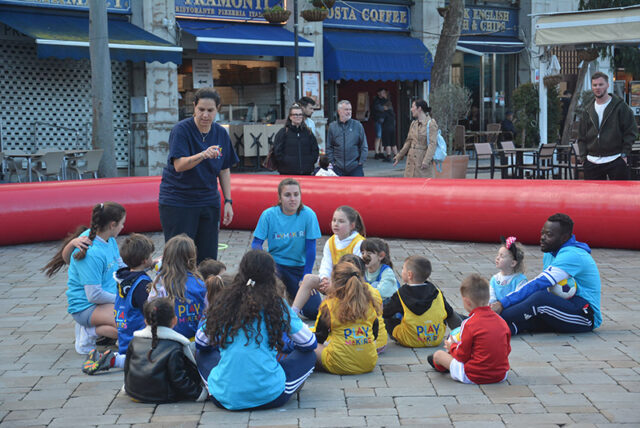
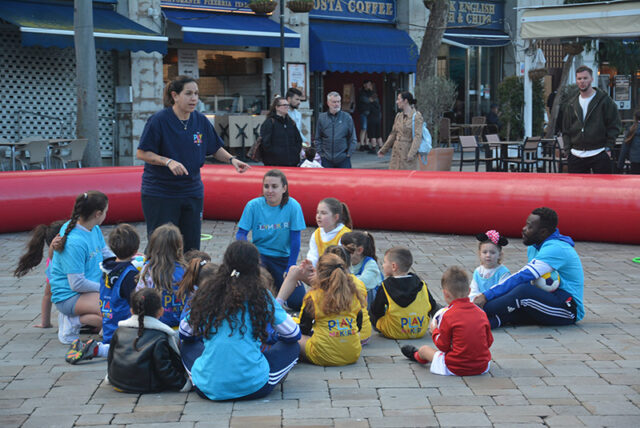
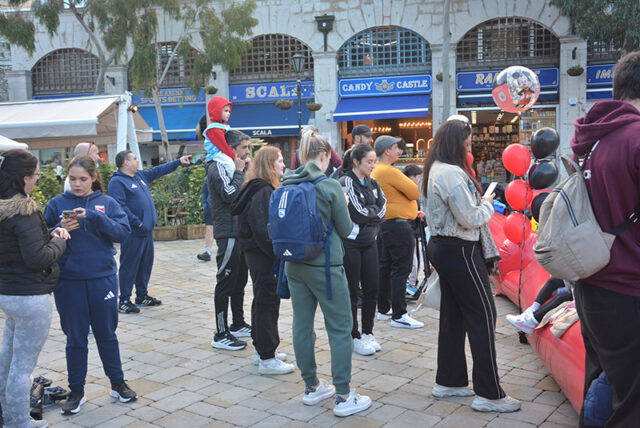
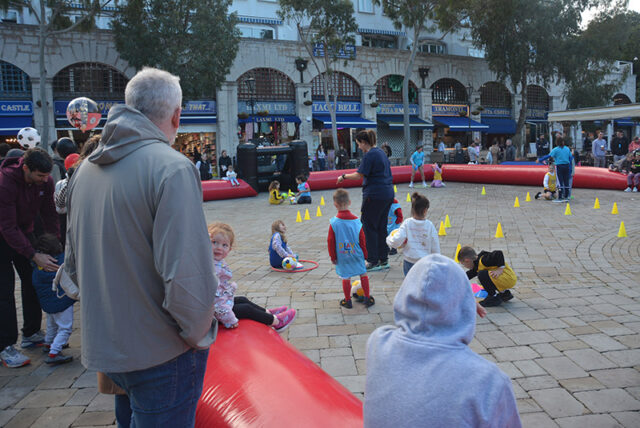
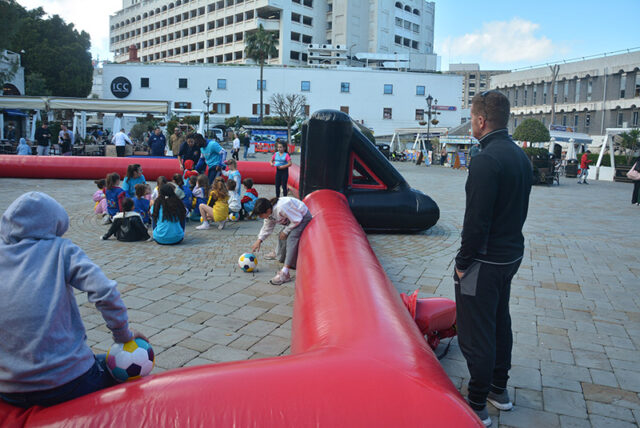
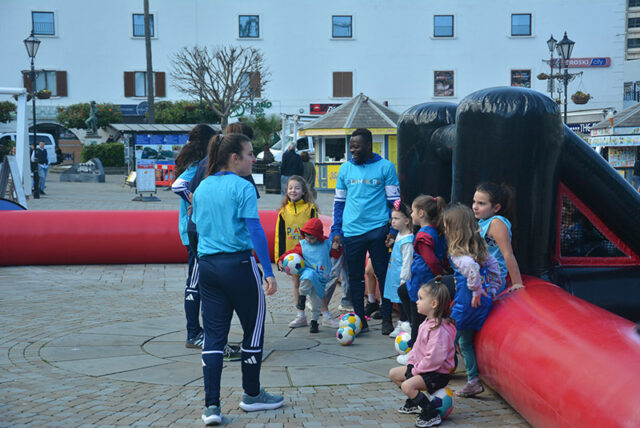
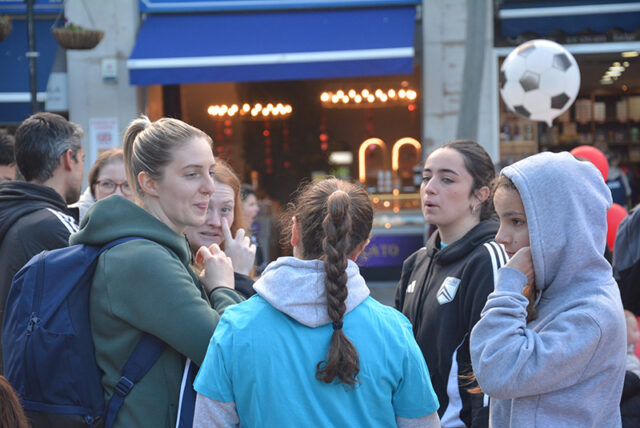
There was no better demonstration of this than a fortnight ago, when the Playmakers initiative took over Casemates Square on a Saturday morning.
Kiara Sene, a former national team player who herself never played in an official competitive football match for Gibraltar — though she had ironically done so in both netball and basketball — led the Playmakers coaching sessions.
Young girls played football in Casemates Square, watched closely by the Women’s Football Development Officer and the National Team Head Coach. The latter two were surrounded by young players in an informal, family-type ambience, very much in keeping with how other women’s sports in Gibraltar have successfully developed — moving forward with a united front.
On the sidelines were men who had supported the creation of this pathway, but whose presence now seemed secondary, as women’s football appeared to be carving out its own niche for the future.
Most notably, and probably the least noticeable as it now became a normal scene, among those watching a former national team player, also one who would never play in an official tournament, with her very young daughter watching her niece play as one of the playmakers.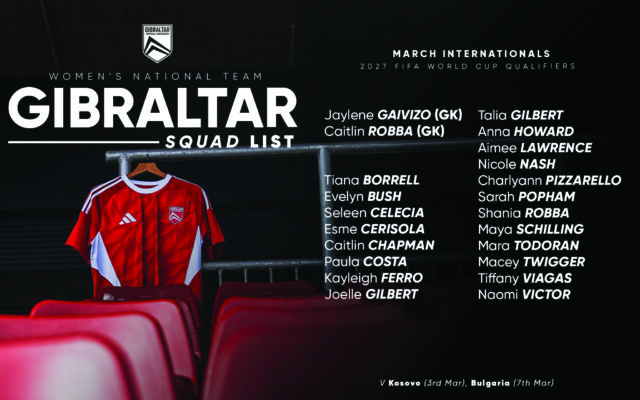
Most Read
La Linea court reaffirms decision to close of Eastside reclamation case, prosecutor appeals
Fri 11th Sep, 2026
Rosindell says Reform unlikely to endorse treaty but will respect Gibraltar’s decision
Fri 11th Sep, 2026

Today's Paper
2nd March 2026
Read our latest newspaper by downloading our app from the link below.


