


Moving to London changed my life


Like so many students, I always dreamed of studying abroad, but my route was far from straightforward. I was told that I couldn’t take my GSCEs like my peers, the first step towards my A-levels and university at eighteen. My life took a U-turn, I completed my bachelor’s degree in creative writing and English Language at the Open University and graduated at 30.
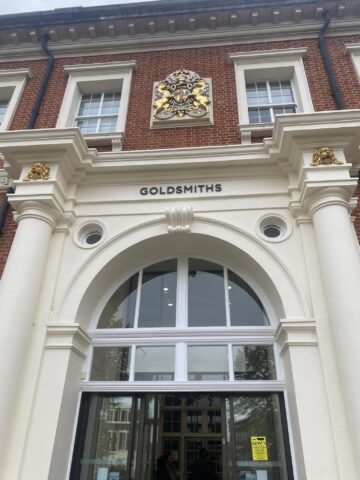
When I started to apply for different universities, Goldsmiths, University of London stood out to me the most, because of its diverse campus. Also, they offered a master’s in digital journalism was exactly what I wanted, given the power it holds for digital media.
Moving was one of my best decisions. The first thing I learned is that my disability is part of me, not the whole of me. I didn’t just hear it. I saw it in action all around me.
Growing up in Gibraltar, I did not always feel like that. It was always my cerebral palsy first, and sometimes my disability was seen as a tick in a box rather than genuine human connection.
In London I handled everything on my own, from cooking and laundry to food shopping and my daily routine, all without a caregiver. When I first said I wanted to move abroad, I was told I would need one. It is easier to assume than believe we all have different abilities. My university respected my decision to be fully independent. And like any other student, I could ask for support if I needed it.
I was surrounded by people who shared that mindset, ‘you are an independent woman with a strong character who can lead her own life’, academically, professionally and socially.
I used university experience to catch up on my youth and adulthood that I had been locked out of. Life in Gibraltar was not designed with the disability community in mind, and I don’t only mean physically. Too often social spaces can be unwelcoming and deeply infantilizing, with people treating me like a lost child rather than an adult who’s trying to enjoy life. In the UK, I found a bit of culture shock on how they treated me as an adult, especially during nights out. The spaces were very welcoming and no one treated me like a lost child. I discovered rave culture and that changed how I viewed the world around me.
My first rave was at Planet Wax in New Cross, where I lived during my year at university. I didn’t feel stared at or coddled, I just felt like me. When I later interviewed the owner, Dexter, he told me: “We don’t allow prejudice here.” It wasn’t just a line in a policy document, it was a venue treating inclusion as a baseline.
Looking back at Gibraltar from London, I believe a small-community mindset should never excuse a diminished life. For too long, the local narrative around disability has been framed around care and protection, while what disabled adults need is not an over-protected bubble. We need autonomy, infrastructure, and space.
For my final project, I wrote about ‘Dancing Differently: Accessibility, Disability and Community in London Nightlife,’ researching how access and belonging can reshape London’s nightlife. I interviewed organisations across Southeast London such as Disco Neurotico, Out of Body Pop and Bubble Club, which are reimagining what an inclusive night can look like.
Bubble Club offers people with learning disabilities a space to enjoy music and learn how to DJ. At one of their events at Brick Lane, I watched performers including DJ4BLUE, who was playing in Ibiza this summer.
News like this is not shown. There’s a gap in representation of the disability community, and it is one of the reasons I chose journalism. Awareness has grown, but we mostly see it during awareness months, when our social media feed is filled with originations wearing coloured shirts. Yet, disabled people are still seen as vulnerable, or “angel myths,” innocent, harmless and assumed incapable of travelling alone, studying abroad, having relationships, being decision makers or being leaders.
In the mainstream media, disability is often filtered through charity or a medical lens. We are portrayed either as tragic objects or as “inspirational” figures praised merely for surviving an inaccessible world.
This is why I believe that we need more disabled journalists in the newsrooms, which changes the questions we ask. It shifts from “How do they cope?” to “Why isn’t this accessible?”
Before moving to London, I was told to be “realistic” because how can someone like me work in a newsroom, and if non-disabled students find moving abroad hard, I will find it ten times harder. It showed me how quickly people try to write your script rather than letting you live it.
Life was not always easy, but that’s the beauty of being abroad because it challenges you. It also teaches you things about yourself that you never knew existed. I did have days that I found hard to cope with, but I taught myself this strategy. I paused, slept on it and tried again the next day.
I didn’t have to show I was some kind of “superwoman” all the time. Because I did not have to prove myself and no one made me feel like I should.
However, meanwhile growing up in Gibraltar, I felt like I had to prove myself and abilities to feel “accepted,” to feel like I can contribute to society once I proved myself, and if I did have an off day, it felt like that would define my whole ability. In university, I never had to stand in front of classmates and professors and explain what cerebral palsy is. Instead, I became open to my disability: if I was having a bad day, I told my lecturers, flat mates and friends. That open dialogue taught me how much it matters to be understood rather than merely tolerated.
Living alone has taught me to spread my wings more than I imagined, like for example, catching trains on my own. Saying yes more has also been the highlight of my year abroad: yes to raves my friends invited me to; yes to a coffee date with someone who isn’t disabled, which a small-minded society would not accept; and yes to watching Harry Styles at Wembley on my own.
I also had an incredible mentor, Sarina, who reminded me that I oversaw my own life and was capable of tearing down barriers, and who taught me to advocate for myself, a skill I had never known.
Living a “normal” life felt surreal. I was surrounded by people who saw Manar, who had big dreams and potential. They saw the Manar that not many people gave a chance to see.
This piece is not an exercise in being “inspirational” or “brave.” The label is often hollow, handed out by a community that still makes it hard for us to exist.
This piece is about spreading my wings and allowing myself to live in the big world. London is not scary and the people who have crossed my path have been nothing but supportive and loving.
Go chase your dreams, it is never too late.
Most Read
Reduction in HPV vaccine uptake ‘worrying’, Director of Public Health says
Tue 6th Oct, 2026
Cross-Frontier Group to ask Spain’s political parties for their positions on treaty
Wed 7th Oct, 2026

Today's Paper
8th October 2026
Read our latest newspaper by downloading our app from the link below.


