Notes from the past as first automated telephone system is introduced in 1926


 Can you imagine a time with no telephones? Worse still, can you imagine a world with no mobile phones? How often do you hear people say – what did we do before without the mobile phone? Well, unbelievably we got on with it. We manually called each other on the landline, always hoping that when you left a message whoever you were trying to get hold of would get back to you – either by calling you back on the landline (and you were home) or meeting you in the street. How did we do it? We did it in a much slower paced world. What happened to that world? I hear you ask. Well, those advancements in technology which we learnt to accept and are now a major part of our lives, and will, I am sure lead them to help us learn to accept A.I. even though there is – I know certainly on my part – a resistance to fully immerse in it. But let’s not even go there… and let’s hope keyboards are still here in ten years’ time. Let’s be optimistic.
A few weeks back, one of our regular readers of Alice’s Table (and he has featured on these pages before), my good friend Malcolm Beanland called me to let me know that an important anniversary in the telephone world on the Rock was soon coming up, and that perhaps I might want to feature a few words about it – the 100th anniversary of the first Gibraltar City Council run telephone automated system to be introduced locally. Never inclined to say no or to turn down a story, I took him up on the offer.
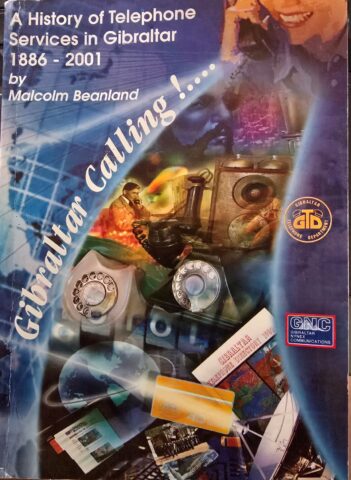
Malcolm of course wrote a book on Gibraltar’s Telephone Services back in 2001 – the book “Gibraltar Calling” was a History of Telephone Services in Gibraltar 1886-2000. The book features this milestone of 100 Years of Automated Telephone Services. He tells me how communications evolved significantly since the emergence of the telegraph in 1870 and electricity in 1897 in Gibraltar. The telephone of course was invented by Alexander Graham Bell in 1876 and reached Gibraltar just ten years later in 1886. At first, it would only attract some 100 subscribers.
I began by looking up the Gibraltar Guides and Directory, and the Colonial Report of 1926 – yes, one hundred years ago is where we are heading back to this week. The Gibraltar Colonial Report of 1926 carries a few short paragraphs on this special anniversary in October 1926 when this new telephone service first arrived in Gibraltar. At the time there were no telephones under the Colonial Government control. According to the Colonial Report this new telephone service of the Strowger Automatic Telephone Exchange type was installed during the year for the City Council of Gibraltar by the Peel Conner Telephone Works of Coventry, of which the General Electric Company were the proprietors. The service was inaugurated in October 1926. To be exact on the 1st of that month (yesterday). The establishment of this telephone service had already been authorised in November 1924 by the City Council (telephone) Ordinance of 1924. According to the report the City Council was guaranteed by the Government against loss on working expenses to a limit of £5,000 for a period of five years. There had already been a small telephone service locally which had been operated as a commercial enterprise by a private individual in Gibraltar, but this was discontinued.
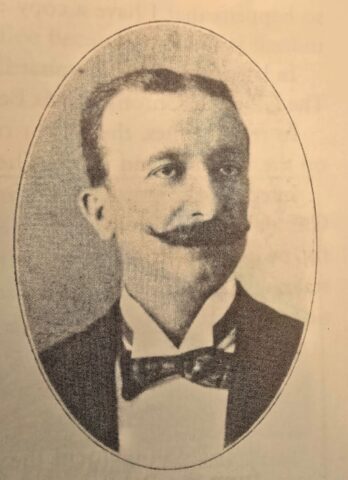
Malcolm tells me this was James Dagnino. His book refers to the telephone having reached Gibraltar 10 years after it was invented. He pointed to this being “testimony to the importance of the role of the business community and especially to the innovative skills of entrepreneurs in Gibraltar”. Dagnino, he writes in his book “ran a magneto type switchboard using a switchboard operator for placing local calls only during the time he ran Telephone Services on the Rock. And therefore, the services were manually run.”
The Gibraltar Civil Telephone Service lasted 34 years with Dagnino as its sole proprietor and manager. Mr Dagnino had in 1924 threatened to cease the Telephone service but was eventually persuaded to carry on the service until the end of September 1926. Malcolm, in his book also refers to the Gibraltar telephone service having started as far back as 1886 by Messrs Spagnoletti and Crookes and then by a Mr Cromwell Oliver Varley from 1888 to 1890. Until Dagnino took it on.
Another chapter relates to the time when the City Council was created in 1921, when the Council was asked in 1924 if it was feasible for them to provide a more modern telephone service than that provided until then. Even then, the local Naval and Military Departments had their own lines which were connected to the City Council exchange. Malcolm points out that although the Telephone Exchange was completed by August 1926, the paid service to both Business and Residential and Official Authorities would not be introduced until the beginning of October. The old system, he explains, had up to about 300 subscribers who were connected to the service which was only for local calls which had to go through an operator.
“With the new City Council telephone exchange subscribers could make local calls automatically without the need for an operator.”
The Gibraltar Chronicle, he says, sent a reporter to cover the story and it was published 14 October 1926. It was a very extensive report and gave readers a very comprehensive idea of the new Telephone Exchange under the headline “City Council’s Telephone Exchange Marvels of Electrical Engineering”. The reporter wrote that “if the Council had never done anything else it would have earned undying gratitude for having set up the Automatic Telephone in our midst”.
The overall report paints a picture of the exchange, where it was situated and how it worked.
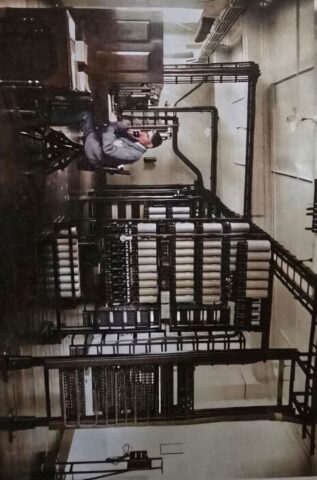
“A climb up a steep, winding staircase lands one on the roof of the City Hall, whence a magnificent view of the Bay meets the eye. The exchange occupies the eastern side of the roof. A long, somewhat low but light and airy room, rather reminiscent of a hospital dispensary with its spotless white enamel and polished floor, houses several iron frames containing the telephone plant, a mass of cables running along the roof and a pair of what at first sight I took for ordinary roll-top office desks, but which on further inspection proved to be fitted with a variety of cunning contrivances. These are in fact the controls from which a couple of operators work the whole of the council’s telephone system. At present only one operator is required, later when Gibraltar has been connected up to the Spanish telephone system a couple more may be needed, the second for trunk calls. When the exchange recently opened 800 calls were dealt with in a day, the number is now 3000.”
Given that this report went out on October 14, 1926, there had in a matter of weeks been a substantial increase in subscribers. Allowing for technical details and its wider set up, the article then goes on to say the following: “Should you happen to lay down your receiver by the side of your instrument after a conversation, thus preventing anyone else from getting on to your friend’s number, the automatic exchange is equal to the situation. After two and half minutes, a time switch operates a light and an alarm notifying the operator of the exchange of your delinquency, and he promptly sets in action a “howler” which emits a piercing shriek from the mouth of your receiver. Again, if you try on your dial to get a number which does not exist, a warning light at once tells the exchange operator who will inform you of your error. Another light indicates that a subscriber wants to make an inquiry or a complaint. Once you have begun your complaint you cannot disconnect from the exchange till the operator releases you.”
An interesting fact highlighted in the article says how generally speaking the exchange operator could not listen in to the conversations carried out between subscribers. However, a line could be placed under observation by a technical electrician for “special purposes” for instance when there was a suspicion that a line was being improperly used without the knowledge of the subscriber’s consent. Oh, and every call passing through the exchange was automatically registered on a meter. When Malcolm joined the Gibraltar City Council as a Clerk in 1967, he was posted to the Telephone Department. He describes them as a small department with around 80 employees, both technical industrial and administrative grades. But importantly the 1926 Telephone Exchange was still operating, and the telephone instruments were all in black and were heavy. He also recalls a large waiting list of 1000 people and firms for telephones as the capacity of the exchange had been filled up.
Malcolm adds that the event of 100 years ago would prove to be a major milestone in the journey made in communications locally. By the end of 1939, 800 telephone lines had been connected and following the War to 1000 by 1954 and 4000 lines by 1967 – this was the year he joined the Telephone Department. He further explains how from 1926 to 1946 the Telephone Service was an offshoot of the Electricity Department but that once the City Council was reconstituted it was run by the new Telephone Department, and the Telephone Exchange was increased to 4000 lines. Once the new exchange was up and running 100 years ago within the year – in April 1927 - there was an extension added which would include Spain.
A year later, by 1928 the telephonic communication had further increased to fully establish a link with the United Kingdom, France, Switzerland and Portugal. As rapid advancements continued in the industry other European countries were added by 1933. In 1935 the industry would see the establishment of further communication with countries further away such as the United States of America, South America, Canada, Australia, Egypt and India. By then these would be fully established.
Malcolm says that the connection to the UK and beyond was via Telephone Trunk Operators, and his late father-in-law Louis Olivero was one of the first Telephone Trunk Operators.
Reading through the Chronicle report of 1926, and Malcolm’s book, Gibraltar seems to have been ahead of the game and mirroring what was happening in the world of telephony. But Malcolm points out this was also the case when it came to telegraphy.
“This was true for Telegraphy as it was true for Telephony. Telegraphy was invented in 1837 and by 1870, a telegraph cable had been laid from the UK to Gibraltar and Malta. The Telephone was introduced in 1886 just ten years after its invention. The first Telephone Company in the UK was The Telephone Company (Bells Patents) Ltd in London in 1878.100 years ago Gibraltar introduced its first automated Telephone Exchange. The Compañia de Telefono de España (CTNE) today Telefonica was formed in 1924,” he explains.
Malcolm then quickly moves forward to 1971 when the UK and the USA introduced International Direct Dialling. Gibraltar followed 11 years later in 1982, and it was only then, he says, when the last of the 1926 equipment was fully replaced.
“Then in 1990 the Gibraltar Telephone Department introduced the new digital Telephone Exchange System X, the first country to have a completely digital system that took the UK over 10 years to complete. The system was decommissioned in 2022 and replaced by a new system that is no bigger than a suitcase. Today Gibraltar has the latest state of the art telecommunications services serving Gibraltar,” he adds. But 100 years ago, around the world the Telegraph remained one of the most important and popular forms of communication. The Gibraltar Government landlines of the day connected Gibraltar with the Spanish towns of San Roque, Cadiz, Malaga, and Cordoba.
The Eastern Telegraph Company worked these landlines. The Company had a special agreement and paid £300 annually to the Colonial Government. The Eastern Telegraph Company had a station at Gibraltar whereby telegrams were also accepted for all parts of the world. Meanwhile both commercial and private messages for transmission by the Naval Wireless Station to merchant vessels at sea in the neighbourhood were also accepted and despatched from the offices of the Eastern Telegraph Company. Similarly, wireless messages received from ships were also delivered by the company.
As to postal communications both British and Continental mail were forwarded and received daily by overland routes via Spain and France. There was also a daily steam service in connection with this mail service between Gibraltar and the Spanish town of Algeciras for which the Colonial Government paid the Algeciras Gibraltar Ferry Boats Company under contract an annual subsidy of £500.Other correspondence for Egypt and places eastward of Suez was forwarded weekly by Peninsula and Oriental Steam Navigation Company steamers and the Orient Line steamers which would carry mail for faraway ports such as Port Said, Colombo and even Australia.
Curiously, at the time overland mail was fast. Well, not as fast as today’s instant WhatsApp message, but taking into account the long journey, when roads were not what they are today - from Gibraltar to London and vice versa mail took an average three and a half days to arrive and be delivered.Just as a reminder of what else was happening in Gibraltar in 1926 – the staple trade then was the supply of coal, fuel oil, stores, and freshwater shipping, as Gibraltar then was pre-eminently a coaling station. In fact, as we have featured before on these pages, the only industries in Gibraltar then were connected to shipping and the manufacture of tobacco. At the end of 1926 the estimated total civilian population on the Rock was 16,150 residents. The number of births that year was 428. So, let us take a close look at education.
Since 1921 the Governor had been advised on educational matters by a Board of Education under the chairmanship of the then Colonial Secretary. As in other years books and equipment issued to pupils were free of charge. For this purpose, a special grant was given to the several school committees ranging, and in accordance with the standard achieved, from just two shillings to 16 shillings for each child appearing on the roll on the last day of the scholastic year. The total amount paid for the year ended 31st of March 1927, for example, was £967. In 1926 in Gibraltar there were nine school buildings containing 13 government aided schools for primary education and 11 Roman Catholic and two Hebrew schools.
The Roman Catholic schools were conducted by the Christian brothers and the nuns of the Order of Loreto, and the Hebrew schools by lay teachers, the various schools being under the direct management of local committees. According to the colonial report of 1926 the woodwork classes at the Sacred Heart school to which the government contributed an annual grant of £240 were very popular among the boys. Meanwhile, the first examination in English for assistant teachers under the scheme approved by the Board of Education in June the year before was carried out in July 1926. 31 candidates 10 male and twenty-one females presented themselves for examination and with these 24 were successful, four of them obtained honours.
Now, here’s an interesting fact, monthly inspections of the children in the schools were carried out by the school nurse, one of the staff nurses attached to the colonial hospital, and occasional visits paid by the assistant surgeons.
The total number of pupils on the register in 1926 was 2,630 and the average attendance that year was 2,222. And finally, you may ask, aside from households and private individuals who would have subscribed to the new Telephone Automated systems? The advertising section of the Gibraltar Directory included a long list of professionals and traders in our community – from antique dealers to booksellers and brokers. Builders, banks, bankers and banking agents, motor car agents, shipping agents, the Gas Company, and the Coal Agents. There were the furniture dealers and makers, the engravers, the perfumers, painters, engineers and dentists and GPs, and the many General Merchants providing goods and services back in 1926.