


A journey towards establishing weightlifting on the Rock


These past months have seen three Gibraltarian sportspeople travel to both Georgia and, later, the UK in their bid to qualify for the Commonwealth Games. Whilst, for many, qualification for the Games has come with the support of a governing body paving the way, for these three athletes the path has been somewhat unusual, with a considerable burden to bear along the way.
Holly O’Shea, James Perrera and Tom Appleton have no such association backing them, no governing body providing support, no funded facilities and no sponsorship. The three weightlifters have embarked on a pathway which they hope will lead to the official establishment of the sport on the Rock.
The three attended the 2026 EWF European Championships. The event served as a qualification event for the 2026 Commonwealth Games in Glasgow. As such, athletes from Commonwealth Sport nations, including the Home Nations (England, Wales, Scotland, Northern Ireland), the Crown Dependencies (Guernsey, Jersey, and the Isle of Man), and the British Overseas Territories (Gibraltar) under the jurisdiction of British Weightlifting participated, even if they did not represent an EWF full member federation. Their participation solely for Commonwealth Games ranking purposes, and their results not included in the official 2026 EWF European Championships standings.
This the first of two events before heading to the British championships. Since then a clearer path has already started to form with the process to launch an association already underway with formal notification understood to have been made to the relevant authorities.
We had the opportunity to gain an insight into their journey through James Perrera, who responded to our questions.
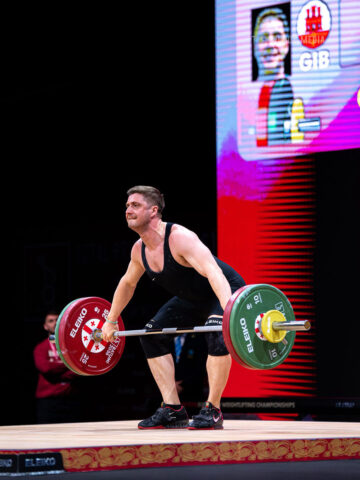
When did you first become interested in weightlifting as a sport?
James Perrera: I first saw Olympic weightlifting in the 2016 CrossFit documentary Fittest on Earth, which followed Mat Fraser, but I didn’t think much of it at the time. It wasn’t until watching the Tokyo 2020 Olympics that I thought to myself, this is something I’d really love to try. Holly had been into the sport slightly longer than I had, which helped spark my interest. Later on, Tom saw me lifting in the old Strength Factory gym and asked me to coach him shortly after.
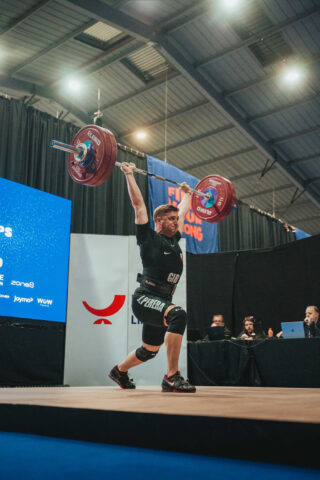
How difficult has it been to practise the sport to reach a level where you can compete internationally?
James Perrera: Like any sport, progress isn’t linear. I wasn’t the fastest, strongest, or most athletic kid growing up, so reaching this level feels quite surreal. Tom is currently 17, and I constantly have to remind him that I will only be stronger than him for a very short window of time! With proper coaching and his age, he is progressing at a much faster rate than I ever did.
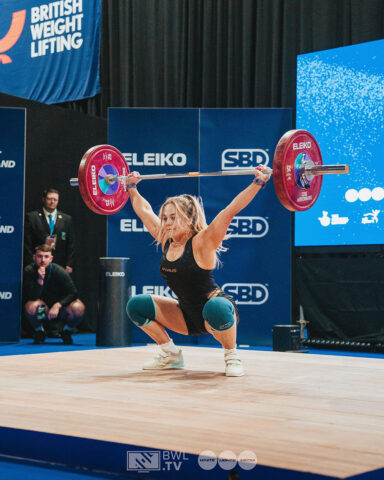
You recently competed in the qualifiers for the Commonwealth Games at the European Championships in Georgia. What were your goals going into that event, and how did it feel to step onto that stage?
James Perrera: Correct. For Holly, Tom, and myself, the primary goal in Georgia was simply to register an official total at a major international meet to kickstart our qualification process. Whether that meant hitting an all-time personal record or playing it safe with smart attempts, it was all about executing on the day. We used it as an invaluable opportunity to expose ourselves to the absolute highest level of competition. It was a massive undertaking, but it’s not every day you get to step onto the platform at the European Championships.
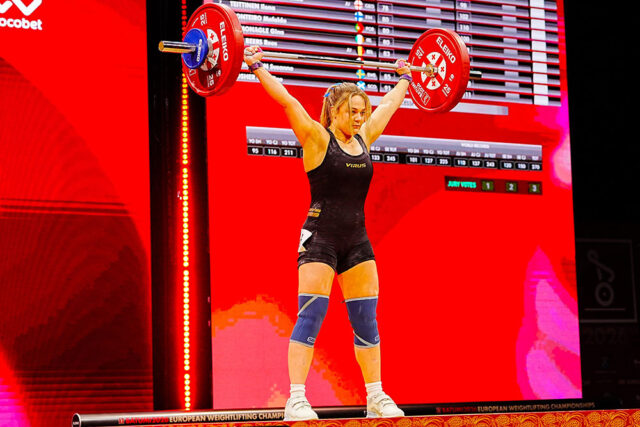
To become eligible for the Commonwealth Games, you require multiple international totals. However, you are entirely self-funded—covering everything from travel to training. How expensive does it become to merely try and qualify to represent Gibraltar, and is it worth it?
James Perrera: Getting this far has been a massive financial commitment. Between the three of us, the trip to Georgia cost around £4,000, which was completely self-funded. We followed that up two weekends ago by competing at the British Senior Championships, which cost another £1000 in travel and accommodation alone.
But it was entirely worth it. At the British Seniors, I managed to secure a 226kg total, hitting a 100kg snatch and a 126kg clean & jerk. Weightlifting is a niche sport back home, so we view these self-funded trips as a vital investment to gain international exposure and respect for Gibraltar on the lifting map.
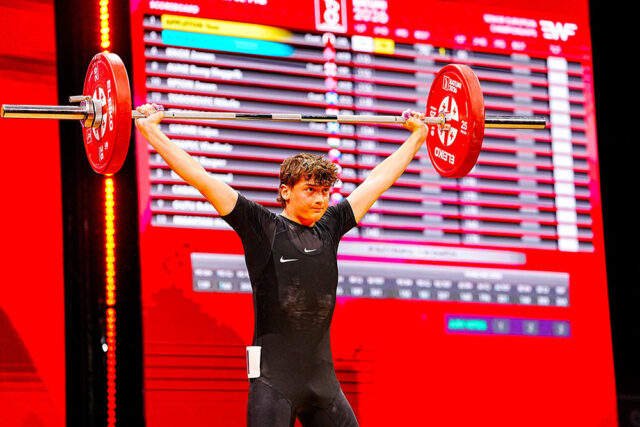
Weightlifting is not a new sport for Gibraltar, yet there are currently no local training facilities and no formal association. How hard is it to practise under these conditions?
James Perrera: I can count on one hand the number of people I know locally who do Olympic weightlifting—which shouldn’t be confused with powerlifting. To my knowledge, I don’t know of anyone besides Holly who has competed at this level. Perhaps there were lifters before my time, but right now, we are starting from scratch.
You mention that you train in Spain, where the facilities have welcomed you with open arms. Doesn’t it feel somewhat ironic that this is the case, considering your goal is to represent Gibraltar?
James Perrera: Initially, I started out with a club in San Fernando, and they were over the moon to train and help me. I even competed in the Campeonato de Andalucía last year representing them. However, because the federation required us to prove residency in Spain, my time competing in the Spanish system came to an end.
The gym where we train now has been fantastic, they essentially cleared a whole floor for us so we could train with the specific equipment we need. Like most things in Gibraltar, physical space is the main issue. Because of this, I have started the official process of establishing the Gibraltar Weightlifting Federation, which will act as an umbrella association for powerlifting, bodybuilding, and Olympic weightlifting. Securing a dedicated local facility is still a long way off, but this association is the first step.
In terms of preparation, what is a normal weekly routine to get you to peak competition level?
James Perrera: We structure our training in 12-week blocks, training five days a week. The first four weeks are a volume phase to build work capacity. The next four weeks shift into a dedicated strength phase. The final four weeks focus on heavy, competition-style lifts, transitioning into a ‘taper’ and a ‘deload.’ This systematic drop in volume allows the body to recover, gives the central nervous system a break, and builds peak confidence right before we step on the platform.
Your sport requires you to be physically fit at all times, and injuries are a constant risk. With no funding, how do you manage physio and medical treatment? Does the lack of an association make things like competition insurance difficult to come by?
James Perrera: People often look at weightlifting and immediately think it looks incredibly dangerous. In reality, while any sport carries risk, the injury rate in Olympic weightlifting is actually one of the lowest in sports science, you are statistically much more likely to hurt yourself playing football, basketball, or hockey.
Saying that, I’ve had my share of mild injuries over the last five years. I’m 33 now and work a 9 to 5 job that requires me to sit for long periods. That naturally takes a toll on my mobility and readiness, which increases the risk of injury, so managing recovery out of my own pocket is just part of the sacrifice.
When we think of weightlifting, nations like the Eastern Europeans come to mind, not necessarily Gibraltar. However, individual sports can provide surprising results. Where does Gibraltar stand right now, and what could be achieved with the right platform?
James Perrera: The Russians and Bulgarians are famous for their brutal, historic approach to the sport, and many of the modern training structures we follow are modelled on Eastern European systems from the 1970s to the 1990s.
I didn’t start this sport until I was 29, and I have now represented Gibraltar at the European Championships. The ceiling for weightlifting in Gib is incredibly high because the sport relies on raw, explosive power. I know people of all ages in Gibraltar who are freakishly strong and could reach world standards if given the tools. For example, a 130kg snatch and a 160kg clean & jerk will get you to the World Championships. Those numbers sound massive, but a 17 year-old male with a few years of structured training can absolutely hit them, and push for 150kg/180kg+ by their early twenties. That is what will put Gibraltar on the global weightlifting map.
What drives you personally to stay focused and pursue the Commonwealth Games, despite having no local competition and having to travel outside Gibraltar just to train?
James Perrera: When I met Holly about four years ago, competing at the Commonwealth Games became my ultimate goal. When I first started looking for clubs and ended up with San Fernando, I remember people asking me why I was bothering. They told me I’d never get anywhere and that I’d just be out lifted by younger, stronger athletes.
Five years ago, the lifters at the top of this sport seemed like mythical gods to me. Now, I get to train in the same room as them and share a competition platform with them. But for me, it was never strictly about winning a medal, it was about gaining the exposure and credentials required to come back and coach the future giants of Gibraltar. Discipline is what gets you results when motivation fades. It’s about showing up when you don’t want to, training when you are exhausted, and lifting late into the evening after a stressful day at work. That mentality is what got me here.
If you successfully meet the qualification criteria for the Commonwealth Games, do you automatically get selected, or does Team Gibraltar have to formally accept you?
James Perrera: To be honest, the exact selection and ratification process through the local sporting bodies is something we are still navigating. If anyone within the Gibraltar Commonwealth Games community is reading this, please do reach out to me! We would love to align our plans with the national standards.
How do you hope to fund what will be an expensive journey to the Commonwealth Games? Will you be actively seeking corporate sponsorship?
James Perrera: If athletes from other established sports on the Rock have their travel and accommodation covered when representing Gib, I would hope that we will eventually be treated with the same respect. I entirely understand why governing bodies might hesitate to fund three relatively unknown self starters during the early qualification phases, but I am optimistic that the conversation will change now that we are proving ourselves on the international stage. We will certainly be looking for local sponsors to partner with us as we head towards the Games.


