


Northern Defences tour applauds new research into Gibraltar’s military past


Gibraltar’s Northern Defences were placed in focus on Friday during the Forte Cultura Congress 2026, as visiting experts were given a guided tour by Project Manager Carl Viagas.
The Forte Cultura Congress 2026 was held last week in La Linea de la Concepcion with 72 participants from 17 countries gathering to share their experiences and undertake excursions to fortifications in the Spanish town itself as well as those of Tarifa and Cadiz. Following an invitation from Mr Viagas, the delegation readily accepted an invite to see the Rock’s Northern Defences.
The visit, led by Mr Viagas alongside representatives from the Gibraltar Tourist Board, examined new findings that challenge long-standing assumptions about the Puerta de Granada and Villa Vieja.
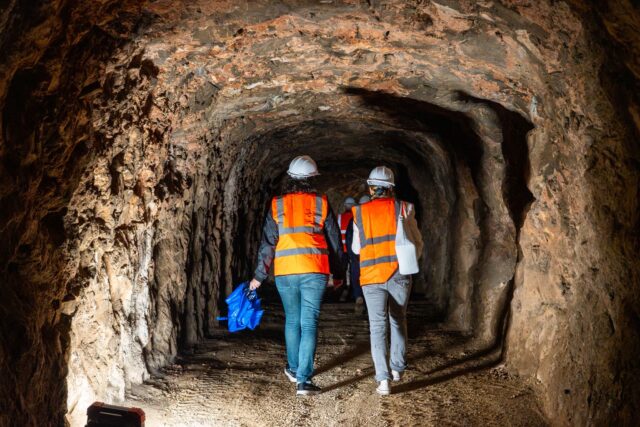
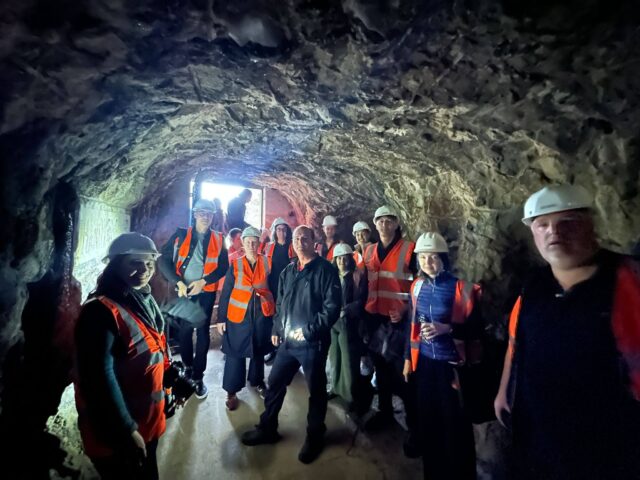
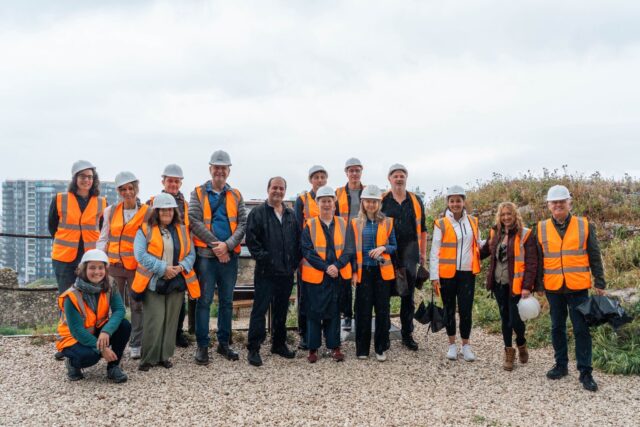
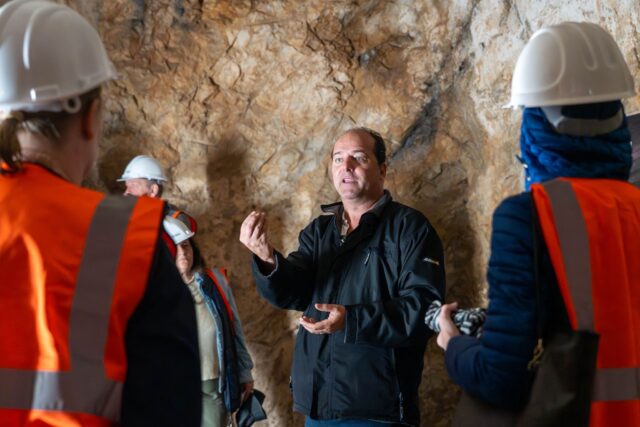
Delegates were also introduced to newly revealed defensive structures, communication lines, and archaeological features uncovered through extensive clearance and investigation works. The visit highlighted not only the physical uniqueness of the Northern Defences, but also the innovative research being undertaken to better understand Gibraltar’s historic landscape and its role within wider European defensive networks.
Speaking during the visit, Mr Viagas emphasised the importance of international collaboration in advancing heritage understanding: “What days like this demonstrate is that heritage is not static, it evolves through collaboration. By bringing together specialists, researchers, and practitioners from different fields and regions, we begin to see these defences not as isolated structures, but as part of a much wider, interconnected story. It is through this kind of joint effort and shared expertise that we deepen our understanding and unlock the true value of our heritage.”
Mr Viagas had recently unveiled that current research suggests the Puerta de Granada may not have been the principal civilian gateway into the medieval town, but instead functioned primarily as a military access point within a wider defensive communication system.
He also stated that researchers are also reassessing Villa Vieja, which has long been regarded as the oldest and most densely populated part of Gibraltar’s early settlement.
According to Mr Viagas, new analysis suggests it may instead have operated as a restricted zone closely linked to the upper defensive complex rather than serving as the centre of urban life.
Mr Viagas said: “It is by bringing together experts on fortifications from numerous countries where we can better critique and understand our own past.”
The organisers of the congress also highlighted the importance of such exchanges. Dirk Röder noted the value of bringing together international expertise and local knowledge.
“The role of FORTE CULTURA as a European Cultural Route is, to connect people, places and expertise across Europe. Under the slogan, Fortresses for Culture and Peace, we make European fortresses accessible to everyone. By creating opportunities for professionals to meet on site, share insights, and learn from one another, we strengthen both our understanding and the future of fortified heritage.”
“It was particularly rewarding to experience Gibraltar’s Northern Defences in this way, it was great to see the fortress through Carl’s eyes.”
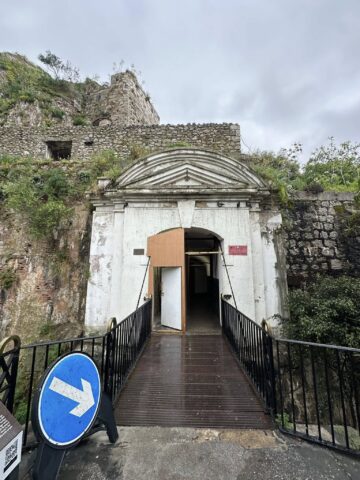
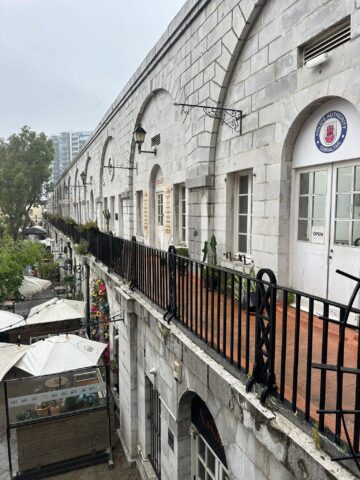
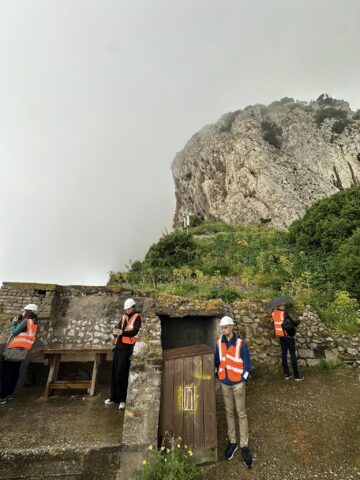
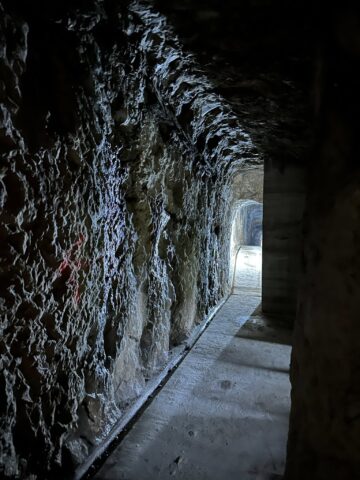
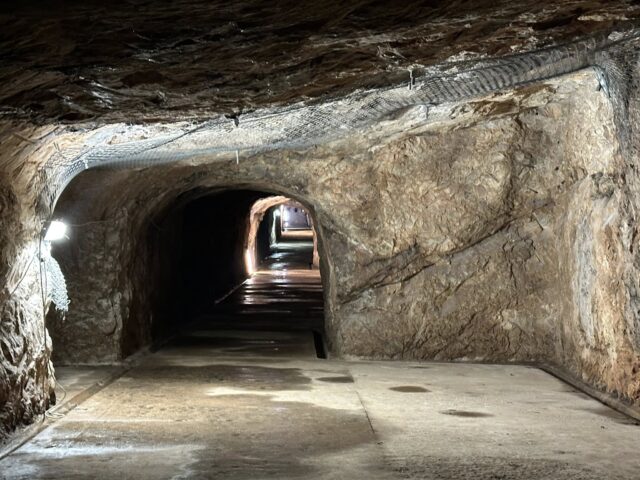
Recent excavation and clearance works have uncovered previously undocumented military features, including ramped and stepped access routes, covered communication lines, and architectural elements consistent with fortified military corridors.
According to the findings presented during the tour, these features point to a highly organised defensive system designed to regulate movement through the northern approaches, noted Mr Viagas.
Mr Viagas has now been asked by the conference organisers to present the latest findings in a keynote address, and has also been invited to Diest in Belgium.
“As Secretary General of EFFORTS (the European Federation of FORTified Sites), our role is to connect fortified sites across Europe, promote knowledge exchange, and support innovative approaches to heritage management. What we have seen in Gibraltar is particularly compelling,” said Raf Deroo.
“The Northern Defences are not only being conserved, but actively reinterpreted through rigorous research and creative vision.”
“Carl Viagas has demonstrated how a site can be transformed into a dynamic cultural asset while remaining grounded in scholarship.”
“We are therefore delighted to invite him to Diest to present the Gibraltar model, which we believe offers valuable lessons for fortified sites across Europe,” he added.
Experts from Granada who took part in the visit also identified parallels between Gibraltar’s emerging evidence and known military infrastructure in southern Spain, supporting the view of a shared Mediterranean defensive tradition.
Mr Viagas said: “What we are beginning to uncover here is not just a series of fortifications, but a carefully structured military landscape.”
“By combining archaeological evidence with historical analysis and the insights of international experts, we are challenging long-held assumptions and revealing a far more strategic and controlled environment.”
“It is through this collective effort that we move closer to understanding how Gibraltar truly functioned in the past.”
The Government said that Gibraltar’s inclusion in the congress programme reflects the growing recognition of the Northern Defences as a site of European significance as the project aligns closely with the congress themes of sustainable tourism, cross-border cooperation, and the development of cultural routes linking fortified heritage across the continent.
It also noted that the visit reinforced the importance of collaboration between Gibraltar and its regional partners, and that it remains committed to supporting the continued development of the Northern Defences project, recognising its value not only as a heritage asset, but as a driver of education, tourism, and international cooperation.
The Minister for Heritage, Dr John Cortes, said: “The Northern Defences are one of Gibraltar’s most exciting heritage projects, revealing new layers of our history as research and clearance works continue.”
“This visit allowed international experts to appreciate not only the significance of the site, but also the care, expertise and vision being applied to its development. We remain committed to ensuring that this remarkable area is protected, understood and enjoyed by future generations.”
For his part, the Deputy Chief Minister, Dr Joseph Garcia, said: “Gibraltar’s participation in the FORTE CULTURA Congress demonstrates the strength of our European and regional connections, and the important role that heritage can play in bringing people together across borders.”
“The Northern Defences are a powerful example of Gibraltar’s unique place in European history, and their inclusion in this programme reflects growing international recognition of the Rock’s fortified heritage.”
Members of the Gibraltar Heritage Trust also attended an evening visit on Friday, which organisers said formed part of wider efforts to ensure public engagement with the project and its findings.


